The Unexpected Shade Economy
I’ve been staring at the blueprints for Project Nexus in the Turlock Irrigation District, and I can't stop thinking about the shade. We usually talk about solar panels in terms of what they catch—photons, tax credits, carbon offsets—but we rarely talk about what they create underneath. By suspending these panels over the 4,000 miles of California's canal system, we aren't just generating 13 gigawatts of power; we are creating thousands of miles of artificial, temperature-controlled tunnels in the middle of some of the harshest agricultural land on the planet.
It’s a massive experiment in unintentional terraforming. In the Central Valley, where summer temperatures routinely break 100 degrees, the water in these canals evaporates at a rate of about 63 billion gallons a year. Slapping a lid on the water stops the evaporation, sure, but it also drops the ambient temperature under the panels by several degrees. I wonder if we’ve accidentally built the world’s longest, thinnest cooling fan for a landscape that is increasingly desperate for a breeze.
A Microclimate for the Picky Eaters
What happens when you change the rules of the local atmosphere? Farmers are starting to realize that the land immediately adjacent to these solar-covered canals isn't the same land it was five years ago. This is where agrivoltaics gets weirdly specific. Because the panels reduce wind speed and keep the humidity slightly higher near the water’s surface, we are seeing the birth of microclimates that shouldn't exist in a Mediterranean climate.
I’m curious about the "Goldilocks" crops—the ones that usually struggle with the Central Valley’s brutal direct sun but love the nutrient-rich soil. We’re talking about specialty berries, certain leafy greens, or even medicinal herbs that usually require expensive hoop houses. If the canal provides the humidity and the panels provide the shade, the strip of land ten feet from the concrete bank becomes prime real estate for biodiversity. We might be looking at a future where the canal isn't just a straw for the big farms, but a nursery for the fragile ones.
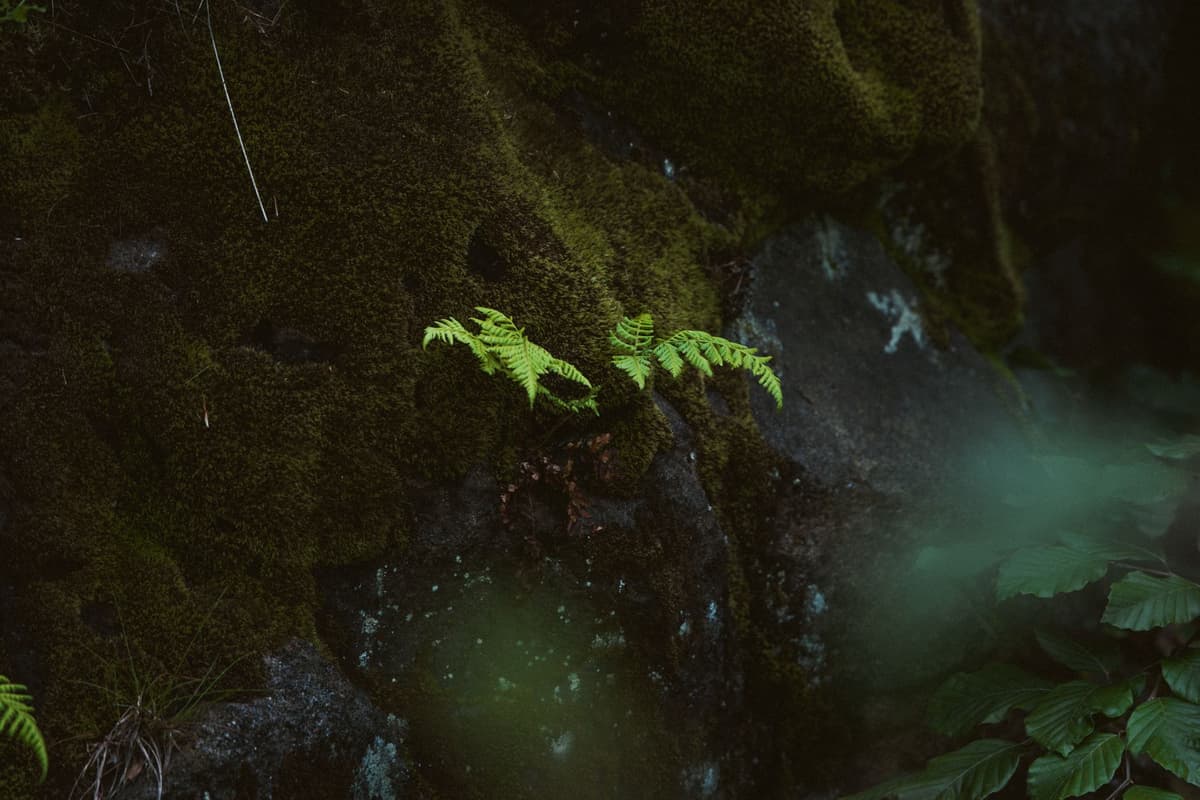
Photo by Jonas Horsch on Pexels
The Biodiversity Under the Glass
It isn't just about the plants we want to eat. I’ve been reading reports about how local wildlife is reacting to these corridors. In a landscape that has been flattened and gridded for industrial agriculture, a shaded canal is basically a five-star hotel for migratory birds and small mammals. It’s a protected highway. If you’re a kit fox or a burrowing owl, a covered canal offers a way to move through the heat without being baked alive or spotted by a hawk.
There is a specific kind of magic in the cooling effect of the water interacting with the underside of the panels. The panels stay cooler because of the water underneath them, which makes them about 3% more efficient at generating electricity. But the water also stays cooler, which reduces the growth of toxic algae. It’s a feedback loop where every player wins, and I have to wonder why it took us so long to realize that stacking our infrastructure was better than spreading it out until it bled.
The Architecture of the In-Between
We have a habit of building things that only do one thing. A road is for driving. A canal is for flowing. A solar farm is for power. But the solar canal is something else entirely—it’s an 'in-between' space. By utilizing the vertical space above the water, we are essentially reclaiming land without having to buy a single new acre. In a state where land use conflicts between farmers and environmentalists are legendary, finding 'free' space is like discovering a new continent.
I find myself thinking about the 19th-century engineers who dug these trenches. They were obsessed with gravity and flow rates. They never could have imagined that their dirt ditches would one day be topped with silicon wafers and silver traces to catch the sun. It makes me wonder what other 'single-use' infrastructure we have lying around that is just waiting for a second layer of purpose. Are we looking at our aqueducts the wrong way? Maybe they aren't just plumbing; maybe they're the spine of a new kind of mechanical forest.
What This Actually Means
This isn't just a clever engineering trick; it’s a shift in how we perceive the environment. For a century, we tried to dominate the climate of the West with brute force—more dams, deeper wells, bigger pumps. The solar canal approach is quieter. It’s about working with the physics of evaporation and the biology of shade. It suggests that the solution to a warming planet isn't just 'less carbon,' but 'smarter shadows.'
If this scales, we’re looking at a blueprint for the entire Southwest. We could be creating a network of 'cool corridors' that act as a safety net for local species while simultaneously stabilizing our power grid. It’s the first time in a long while that a massive infrastructure project feels like it’s adding something to the ecosystem rather than just taking a bite out of it. We are finally learning how to build things that breathe.
Quick Answers
Does this make the water harder to clean?
Actually, it makes it easier because the shade prevents the massive algae blooms that usually clog up the filters. You spend less on chemicals and more on actual water delivery.
Can the panels handle the humidity?
Modern marine-grade solar components are built for much saltier and wetter environments than a freshwater canal, so the hardware holds up surprisingly well.
Is it expensive to build over water?
It costs more upfront than sticking poles in the dirt, but when you factor in the $0 land cost and the massive savings from water conservation, the math starts to look very smart, very quickly.