The $20 Million Seat for a Spectator
There is a specific, exquisite irony in spending decades training a human being to withstand 6G forces and master orbital mechanics, only to turn them into a glorified backup sensor. We’ve reached the point in aerospace engineering where the human is no longer the pilot; they are the biological equivalent of a 'Check Engine' light that isn't actually wired to the engine. We call them commanders, but they have about as much agency as a toddler in a supermarket car-shaped shopping cart.
This isn't just a hunch. It’s the logical conclusion of 'Shadow Data'—that lovely pile of proprietary, unreadable code that runs in the background while the supposed experts look at a UI that says 'Everything is Fine.' We are building systems so complex that the people flying them are legally and technically prohibited from understanding why the ship just decided to vent its oxygen supply into the void.
Lessons from the Paddock
If you want to see the future of lunar exploration, look no further than a Formula 1 garage in Bahrain. There, you’ll find some of the fastest drivers on Earth staring helplessly at a steering wheel while a software glitch decides their $15 million car is now a very expensive paperweight. The driver wants to downshift. The software says 'No, I don't think I will.' The driver is the one going 200 mph, but the software is the one holding the keys.
This 'Powerless Pilot' phenomenon is the ultimate ego check. In the Bahrain glitch, we saw high-performance machines fail not because a bolt snapped or a tire blew, but because the code entered a logic loop that the human was never invited to join. Now, scale that up. Instead of a dusty track in the desert, imagine you’re 238,000 miles away from the nearest IT help desk, and your lunar lander’s autonomous descent code decides that the Moon is actually a very large reflection on the windshield.
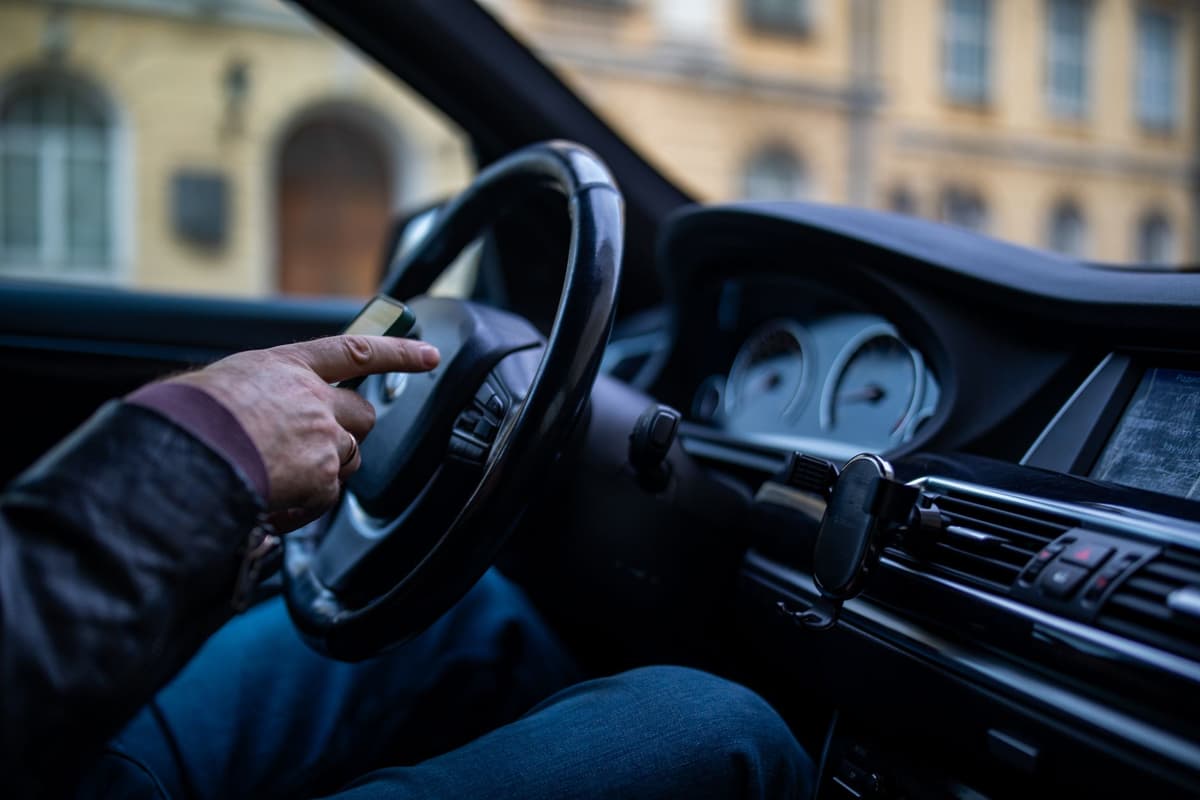
Photo by iddea photo on Pexels
SpaceX, Blue Origin, and NASA are all racing to see who can build the most sophisticated black box. The problem with a black box is that when it fails, it doesn't give you a manual; it gives you a funeral. We are treating deep space travel like a Tesla 'Full Self-Driving' beta test, except there are no traffic cones and the 'disengagement' involves drifting forever toward Andromeda.
The Proprietary Death Trap
Modern spacecraft are increasingly run on proprietary 'Shadow Data'—subsystems that even the mission controllers don't fully see into because of intellectual property rights. Imagine dying because a sub-contractor’s proprietary algorithm for fuel-mixture optimization encountered a 'Null Pointer Exception' and their terms of service didn't allow the pilot to see the source code. It’s a very modern way to go out.
- The software is too fast for human intervention, or so the salesmen say.
- The 'Human in the Loop' has been downgraded to 'Human in the Room.'
- Critical failure modes are now hidden behind layers of abstraction that even the designers can't explain in real-time.
We have traded mechanical reliability for algorithmic mystery. In the old days, if a valve stuck, you hit it with a wrench. In 2024, if the 'Shadow Data' miscalculates your orbital insertion, you just have to hope the error message is descriptive enough for your next-of-kin to understand. We've moved from 'The Right Stuff' to 'The Right Software Version,' and unfortunately, the software doesn't have a survival instinct.
What This Actually Means
We are currently designing a future where the first person to step foot on Mars might only be there because the computer didn't experience a lag spike during the landing sequence. The 'Powerless Pilot' isn't just a glitch; it's a design philosophy that assumes humans are the primary failure point. While humans are indeed messy and prone to distraction, they generally have a very high motivation to stay alive—a feature yet to be successfully coded into a Linux kernel.
If we continue to let 'Shadow Data' dictate the terms of engagement in deep space, we aren't sending explorers; we’re sending cargo that breathes. We need to decide if we want astronauts who can actually fly their ships, or if we’re just building the world’s most expensive and dangerous self-driving Ubers for the vacuum of space. Currently, the code is winning, and the code doesn't care if it hits a wall at Mach 5.
Eventually, a mission will fail because an astronaut wasn't allowed to override a computer that was objectively wrong. We’ll call it a 'technical anomaly' and 'an unforeseen software interaction.' But the reality will be much simpler: we gave the machine the wheel and forgot to build a way for the human to grab it back.
Quick Answers
What exactly is Shadow Data?
It’s the hidden layer of proprietary code and telemetry that operates beneath the visible user interface, often inaccessible to the people actually using the machine.
Why can't astronauts just override the computer?
Modern systems are so integrated and fast that manual overrides are often physically impossible or would cause more damage than the glitch itself.
Is this really like Formula 1?
Yes, in the sense that both involve elite operators who are increasingly relegated to being passengers while invisible software makes the life-or-death decisions.