A laboratory worker in Irkutsk died from bubonic plague earlier this month, leaving nearly 200 people under quarantine and forcing me down a strange rabbit hole. We usually treat national borders and landscapes as static backdrops, but Siberia is shifting beneath our feet, churning up medieval bacteria while geopolitical tensions keep the scientific world locked outside the fence. I find myself wondering where the line between a routine public health incident and an international security stalemate actually blurs.
Most people hear "plague" and assume a historic re-enactment gone wrong. Yet the Russian Anti-Plague Research Institute in Irkutsk, founded back in 1934, exists precisely because Yersinia pestis never left the steppes. It lives natively in local rodent populations across a sprawling geographic corridor known as the Central Asian Plague Belt. When you combine those endemic reservoirs with aging facilities and soil that refuses to stay frozen, biological reality begins to clash violently with modern statecraft.
The Architecture of Forgotten Cold Fronts
There is a peculiar dissonance in looking at how the Soviet Union mapped its biological defenses. Starting in the late 1920s, Moscow established a massive network of dedicated anti-plague stations stretching from the Black Sea all the way to the Pacific coast. These were not casual clinics. They were fortified outposts charged with monitoring everything from marmots to migrating birds across millions of square kilometers.
Decades later, many of these facilities exist in a strange limbo. Some received modern upgrades during cooperative international threat-reduction programs in the 1990s and early 2000s, but that era of mutual transparency is effectively dead. Today, Russia operates these remote outposts under tightening military secrecy, precisely when the terrain around them is becoming unpredictably volatile.
What happens when the early-warning network designed to catch outbreaks goes dark to the rest of the planet? You end up with a scenario where a single fatal accident in Irkutsk sends shockwaves through international biosecurity circles, not just out of epidemiological concern, but because nobody outside the perimeter can verify what strains are being handled or why containment slipped.
The Ground Is Literally Losing Its Memory
It is hard to wrap your head around the sheer scale of the Siberian permafrost. Roughly 65% of Russia’s landmass sits on ground that has historically remained permanently frozen. That permanence was a promise our ancestors took for granted, treating the tundra as a natural, unbreachable vault for biological history.
Now, that vault is leaking:
- The Arctic is warming at roughly four times the global average rate, turning centuries-old permafrost into unstable slurry.
- In 2016, an anthrax outbreak on the Yamal Peninsula killed a 12-year-old boy and tens of thousands of reindeer after thawing exposed a carcass buried during an epidemic in 1941.
- Researchers recently revived a 48,500-year-old amoeba-infecting pandoravirus from Siberian permafrost samples, demonstrating that microscopic pathogens survive deep-freeze conditions far longer than previously assumed.
- Industrial expansion across northern mining corridors continues to carve open undisturbed soil horizons that have been sealed since the Pleistocene.
I wonder whether our geopolitical instincts are totally ill-equipped for this kind of challenge. Diplomacy operates on the assumption that power belongs to whoever holds territory. But what happens when the territory itself becomes a vector for biological surprises that neither side can reliably control?
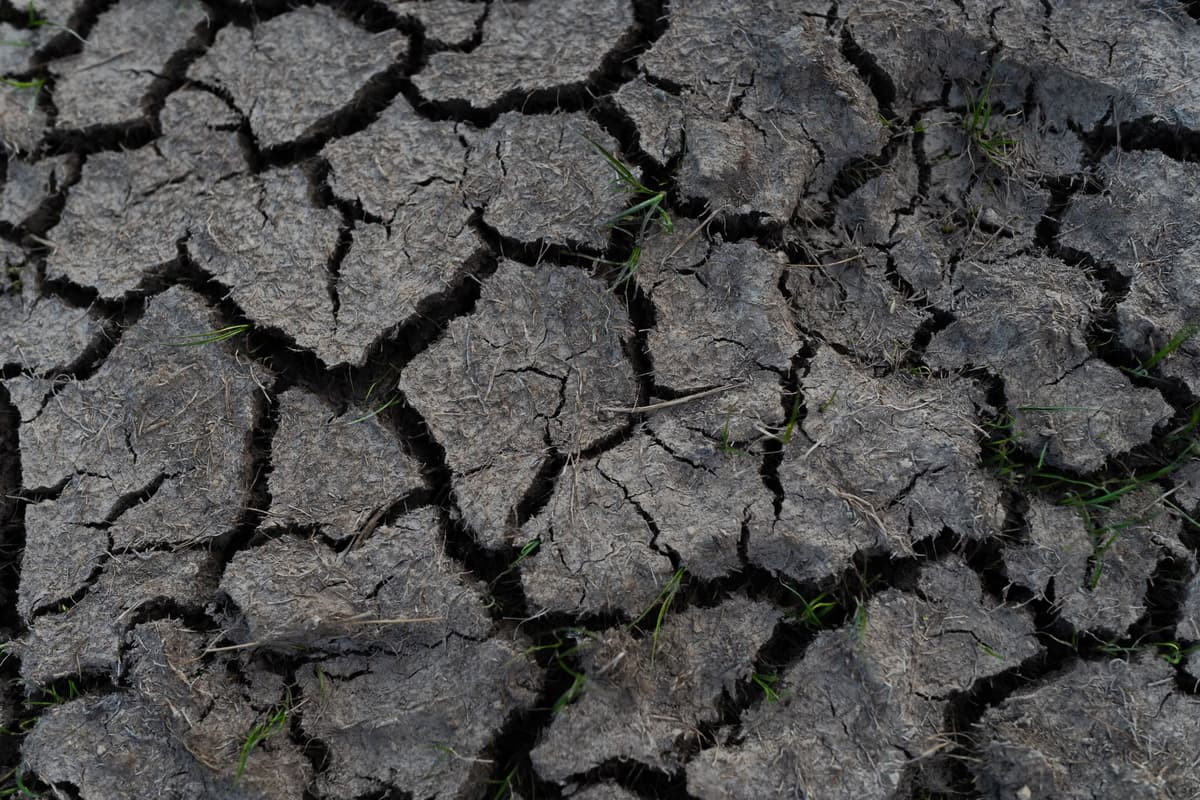
Photo by Dmitriy Piskarev on Pexels
When Public Health Becomes a Spy Novel
Biological monitoring relies on open datasets, genetic sequencing exchanges, and cross-border contact tracing. Yet the Arctic Council's scientific working groups have seen severe disruptions since 2022, effectively cleaving polar research down the middle. One half belongs to NATO allies, while the other half sits inside a Russian state that views independent biological data collection with deep suspicion.
This creates an eerie strategic calculus. If a Siberian lab experiences an accidental exposure or discovers a novel pathogen emerging from thawed soil, reporting that data into international registries is no longer treated as neutral scientific stewardship. In the eyes of modern state intelligence, announcing an outbreak looks like broadcasting a domestic vulnerability.
Conversely, keeping it quiet feeds foreign accusations of clandestine bioweapons research. The result is a dangerous feedback loop where routine laboratory accidents take on the paranoia of covert operations, and legitimate natural health threats get weaponized into diplomatic bargaining chips.
What This Actually Means
The real problem is that bacteria do not care about national sovereignty or diplomatic boycotts. The Siberian permafrost is not just melting; it is quietly democratizing danger, redistributing biological risks across international borders while human institutions become more tribal and isolated than they have been in half a century.
Watching the events in Irkutsk, it strikes me that our modern global architecture was built to handle deliberate actors with obvious motives. We know how to draft treaties about missiles, sanctions, and trade routes. We have virtually no functional framework for managing mutual biological exposure across hostile geopolitical blocs when the catalyst is a warming marshland.
If we continue to treat biological transparency as an optional luxury of peacetime diplomacy, we are going to find out the hard way that nature keeps its own ledger. You can ignore an opposing nation’s diplomatic communiques, but you cannot issue an economic sanction against an exposed pocket of soil.
Quick Answers
Is the bubonic plague actually coming back on a global scale?
No, plague remains treatable with common antibiotics like streptomycin and doxycycline if detected early. The primary risk is localized outbreaks and accidental occupational exposures in research settings.
Can ancient "zombie" viruses actually infect modern humans?
Most pathogens revived from permafrost by researchers specifically target amoebas or primitive single-celled organisms, not mammals. However, dormant bacteria with spore-forming capabilities, such as Bacillus anthracis, pose documented, real-world infection risks to humans and livestock.
Why are these specialized plague research labs still operating in Siberia?
Because Yersinia pestis is naturally endemic to wild rodents throughout Central Asia and southern Siberia. These labs monitor wild populations continuously to prevent the bacteria from jumping into pastoral communities and domestic animal herds.