The Highest Form of Flattery
There is no greater compliment the United States government can pay a software company than calling it a threat to national sovereignty. Forget the Forbes 30 Under 30 lists or the glowing TechCrunch profiles. You haven't truly arrived in the Valley until a three-judge panel decides your model weights are functionally equivalent to a shipment of enriched uranium. Anthropic, the company that sells itself as the 'safe and constitutional' AI lab, has been legally cemented as a critical vulnerability in the American infrastructure. It is a beautiful irony that the more you try to be the responsible adult in the room, the more the government treats you like a suitcase full of unlicensed fireworks.
This ruling confirms that we have officially moved past the 'move fast and break things' era of AI and entered the 'exist as a pawn in a global chess match' era. If you were hoping for a future where LLMs were just helpful tools for summarizing emails you didn't want to read, I have some bad news. You are now interacting with a strategic utility. Every time you ask Claude to write a Python script, you are technically engaging with a piece of infrastructure that the Department of Commerce views with the same squinty-eyed suspicion it reserves for foreign-made telecommunications switches.
Just Another Brick in the Wall
Labeling a software developer as a supply chain risk is a masterclass in bureaucratic rebranding. We used to call this 'exporting code,' but that sounds far too benign for the 2024 vibe. By categorizing Anthropic under the same umbrella as semiconductor foundries, the legal system is admitting that it has no idea how to regulate math, so it is simply going to regulate the delivery of that math as if it were a physical shipment of steel beams. It is a desperate, clunky attempt to apply 20th-century trade laws to a file that can be duplicated a billion times for the cost of a few kilowatt-hours.
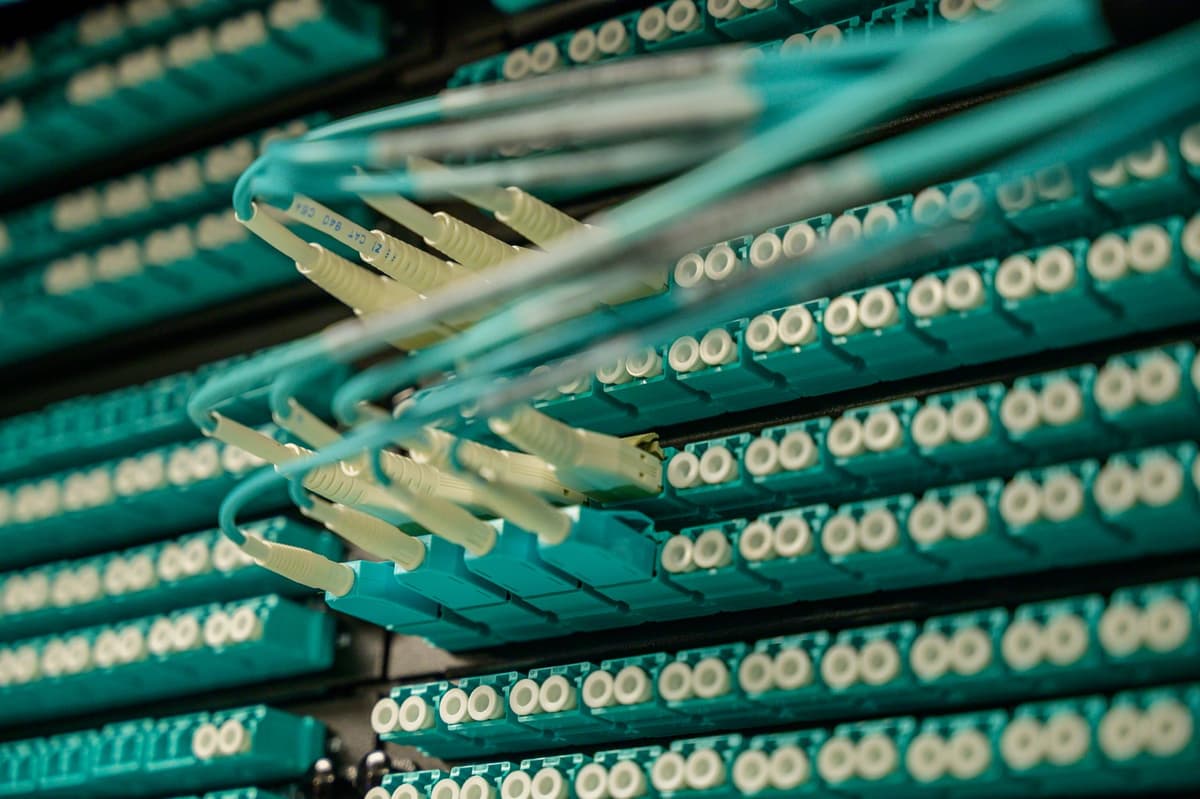
Photo by Brett Sayles on Pexels
Imagine being a developer at Anthropic. You spent years obsessing over RLHF and constitutional AI principles so your chatbot wouldn't tell people how to build a bomb out of household cleaners. Your reward? The government has decided that your entire company is a structural weakness in the American empire. It’s like being told your lemonade stand is actually a front for a rogue central bank. The level of self-importance this must give the C-suite is immeasurable. They aren't just selling a subscription service; they are guarding the digital gates of the Republic.
- The court didn't just look at the code; they looked at the potential for 'foreign adversary exploitation.'
- This sets a precedent where any model over a certain parameter count is essentially a munitions grade asset.
- If you thought the cloud was decentralized, wait until the government starts treating every server rack like a missile silo.
The Geopolitical Sandbox is Full of Spite
We are currently watching the slow-motion collision of the open-source ethos and the 'Fortress America' mentality. The court's decision reinforces the idea that model weights are not just intellectual property; they are a form of soft power that must be hoarded like spice on Arrakis. By upholding this designation, the judiciary is signaling that the era of the borderless internet is dead. It has been replaced by a series of 'trusted' and 'untrusted' silos, where your worth as a company is determined by how easily the state can pull your plug in the name of stability.
This is great news for anyone who loves paperwork. Now, every partnership, every international server deployment, and every high-level hire at these labs will be filtered through the lens of 'is this a supply chain vulnerability?' We are building a world where the most innovative software on the planet is subjected to the same nimble, fast-moving oversight as a bridge construction project in a local municipality. It’s a bold strategy for maintaining a competitive edge in a field that moves at the speed of light.
What This Actually Means
What this actually means is that the 'Software as a Service' (SaaS) dream is over for AI, and 'Software as a Strategic Liability' has taken its place. Anthropic is no longer just a company; it is a component. When the government looks at the 'supply chain,' they see a line that starts at a TSMC cleanroom in Taiwan and ends at a developer’s keyboard in San Francisco. If any part of that line looks a bit too blurry, they’re going to draw a circle around it in red ink.
This ruling is a warning shot to every other lab that thinks they are just building cool tech. You are building the new power grid, the new water supply, and the new nervous system of the economy. And the people in charge of the old versions of those things are very, very nervous about who has the keys. If you want to play in the big leagues of AI, you have to accept that the State is now your most demanding, paranoid, and litigious board member.
Ultimately, we are treating intelligence—even the artificial kind—as a commodity to be stockpiled and guarded. It’s a cynical, narrow view of human achievement, but it’s the only one the legal system knows how to process. Welcome to the sandbox, Anthropic. Try not to let anyone steal your shovel.
Quick Answers
Is Anthropic actually a danger to the country?
Only in the sense that any tool capable of high-level reasoning is a 'risk' to people who prefer a predictable, easily controlled population.
Will this change how I use Claude?
Not immediately, unless you were planning on running your prompts from a banned subsea cable or a sanctioned server farm in a basement in Vladivostok.
Does this mean AI is now a utility?
Legally, yes. It has been promoted from 'fun toy' to 'essential infrastructure,' which mostly just means more lawyers and fewer features.