The Weight of a Digital Brain
I’ve spent a lot of time thinking about why we assume intelligence requires a massive server farm in Northern Virginia to function. We’ve been conditioned to believe that for an AI to be 'smart'—especially medically smart—it needs trillions of parameters and a cooling system that could chill a small city. But what happens when you’re in a rural clinic in sub-Saharan Africa or an emergency tent after a hurricane, and the cloud is effectively a million miles away?
There is a quiet, almost subversive movement happening right now where developers are stripping away the bloat. They are taking clinical reasoning—the kind of logic that usually lives in a 175-billion-parameter beast—and folding it down like digital origami until it fits into a device that costs fifty bucks and runs on a battery. It makes me wonder if the true future of medicine isn't a giant 'God-brain' in the sky, but a million tiny, specialized spirits living in our pockets.
The Magic of the Browser-Native Pivot
Last year, we saw the first real proof that you could run a decent language model entirely within a web browser using WebGPU. It was a parlor trick at first—making a cat write a poem without hitting a server. But the medical community looked at that and saw a lifeline. If a browser can do it, a cheap bedside monitor can do it, too.
These MicroLLMs aren't trying to pass the Bar exam or write screenplays. They are being pruned with surgical precision to do one thing: clinical decision support. By focusing solely on diagnostic patterns and triage protocols, developers are creating models under 1 billion parameters that punch way above their weight class.
- No latency because the data never leaves the room.
- Zero privacy risk because there is no 'cloud' to hack.
- Operational stability in 'austere environments' where electricity is a luxury.
It’s a strange reversal of the tech trend. Usually, we want things more connected. Here, the breakthrough is the ability to be completely, safely alone.
Pruning the Logic Tree
How do you actually shrink a medical brain without lobotomizing it? The process of 'quantization' and 'distillation' sounds like something out of a chemistry lab, but it’s really about finding the most efficient path to a correct answer. If a massive model uses 16 bits of data to represent a single weight, these micro-models might use 4 bits, or even 2.
Photo by George Becker on Pexels
I’m curious about where the floor is. At what point does a model become too small to be safe? Current research suggests that for specific tasks—like analyzing an ultrasound or suggesting a drug dosage based on weight and age—these tiny models are hitting 90% accuracy compared to their cloud-based cousins. When you’re in a location where the alternative is 0% accuracy because there’s no doctor available, that 90% looks like a miracle.
We are essentially witnessing the birth of the 'Clinical Edge.' It’s the idea that the hardware itself possesses the expertise. You don't buy a tool that connects to a service; you buy a tool that is the service. It reminds me of the early days of handheld calculators—suddenly, you didn't need a room-sized computer to do trigonometry. You just needed two AA batteries.
What This Actually Means
This shift away from the cloud solves the one problem that has kept AI out of the world’s most vulnerable clinics: trust. It’s hard to trust a system that might stop working if a backhoe hits a fiber optic cable five towns away. By putting the intelligence directly on the device, we’re handing the power back to the person standing at the bedside.
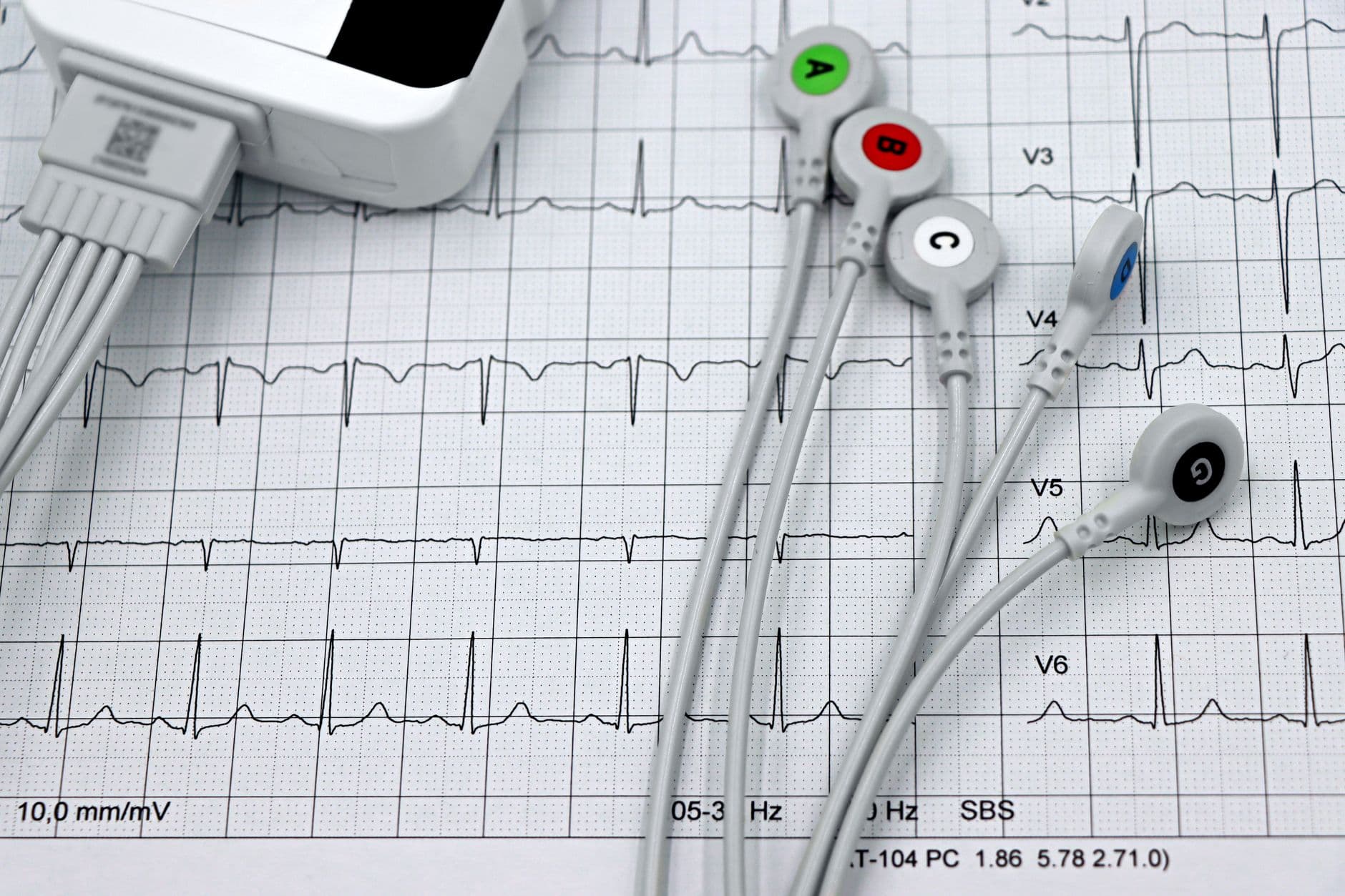
I think we’re going to look back at the era of 'Cloud-AI-Everything' as a weird, centralized fever dream. The real revolution isn't going to be a chatbot that can simulate a conversation with a dead philosopher. It’s going to be a $200 diagnostic tool that works in a basement during a blackout and tells a nurse exactly what's wrong with a patient's heart.
We’re finally learning that intelligence doesn't have to be loud or large to be profound. Sometimes, the most important thoughts are the ones that can happen in the palm of your hand, completely off the grid, right when they are needed most.
Quick Answers
Is a tiny model as smart as GPT-4?
No, and it doesn't need to be. It’s a specialist tool designed to follow medical protocols, not a general-purpose brain that knows history and pop culture.
Does this mean doctors are being replaced?
Hardly. It means the person providing care—whether a doctor, nurse, or community health worker—has a high-level consultant in their pocket when they can't call for backup.
What about data privacy?
This is the biggest win. Since the data never leaves the device and never touches the internet, the risk of a massive medical data breach is effectively zero.