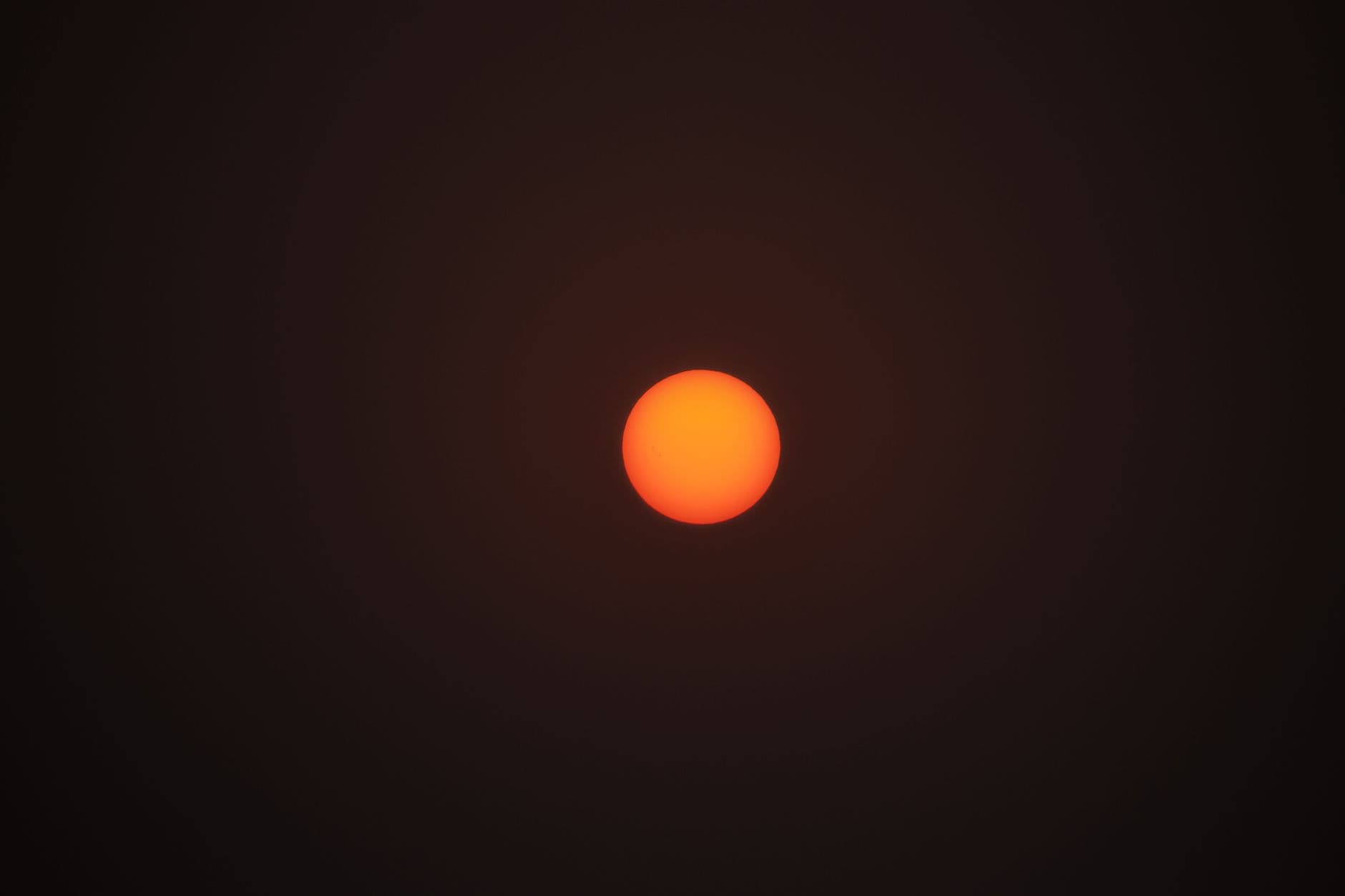
The Upside Down Physics of Our Star
Imagine walking away from a roaring campfire and feeling the air get significantly hotter the further you get. You back up ten feet, and suddenly your eyebrows singe. You back up fifty feet, and the air is ten times hotter than the flames themselves. This defies every intuition we have about thermodynamics, yet this is exactly what is happening with the Sun. The surface, the photosphere, sits at a relatively balmy 5,500 degrees Celsius, but the corona—the outer atmosphere—somehow screams up to 2 million degrees.
We’ve spent sixty years building elegant mathematical models to explain this, mostly involving 'nanoflares' or magnetic waves that shake energy into the atmosphere like a rug being snapped. It felt settled. We had the textbooks printed. But then we actually went there. The Parker Solar Probe, a $1.5 billion piece of machinery currently screaming through the solar outskirts at 394,000 miles per hour, is sending back data that doesn't just tweak our theories—it sets them on fire.
What’s fascinating isn't just that we’re wrong; it’s how wrong we might be. We are finding 'switchbacks'—violent S-shaped kinks in the magnetic field—that appear out of nowhere. These aren't just ripples; they are massive redirections of energy that our old models didn't account for. It makes me wonder if we’ve been looking at the Sun as a steady engine when it’s actually a chaotic, recursive explosion that we only perceive as stable because of the sheer scale of the distance.
The Problem With Being Too Close
For a long time, our understanding of the Sun was based on looking at it through the equivalent of a very long, very blurry straw. We could see the light, measure the spectrum, and guess at the mechanics. But the Solar Orbiter and Parker are finally giving us the 'macro' and 'micro' views simultaneously. What they’re finding is that the transition region—that thin layer where the temperature suddenly spikes—isn't a smooth gradient. It’s a mess of tiny, camp-fire sized brightenings that shouldn't be able to power a whole atmosphere.
Photo by Nothing Ahead on Pexels
If the corona is heated by these tiny 'campfires' discovered by the Solar Orbiter in 2020, the math still doesn't quite add up to the millions of degrees we observe. There is a missing variable in the equation of how energy moves through plasma. It’s a humbling realization. We can map the human genome and land rovers on Mars, but we are struggling to explain the thermal behavior of the most obvious object in our neighborhood.
I find myself thinking about the 'structural flaws' scientists are starting to mention. Usually, in physics, a structural flaw means you’re missing a fundamental force or a behavior of matter. Are we misinterpreting how magnetic fields interact with plasma at these densities? Or are we missing something even more basic about how gravity and heat exchange work in a vacuum? The data is coming in faster than the theorists can rewrite the scripts.
Why This Frustration Is Actually a Gift
Science is at its most exciting when it’s failing. A theory that works perfectly is a dead end; it’s a closed book. But a theory that fails under the gaze of a new telescope is an invitation. The 'Coronal Heating' crisis is essentially a giant 'Help Wanted' sign for the next generation of physicists. We are seeing things like 'magnetic reconnection' happening at scales and frequencies we never predicted.
- The Sun loses about 1.5 million tons of material every second via solar wind.
- The corona is roughly 200 to 500 times hotter than the surface below it.
- Parker Solar Probe will eventually get within 3.8 million miles of the 'surface'—closer than any spacecraft in history.
Every time the probe completes a perihelion, it dips into the corona and essentially 'touches' the mystery. We’re finding that the solar wind isn't a steady breeze but a series of explosive squalls. If we can't predict the heat, we can't perfectly predict the solar storms that threaten our GPS satellites and power grids. This isn't just an academic debate about hot gas; it's a quest to understand the temperamental engine that allows us to exist.
What This Actually Means
This 'crisis' in solar physics is a reminder that proximity changes everything. We thought we knew the Sun because we’ve been staring at it for thousands of years, but we were only seeing the skin. Now that we’re feeling the heat, we realize the internal combustion is way more complex than a simple ball of fusing hydrogen. It suggests that our understanding of plasma—which makes up 99% of the visible universe—is still in its infancy.
If we’ve been this wrong about the star right next door, imagine the errors baked into our models of distant quasars or black hole accretion disks. It’s a beautiful kind of ignorance. We are learning that the universe is less like a clockwork machine and more like a living, turbulent ocean that refuses to be simplified into a few clean lines of calculus.
We aren't just watching a star; we are watching our own certainty dissolve. And honestly? That’s exactly where the best discoveries start. We are finally asking the right questions because the old answers have stopped making sense.
Quick Answers
Is the Sun actually cooling down?
No, the core is still a blistering 15 million degrees Celsius; the mystery is why the outermost layer is so much hotter than the visible surface layers in between.
Why does this matter to non-scientists?
Understanding the corona is the key to predicting solar flares, which can fry our electrical grids and knock out the internet globally if a big one hits unannounced.
When will we have a new model?
Scientists are currently stitching together data from the Parker Solar Probe's 2024-2025 flybys, which should provide the most definitive look at these 'switchbacks' yet.