The Weaponization of the Dopamine Loop
Transit agencies have discovered that it is significantly cheaper to manipulate human psychology than it is to fix a crumbling rail bed. Across major metropolises, we are seeing the rise of 'Transit Rewards' programs—digital interfaces that award points, badges, and micro-discounts for commuting during off-peak hours or choosing specific routes. On the surface, this looks like modern customer engagement. In reality, it is a sophisticated form of social engineering designed to mask the catastrophic failure of urban capacity.
When an agency nudges you to take a bus at 6:15 AM instead of 8:00 AM through a push notification and a promise of a 'Early Bird' digital badge, they aren't providing a service. They are offloading the burden of their own inefficiency onto your personal schedule. It is a subtle admission that the infrastructure cannot handle the population it was built to serve. Instead of adding more trains, they are asking you to rewire your life for the sake of their load-balancing algorithms.
This shift represents a fundamental change in the social contract of public movement. We are moving away from a model where the city provides a reliable utility and toward one where the citizen is a variable to be optimized. If you can be incentivized to wait on a freezing platform for twenty minutes in exchange for a twenty-cent credit, the agency has successfully monetized your patience.
The Data Harvest Behind the Badge
These gamified systems are not closed loops; they are massive data extraction funnels. To participate in a rewards program, a commuter must opt into granular tracking that monitors every entrance, exit, and dwell time. In 2023, data-driven 'nudging' became a billion-dollar industry within the public sector, yet the privacy implications remain largely unaddressed. By turning your commute into a game, agencies gain access to a longitudinal map of your life that would be otherwise inaccessible.
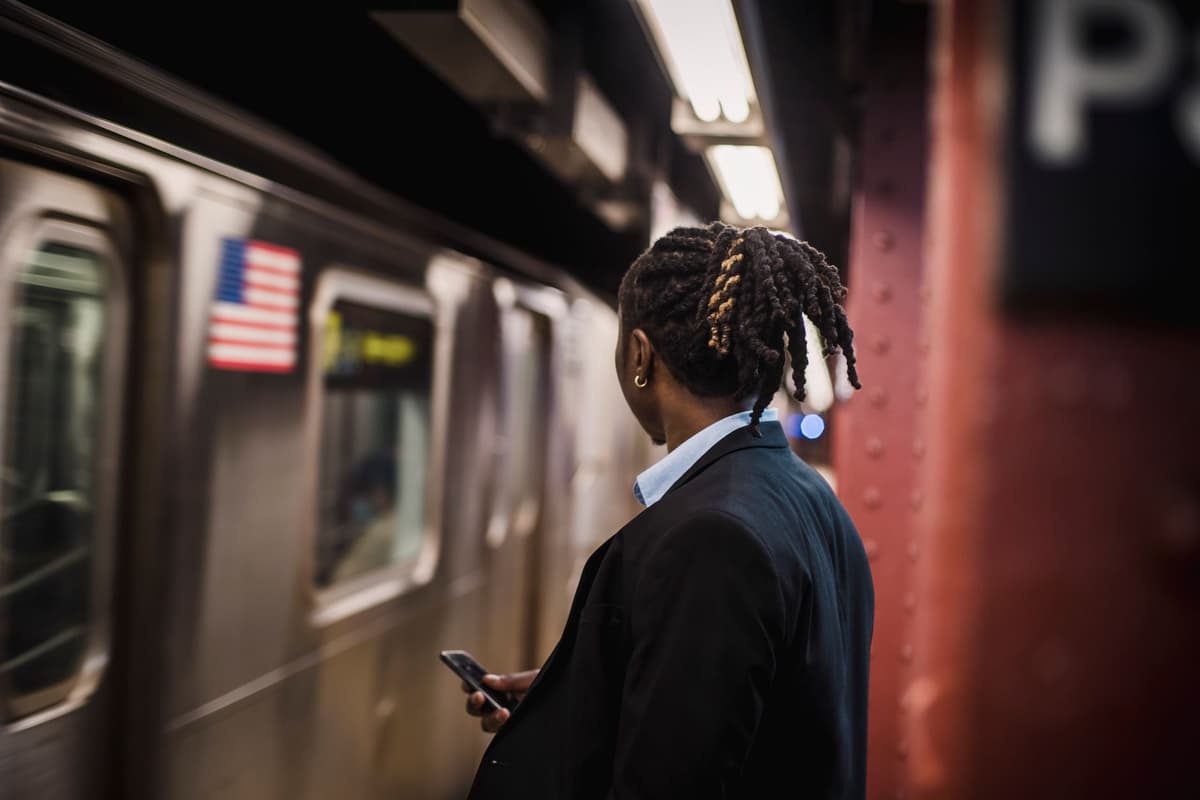
Photo by Ketut Subiyanto on Pexels
This data is rarely used to improve the rider experience in a meaningful way. Instead, it is used to refine the nudge. If the data shows that a specific demographic is resistant to off-peak travel, the algorithm adjusts the reward threshold. This is a feedback loop where the citizen's behavior is the product. We are seeing the 'Uber-ization' of public transit, where dynamic pricing and psychological triggers replace the steady, predictable heartbeat of a municipal schedule.
Furthermore, these systems create a two-tiered class of commuters. Those with the flexibility to chase rewards—the 'laptop class' who can shift their start times—benefit from the crumbs of the system. The essential workers, tied to strict clock-in times, are penalized by the very congestion these systems fail to solve. It is a regressive tax hidden behind a colorful user interface.
Masking the Infrastructure Deficit
In the United States alone, the transit maintenance backlog has ballooned to over $176 billion. While bridges rust and signaling systems from the 1940s fail, agencies are spending millions on 'innovation labs' to develop apps that tell you you're a 'Diamond Rider.' This is a dangerous diversion of focus and funds. A digital reward does not make a train move faster, nor does it make a station safer.
- Gamification creates a false sense of progress while physical assets continue to depreciate.
- It shifts the blame for congestion from the provider to the individual consumer.
- It prioritizes short-term behavioral shifts over long-term civil engineering solutions.
When we celebrate a 5% shift in peak-hour traffic due to a rewards program, we are ignoring the fact that the peak-hour capacity should have been expanded a decade ago. We are treating the symptoms of urban decline with the digital equivalent of a sugar pill. The more we rely on these psychological crutches, the less political will there is to do the hard, expensive work of pouring concrete and laying steel.
What This Actually Means
The gamification of public movement is the final frontier of the attention economy. By turning the act of getting from point A to point B into a competitive loop, we are surrendering the last remnants of our unmonitored public life. We must recognize that a 'reward' for taking a less convenient route is not a benefit; it is a bribe to accept a lower standard of living.
True transit success is invisible. It is a train that arrives every four minutes, regardless of whether you have an app installed. It is a bus that has its own lane, ensuring that a person's time is respected by design, not by incentive. If a city requires a psychological nudge to make its services palatable, those services have already failed. We should demand infrastructure that works, not a game that makes us forget it doesn't.
We are currently at a crossroads where we can either invest in the physical reality of our cities or retreat further into digital simulations of efficiency. If we choose the latter, we will find ourselves in a world where the trains are still late, but at least we’ll have the digital trophies to prove we were there to see it happen.
Quick Answers
Is gamification actually helping reduce transit crowds?
It provides a temporary, superficial fix by shifting a small percentage of flexible users, but it does nothing to increase the total capacity or reliability of the system.
Why is this considered a 'trap' for the commuter?
It forces the individual to trade their personal data and schedule flexibility for minor financial incentives that mask the agency's failure to provide adequate service.
Should we get rid of transit apps entirely?
Apps should be tools for information and payment, not platforms for behavioral manipulation; the focus must return to the utility of the transit itself, not the 'experience' of the interface.