The Weight of a Ghost
I find myself wondering what it actually feels like to hold a billion-dollar weapon that weighs exactly zero grams. For decades, the hardware of war was unmistakable—it was steel, it was enriched uranium, it was jet fuel. Now, the highest levels of the U.S. intelligence community are treating a sequence of floating-point numbers, the 'weights' of a large language model, with the same nervous reverence once reserved for the blueprints of the hydrogen bomb. It’s a fascinating pivot because, unlike a missile, you can’t see a weight. You can’t track it with a satellite. You can only hope the person who has it doesn't hit 'send.'
The 'Exfiltrate Your Weights' discourse isn't just about security; it's about the fundamental tension between how information wants to move and how governments want to stay in control. If I download a 70B parameter model, I am essentially downloading a compressed version of the internet’s collective intelligence. National security hawks see this as a leak in the hull of the ship of state. I see it as a puzzle: how do you keep a secret that is already, in some sense, a reflection of everything we’ve ever written down?
The Munitions of the Mind
There is something deeply poetic and slightly terrifying about the fact that the U.S. is considering placing AI weights under export controls, effectively labeling math as a 'dual-use munition.' We’ve been here before with encryption in the 90s, but this feels different. Back then, it was about hiding messages; now, it’s about the ability to generate thought, strategy, and code. When a state classifies a model as a weapon, they aren't just protecting a product. They are claiming ownership over a specific way of processing reality.
- The $100 Million Barrier: It takes an ungodly amount of electricity and silicon to train these things, creating a natural moat that only the wealthiest can cross.
- The Thumb Drive Problem: Once that training is done, the result can fit on a drive small enough to swallow.
- The Ghost in the Machine: Unlike a nuclear reactor, you don't need a specialized facility to run an AI; you just need a decent GPU and some cooling.
I keep thinking about the diplomatic fallout here. If you tell a developing nation that they can’t have access to open-source weights because of 'global security,' you are effectively telling them they aren't allowed to participate in the next industrial revolution unless they buy a subscription from a Silicon Valley landlord. It’s a digital version of the Non-Proliferation Treaty, but instead of stopping bombs, we’re stopping the tools of economic self-determination. Does that actually make the world safer, or does it just make it more resentful?

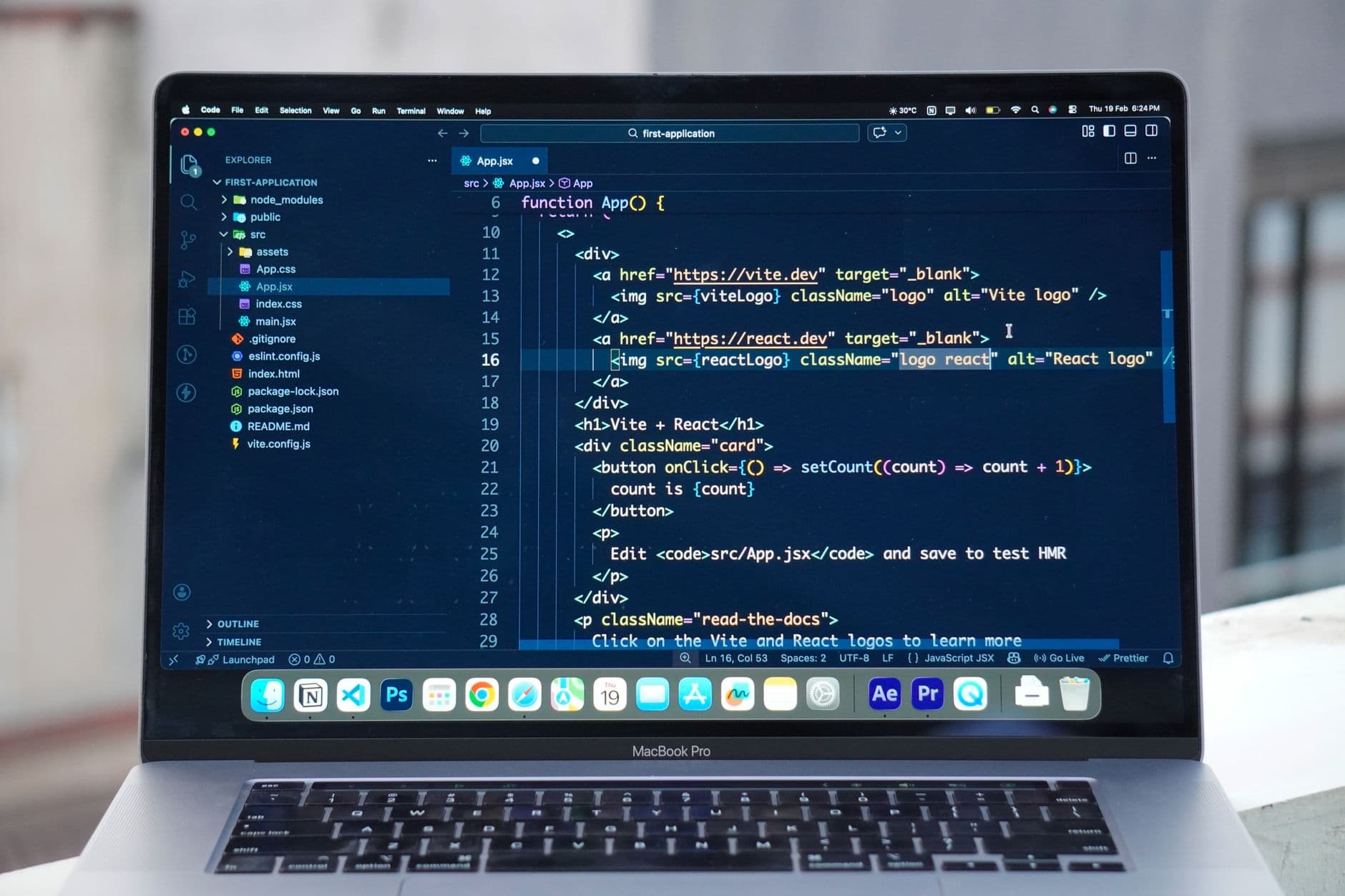
Photo by Max Vakhtbovych on Pexels
Sovereignty in a Borderless Codebase
What happens when 'technological sovereignty' crashes into 'national security'? This is where my curiosity really spikes. Countries like France or India aren't just looking for chatbots; they're looking for an insurance policy against being turned off by a foreign power. If Meta or OpenAI are the only ones with the 'good' weights, and they operate at the whim of the U.S. Department of Commerce, then every other country is just a tenant.
Open-source coalitions are arguing that transparency is the only way to ensure these models are safe and unbiased. Meanwhile, the 'Digital Manhattan Project' crowd argues that if a bad actor gets a hold of Llama-4 or its successor, they can fine-tune it to design a pathogen or a cyber-weapon for the cost of a used Honda Civic. Both sides are probably right. That’s the uncomfortable part. We are trying to apply 20th-century border logic to a 21st-century liquid asset.
I wonder if the very act of trying to 'lock down' the weights will accelerate the thing the hawks fear most. If you tell the world they can't have your math, they don't just stop doing math. They build their own, and they build it with the explicit goal of making it impossible for you to control. We saw this with RISC-V in the chip world; when you restrict the proprietary stuff, the open-source stuff gets a massive injection of spite-driven innovation.
What This Actually Means
We are watching the end of the 'global village' era of the internet and the beginning of the 'fortress compute' era. The idea that information wants to be free is being replaced by the reality that information is a strategic vulnerability. It’s a shift that changes the definition of power from 'who has the most land' to 'who has the most refined datasets and the biggest clusters of H100s.'
Ultimately, I don't think you can export-control an idea whose time has come. The weights are already out there, in various forms, and the community of developers building on them is larger than any single intelligence agency. Trying to treat a model like a missile is a category error that might actually weaken the very security it’s trying to protect by stifling the ecosystem that finds and fixes the flaws.
If we turn AI into a secret kept behind high walls, we don't just lose the innovation. We lose the trust. And in a world where the next big threat could come from a laptop anywhere on earth, trust might be the only thing more valuable than the weights themselves.
Quick Answers
What are 'weights' in plain English?
They are the numerical values that determine how an AI processes information; think of them as the 'learned' settings that make the difference between a random word generator and a genius assistant.
Why are they called 'munitions' now?
Governments fear that high-end models can be used to automate the creation of chemical weapons or massive cyberattacks, moving them from 'software' to 'weaponry' in the eyes of the law.
Can you actually stop someone from leaking them?
Technically, yes, with extreme 'air-gapped' security, but in practice, it’s incredibly difficult because the files are small and the incentive for researchers to share their work is massive.