The Glottal Stop and the Ego
I’ve been thinking about the sheer amount of mental calories we burn trying to decide if we should say 'a historic event' or 'an historic event.' On the surface, it’s a simple rule of phonetics: use 'an' before a vowel sound to keep the breath moving. But 'historic' starts with a hard H, at least in most modern dialects, which means that using 'an' requires you to intentionally drop the consonant or perform a weird, breathy vocal gymnastics routine. It feels less like a rule of grammar and more like a secret handshake.
Why do we do this? If the goal of language is the efficient transfer of information from my brain to yours, 'a historic' wins every time. It’s cleaner. It matches the way we actually speak. Yet, you’ll still find people who insist on 'an,' often with a certain tilt of the chin that suggests they’ve spent a lot of time in libraries. It makes me wonder if we aren't actually looking for clarity at all, but rather looking for a way to signal that we know the 'old ways' of the elite.
A History of Soft Breaths
To understand why we’re even having this fight, you have to look back at how the English 'H' has been bullied over the centuries. In the 18th century, many words borrowed from French—like hospital, hotel, and herb—had silent initials. Back then, 'an hotel' wasn't a pretension; it was a phonetic necessity because the 'H' wasn't there to block the way. Over time, we started pronouncing those H-sounds again, but the 'an' lingered like a ghost in the machine of our grammar books.
- 1791: John Walker’s Critical Pronouncing Dictionary notes that the 'h' in 'humble' is silent, making 'an humble' the standard.
- Late 1800s: The 'H' begins its comeback in middle-class speech as a way to distinguish 'proper' English from Cockney accents that dropped 'H's everywhere.
- Today: Most of us pronounce the 'H' in 'historic,' yet the 'an' remains a prestigious holdover in formal writing and broadcasting.
It’s fascinating that we’ve kept the 'an' while bringing back the 'H.' It creates a phonetic collision—a 'glottal stop'—where you have to physically choke off your breath to make the transition. We are literally choosing to make speaking more difficult. It’s the linguistic equivalent of wearing a corset: it’s uncomfortable, it restricts your breathing, but it tells everyone you can afford to prioritize form over function.
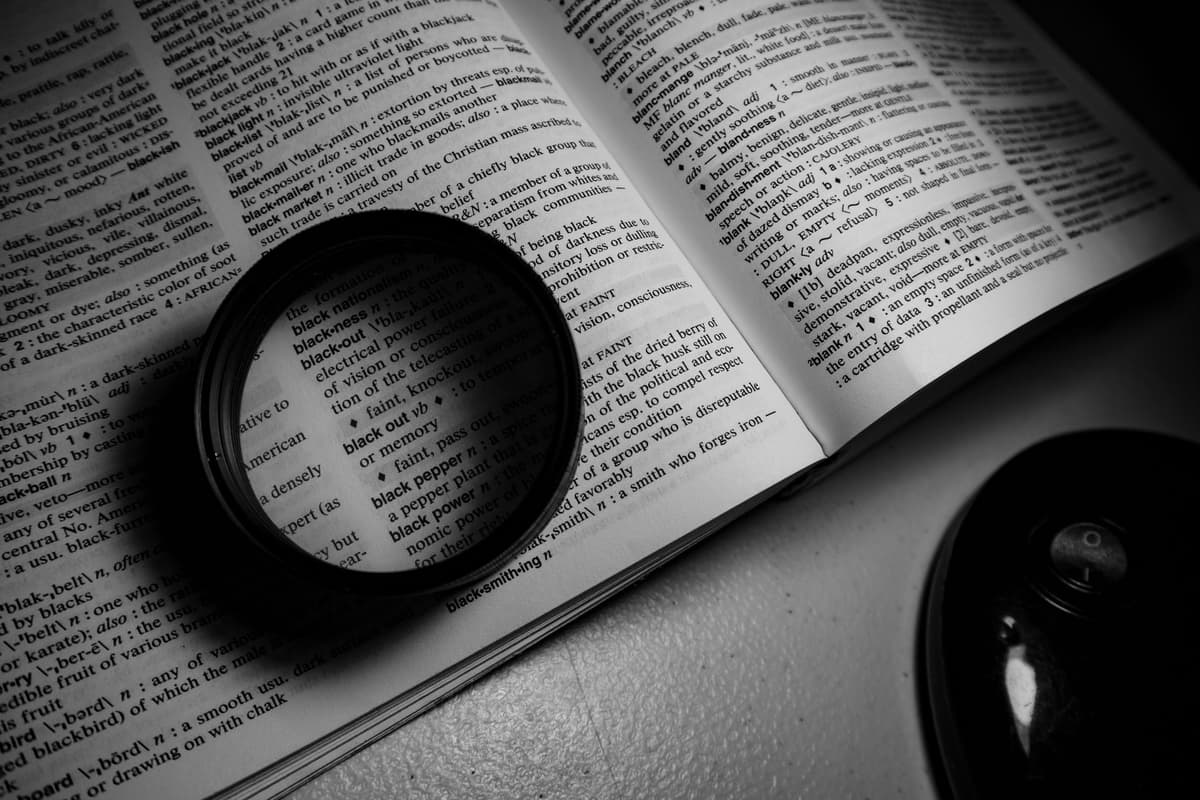
Photo by Nothing Ahead on Pexels
The Gatekeeper in the Brain
I wonder if this 'spiteful pedantry' is actually a hardwired human quirk. We love a barrier to entry. If everyone can speak 'correctly' just by following their natural intuition, then 'correctness' loses its value as a social marker. By maintaining rules that feel slightly counter-intuitive, we create a way to identify who has been 'properly' educated and who hasn't. It's a subtle form of gatekeeping that happens in the milliseconds between words.
When someone corrects you from 'a' to 'an' (or vice versa), they aren't usually trying to help you be understood. No one has ever heard 'a historic' and thought, "I have no idea what this person is saying." The correction is about the speaker, not the listener. It’s an assertion of authority. It’s a way of saying, "I am the kind of person who knows the exception to the rule, and you are the kind of person who just follows your ears."
But what if we looked at it differently? What if this isn't just about snobbery, but about a genuine human love for ritual? We like the 'an historic' because it sounds 'important.' It has a weight to it. It signals to the listener that what follows is a big deal. We’re willing to endure the vocal friction because it acts as a flourish—a verbal underline that says, "Pay attention, this part matters."
What This Actually Means
Ultimately, the 'a' vs. 'an' debate reveals that language is never just about words; it’s about the hierarchy of the people speaking them. We are a species that thrives on distinction. We find ways to turn the simplest phonetic transitions into tests of character and class. If we can’t find a way to distinguish ourselves through what we say, we’ll find a way to do it through how we breathe between the words.
I don't think we'll ever stop being pedantic about this. Even as our language becomes more casual and our communication more digital, we’ll find new 'H-words' to fight over. There’s something deeply human about wanting to be 'right' in a way that makes someone else 'wrong.' It’s not about the grammar; it’s about the feeling of being in the club.
Next time you hear someone insist on 'an historic,' don't just roll your eyes. Look at the effort it takes them to say it. There is a strange beauty in that unnecessary exertion. It’s a tiny, breathy monument to our obsession with status, preserved in the middle of a sentence like a fly in amber.
Quick Answers
Is 'an historic' actually incorrect?
Not exactly, but it is increasingly archaic. If you pronounce the 'H' in historic, using 'a' is the logically consistent choice for modern English.
Why do news anchors still say 'an historic'?
It’s a stylistic choice that signals gravitas and follows older style guides that equate the 'an' with formal, prestigious speech.
Does this happen in other languages?
Yes, most languages have 'prestige dialects' where certain archaic pronunciations are kept alive specifically to signal higher education or social standing.
Should I correct people on this?
Only if you want to be the person at the party that everyone avoids. Life is too short to police the vowels of your friends.