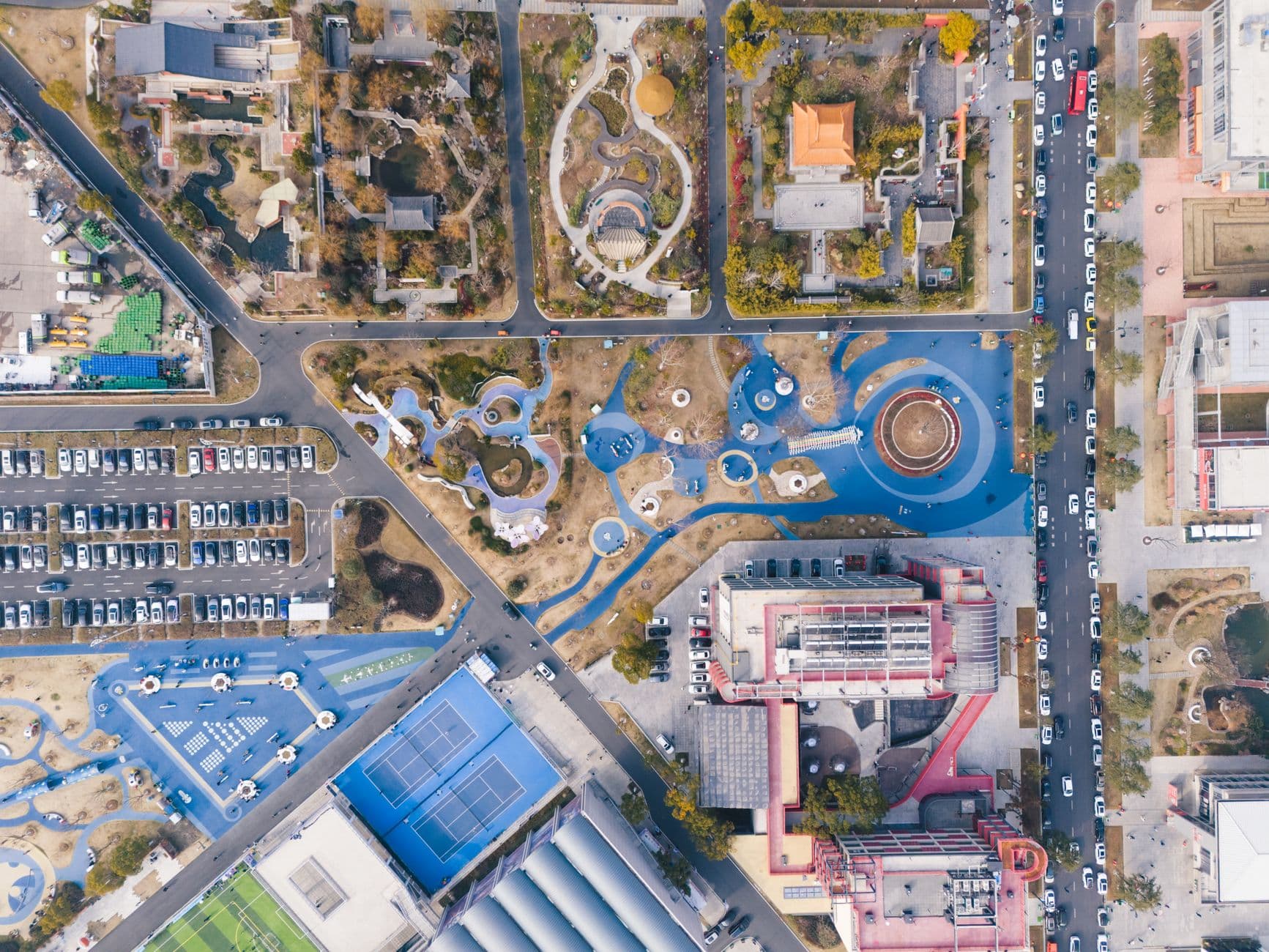
The Death of the Bird's Eye View
Remember maps? Those colorful, grid-based rectangles that told you exactly where you were in relation to a Starbucks and the crushing weight of your own mortality? Well, toss them in the recycling bin next to your dignity, because Gen Z has decided that looking at a map is 'too much work' and 'low-key stressful.' Instead, they are asking LLMs to hallucinate a path to the nearest vintage clothing store based on the 'aura' of the neighborhood. We’ve traded the objective reality of latitude and longitude for a digital magic 8-ball that thinks a three-mile walk through an industrial shipyard is 'a whimsical urban stroll.'
This isn't just a minor shift in how we find a bathroom; it’s a total lobotomy of our collective spatial awareness. We used to have a mental model of our cities—a bird’s-eye view that allowed us to understand that North meant 'uphill' and East meant 'toward the ocean.' Now, we have a chat window. If the AI tells a teenager to turn left into a canal because the water has 'immaculate reflections,' that teenager is getting wet. We are raising a generation that couldn't find their own kitchen if the Wi-Fi dropped, and that is a comedy of errors waiting to happen in a burning building.
Designing for the Algorithm’s Eyeballs
Architects are currently having a collective nervous breakdown because they realized that nobody is actually looking at their buildings anymore. They used to worry about things like 'pedestrian flow' and 'visual landmarks.' Now, they have to worry about whether a building is 'LLM-readable.' If a facade doesn't have enough SEO-friendly textures for a bot to categorize it as 'dark academia,' it basically doesn't exist. We’re going to end up with cities that look like a fever dream of Pinterest boards because the 'vibe-check' is the only way anyone finds the front door.
Imagine an urban planner trying to explain a new zoning law to a board of directors who only navigate via TikTok-style recommendations. 'Sir, we need to widen the sidewalk for safety.' 'Is the sidewalk aesthetic, though? Does it have a narrative arc?' This is how we get parks that are 100% neon signs and 0% grass. We are building sets for a movie that nobody is filming, all because we’ve outsourced our internal compass to a server farm in Nevada that doesn't know the difference between a shortcut and a cul-de-sac.

Photo by https://kaboompics.com/ on Pexels
The Great Spatial Literacy Drought
There was a time when humans could navigate by the stars. Then we used paper. Then we used blue dots on a screen. Now, we use 'vibes.' We are de-evolving at a rate that would make Darwin throw his notebook into the sea. If you take away the map, you take away the 'Why' of a city. You don't see how the financial district bleeds into the docks; you just teleport from one 'curated experience' to the next like a glitchy character in a video game. We’re losing the connective tissue of our physical world.
- Phase 1: Knowing where you are.
- Phase 2: Knowing where the phone says you are.
- Phase 3: Asking a robot if the vibes are 'mid' and walking blindly into a fountain.
I recently saw a group of tourists standing in the middle of a busy intersection in London, not looking at the Big Ben—which was literally behind them—but staring at a text summary of 'Top 5 Iconic Clock Vibes.' They were reading a description of the thing they were currently obstructing with their bodies. We have reached Peak Metadata. The actual, physical stone and mortar is just a nuisance that gets in the way of the data stream.
What This Actually Means
We are accidentally turning our cities into 'Algorithmically Optimized Theme Parks.' When we stop using maps, we stop discovering the 'in-between' spaces—the weird hardware stores, the suspiciously cheap bakeries, the parks that haven't been 'optimized' for a vibe-check. If it’s not in the LLM’s training data, it effectively vanishes. We’re creating a digital gentrification where only the most 'searchable' parts of a city survive, while the rest of the urban fabric withers away from lack of digital eye contact.
Ultimately, navigation is a skill, not just a service. Every time we ask an AI to 'find a cozy spot' instead of looking at a map and finding a spot ourselves, a tiny piece of our brain that used to understand geometry dies and is replaced by a craving for oat milk. We need to start looking up again. Not because the view is better, but because if we don't, we're going to keep walking into lampposts while the AI tells us the lamppost has 'unmatched industrial energy.'
If the future of urban exploration is just following a chatbot's whimsical whims, I’m buying a compass and moving to the woods. At least the bears there don't care about my 'aesthetic.' They just want to eat me, which is a very clear, map-based interaction that I can actually understand.
Quick Answers
Is using AI to find places actually that bad?
It’s fine if you want a sandwich, but it’s terrible if you want to know where you actually are in 3D space.
What is 'spatial literacy'?
It’s the radical, ancient ability to know that if you walk in a straight line for twenty minutes, you won't end up back where you started.
Are architects really changing how they build?
Yes, there’s a growing trend of 'Instagrammable architecture' designed specifically to be identified by algorithms rather than enjoyed by humans.