Quenching the Thirst of a Digital God
We’ve spent decades being told to turn off the tap while brushing our teeth, yet we are currently building massive concrete boxes that drink like a frantic elephant in a drought. High-bandwidth memory (HBM4) is the latest and greatest in our quest to make chips that can think faster than we can, and it turns out these chips have a bit of a temperature problem. To keep them from becoming expensive paperweights, we aren't just using electricity; we are using staggering amounts of localized freshwater to keep the servers from spontaneous combustion.
Microsoft’s latest environmental report showed their global water consumption spiked 34% in a single year, hitting roughly 1.7 billion gallons. That is a lot of swimming pools for a company that mostly exists in your taskbar. But don't worry, while your town might be under a stage-three water restriction, the data center next door is doing just fine. It needs that water to ensure a generative AI can accurately explain why a hot dog is or isn't a sandwich at 3:00 AM.
The HBM4 Sweatshop
Manufacturing HBM4 isn't like baking a cake; it’s more like performing open-heart surgery on a grain of sand while it’s on fire. The sheer density of these memory stacks means that standard air cooling—the stuff that makes your laptop sound like a jet engine—is about as effective as blowing on a forest fire. We are moving toward liquid cooling and massive industrial chillers because the heat flux in these chips is becoming a physical impossibility to manage otherwise.
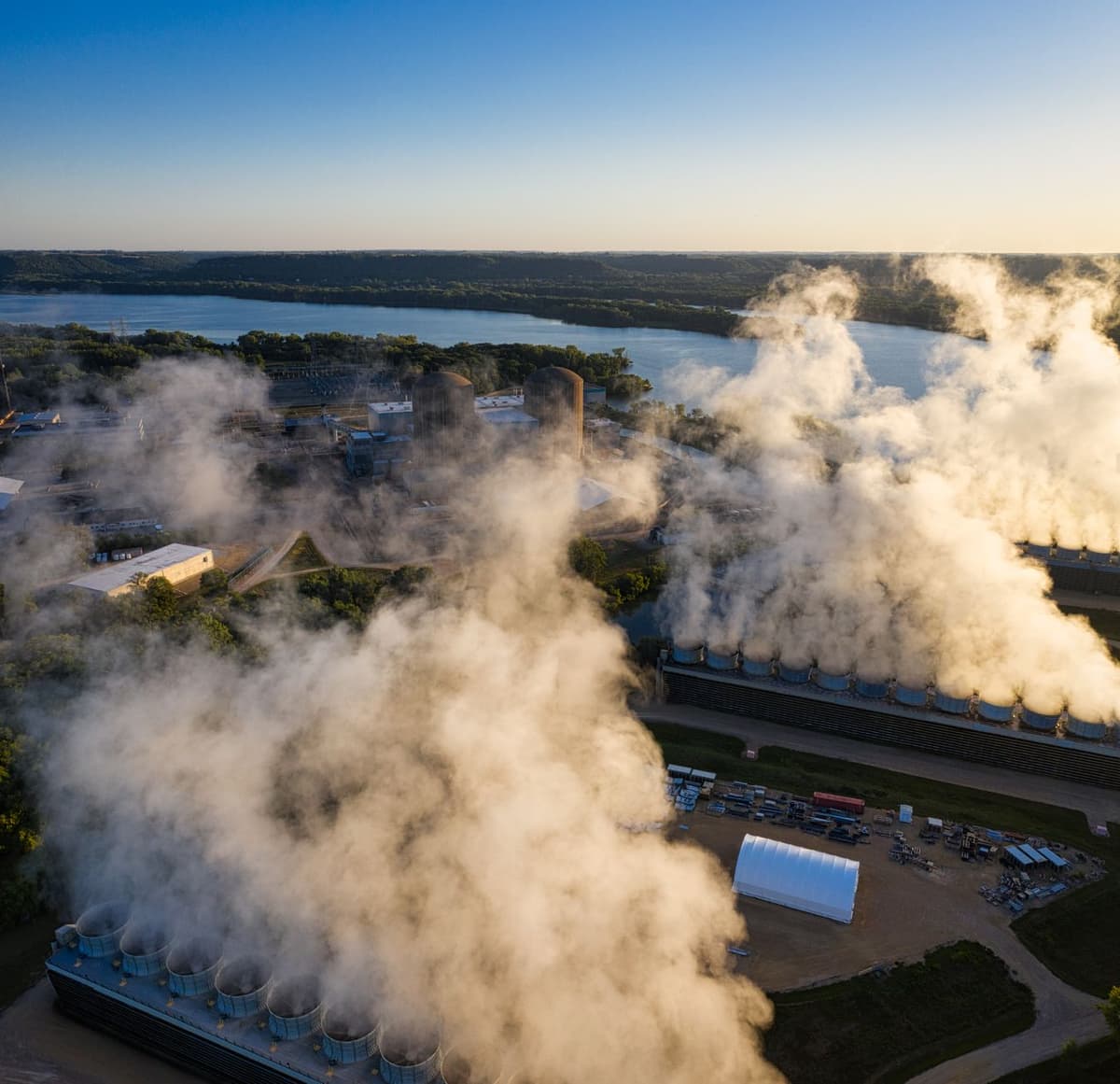
Every time we push for more bandwidth to feed the insatiable hunger of Large Language Models, we add another layer of complexity to the cooling infrastructure. This isn't a closed loop where the water stays pristine and magically reappears in the tap. A significant portion of this water evaporates in cooling towers. It’s gone. It’s a literal sacrifice to the gods of low latency. We are essentially converting the local water table into a fine mist so that a GPU can crunch numbers 10% more efficiently than the last model.
Community Relations and Other Minor Nuisances
There is something deeply poetic about a data center being built in a semi-arid region because the land was cheap and the tax breaks were plentiful. The residents get a few dozen low-level security jobs, and in exchange, they get to wonder if their wells will run dry by August. It’s a fair trade if you value the ability to generate deepfake images of celebrities over, say, being able to take a shower or water a crop.
The ethics of this are remarkably simple if you happen to be a shareholder. The localized nature of these water grabs is the genius part of the strategy. It’s not a global crisis if it’s just one town’s problem at a time. By the time the neighbors realize the data center is drinking 5 million gallons a day, the facility is already built, the ribbons are cut, and the AI is busy optimizing the company's supply chain to find even cheaper water elsewhere.
The Innovation of Doing the Same Thing Faster
We love to talk about how AI will solve the climate crisis, presumably by calculating exactly how doomed we are with four decimal places of precision. The irony of using massive amounts of water and energy to train a model that might eventually tell us to use less water and energy is apparently lost on the people signing the checks. We are building a high-speed highway to a brick wall and complaining that the car doesn't have enough cup holders.
If HBM4 is the future, then the future is incredibly humid. We are moving toward a reality where 'compute' is a physical weight on the environment that rivals heavy manufacturing or industrial agriculture. But at least when a farm uses water, you get a tomato. When a data center uses water, you get a slightly more convincing chatbot that still can’t tell you how many 'r's are in the word strawberry.
What This Actually Means
This actually means that 'the cloud' is a marketing lie designed to make you forget about the massive, resource-heavy physical reality of the internet. Every time a tech giant announces a new, more powerful chip, they are announcing a new, more powerful straw inserted directly into the local environment. We are prioritizing the thermal management of silicon over the hydration of carbon-based life forms, and we’re doing it with a smile because the stock price looks great.
The 'Invisible Water Crisis' isn't invisible because it's hard to see; it's invisible because we choose to look at the screen instead of the cooling tower. As HBM4 becomes the standard, the thirst will only grow. We are currently in a race to see if we can build a superintelligence before we run out of the basic ingredients required to keep our own bodies functioning. It's a bold strategy. Let's see if it pays off.
Quick Answers
Why can't they just use seawater?
Salt is the natural enemy of precision electronics, and desalination is an energy-intensive nightmare that would make the power bill even more horrifying than the water bill.
Is air cooling not an option anymore?
Not for the high-density chips required for modern AI; the heat is so concentrated that air simply can't move fast enough to pull it away before the chip fries itself.
Can't they just recycle the water?
Some of it is recycled, but cooling towers rely on evaporation to actually shed the heat, meaning a massive amount of water is literally vented into the atmosphere and lost to the local watershed.