Everyone spent the last eighteen months sweating over power grids, frantically calculating how many gigawatts a recursive loop of AI-generated headshots consumes. Good news: we figured out how to pack memory closer together so the electrons don't have to walk as far. Bad news: keeping that microscopic skyscraper of silicon from melting requires turning several million gallons of drinking water into industrial runoff before lunchtime.
Welcome to the era of High-Bandwidth Memory 4, or HBM4 for those who like their environmental trade-offs acronymized. The hardware industry has performed a truly remarkable magic trick here. By stacking 16 layers of DRAM dies directly on top of logic chips using microscopic copper pillars, engineers created an astonishingly fast memory interface. They also engineered a device that operates with the thermal profile of a flat top grill, manufactured using a process that treats municipal watersheds like an all-you-can-drink buffet.
The Immaculate Conception of Ultrapure Water
To manufacture a 16-layer HBM4 module, you cannot simply rinse the silicon under the tap. Ordinary tap water contains minerals, dissolved gases, and tiny bits of organic debris. If a microscopic speck of calcium lands on a 3-nanometer circuit line, that entire wafer is scrap. Enter Ultrapure Water (UPW), a liquid so chemically stripped of minerals that it is technically non-conductive, extraordinarily aggressive, and entirely unfit for human consumption because it literally leaches minerals out of your cells if you swallow it.
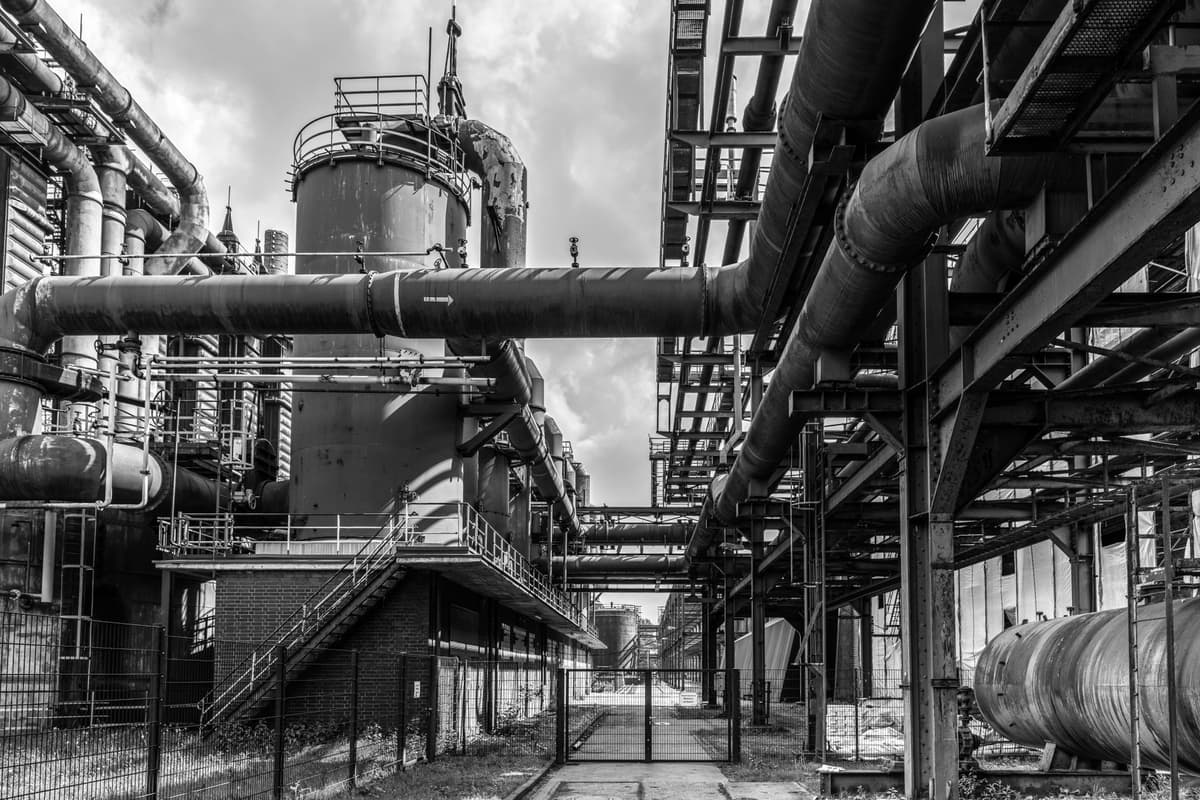
Photo by Wolfgang Weiser on Pexels
Producing UPW is an engineering marvel that requires taking vast quantities of normal fresh water and filtering out roughly 99.999999% of everything that isn't hydrogen and oxygen. For every three gallons of municipal water fed into a typical industrial reverse-osmosis system, you might get two gallons of UPW out the other side, while the third gallon becomes hyper-concentrated brine that has to be dumped somewhere convenient.
A single cutting-edge semiconductor fabrication facility can burn through 5 million to 10 million gallons of fresh water every single day. That is roughly the daily domestic consumption of a city of 50,000 people. When you scale that across the planned fab expansions in Arizona, central Texas, and South Korea, all racing to supply the millions of HBM4 stacks needed for the next wave of accelerators, the math acquires a certain gallows charm. We are building state-of-the-art silicon sanctuaries in historical drought zones, then expressing polite surprise when the local irrigation districts start holding emergency town halls.
Solving the Heat Problem by Boiling the County
Once the chip survives the fab and arrives at a data center, the water story enters its second, equally hilarious chapter. Powering a cluster of accelerators outfitted with HBM4 produces an astonishing amount of localized heat. Air cooling tapped out two hardware generations ago. Blowing room-temperature fans over a 1,000-watt accelerator module accomplishes about as much as waving a paper napkin at a house fire.
The default solution remains evaporative cooling towers. You take cold water, run it near the heat source, let the heat evaporate the water into the atmosphere, and pump in fresh water to replace it. It is cheap, mechanically simple, and ecologically unhinged:
- An average mid-sized hyperscale data center consumes roughly 300,000 to 500,000 gallons of water daily just for cooling evaporators.
- Modern ultra-dense clusters featuring next-gen stacked memory can push that number north of 1 million gallons daily per facility during peak summer ambient temperatures.
- The evaporated water does not magically return to the local utility; it drifts downwind into another weather pattern entirely, permanently removing it from the local aquifer.
Tech companies love to issue press releases announcing they bought wind credits from a turbine farm three states away to make their operations '100% renewable.' It is a tidy, audited spreadsheet exercise. Try explaining that offset logic to a municipal water board. You cannot purchase water credits from a damp pasture in Oregon to refill a collapsed water table in Phoenix.
The Geography of Convenience
There is a deeply funny spatial logic to where these facilities get placed. Data centers cluster where land is cheap, fiber optic transit is fast, and local tax incentives are aggressively desperate. These attributes frequently overlap with places that have negligible rainfall and over-allocated groundwater basins.
Consider the Phoenix metro area, where semiconductor companies have committed over $65 billion in new fab investments over the past four years. The Colorado River is effectively operating under rationing protocols, yet local economic development boards continue to roll out the red carpet for facilities whose primary manufacturing byproduct is thirsty silicon. The municipal rationale is that chips bring high-paying jobs, which is true, provided those workers do not insist on taking showers or watering a lawn.
Eventually, someone will suggest closed-loop liquid cooling using dielectric fluids or direct-to-chip refrigeration loops. Those systems do exist. They are sealed, they do not evaporate local water supplies, and they protect regional aquifers. They also cost significantly more capital upfront and require complex plumbing maintenance, which means enterprise infrastructure teams will treat them as a delightful theoretical luxury until a local government literally padlocks their intake pipe.
What This Actually Means
The AI sustainability conversation spent years obsessing over carbon footprints because carbon is abstract, global, and relatively painless to offset with an accounting trick. A corporation can buy carbon offsets from a forest it will never visit and declare victory in its annual ESG report. Nobody complains because the air looks the same either way.
Water does not work like that. Hydrology is brutally, stubbornly local. When an advanced packaging fab or a dense compute cluster sucks down six million gallons a day, the impact does not disperse across the global atmosphere. It manifests right there, in that specific county, as a falling water table, an increased utility bill for local households, and a drying irrigation canal for adjacent farmland.
The industry spent decades promising that the digital world would liberate us from the physical constraints of heavy manufacturing. Instead, we have engineered an architecture so complex that producing the cognitive horsepower to summarize an unread PDF requires draining a small reservoir.
Quick Answers
Why does HBM4 need so much more water than standard memory?
HBM4 vertically stacks 16 dense silicon dies using copper micro-bumps, a manufacturing process that requires exponentially more lithography, etching, and chemical-mechanical polishing steps, each demanding massive wash cycles of ultrapure water.
Can't data centers just use reclaimed or gray water for cooling?
Some do, but treated wastewater contains dissolved minerals and particulates that cause biological fouling and corrosion inside cooling towers, requiring expensive secondary treatment infrastructure that operators usually avoid unless legally mandated.
Is direct liquid-to-chip cooling going to fix this?
Closed-loop direct-to-chip cooling eliminates site-level evaporative water loss, but it requires much higher electrical power to run the heat exchangers, meaning facilities either burn more grid power or stick with cheap, water-evaporative cooling towers.