
The hierarchy of the internet was supposed to be permanent. For three decades, the .com suffix acted as the ultimate arbiter of legitimacy, a digital high-rent district where commercial stability was signaled through three letters. But that monopoly has quietly collapsed. In the subcultures of decentralized finance, artificial intelligence research, and protocol engineering, the .com domain is increasingly viewed as a relic of a centralized, consumer-facing past—a 'retail' internet that prioritizes brand safety over algorithmic transparency.
This shift toward .xyz is a calculated move into what I call the semiotically neutral internet. By stripping away the baggage of 1990s-era commercialism, builders are establishing a new digital zip code. It is a signal of technical literacy. If you are operating on a .xyz domain, you aren't trying to sell a product to a general audience; you are signaling to a peer group that you understand the underlying plumbing of the modern web. It is the difference between living in a branded luxury high-rise and an unmapped industrial loft where the real work happens.
The Rejection of Legacy Legitimacy
Traditional corporate legitimacy is built on the foundation of the 'trusted third party.' The .com era was defined by this—businesses needed to look like banks or established retailers to earn user trust. However, the ethos of the post-COM world is fundamentally different. In ecosystems where 'don't trust, verify' is the primary mantra, the polished, focus-grouped aesthetic of a .com address actually works against a project's credibility. It feels like a mask.
When Google rebranded to Alphabet in 2015 and chose abc.xyz as its home, it wasn't just a quirky choice by Larry Page. It was a recognition that the most ambitious, experimental arms of the company didn't fit within the commercial confines of the search engine's legacy brand. It provided a template for a new kind of institutional identity: one that is expansive, modular, and intentionally devoid of the baggage of the 'dot-com bubble.' Since then, the adoption has accelerated among entities that prioritize permissionless innovation over traditional PR.
This is a structural shift in how we perceive authority. In the old world, you bought a .com to prove you were a real company. In the current landscape, the most influential protocols and AI labs opt for .xyz to prove they are part of the technical vanguard. The domain has become a filter. It identifies a community that values code over marketing and decentralization over centralized gatekeeping.
Infrastructure as a Cultural Signal
Every technological era has its own architectural vernacular. If the .com era was the era of the shopping mall—centralized, brightly lit, and designed for consumption—the .xyz era is the era of the open-source laboratory. The choice of a TLD (Top-Level Domain) is now a functional part of the stack. It tells the user what kind of consensus mechanism to expect before the page even loads.
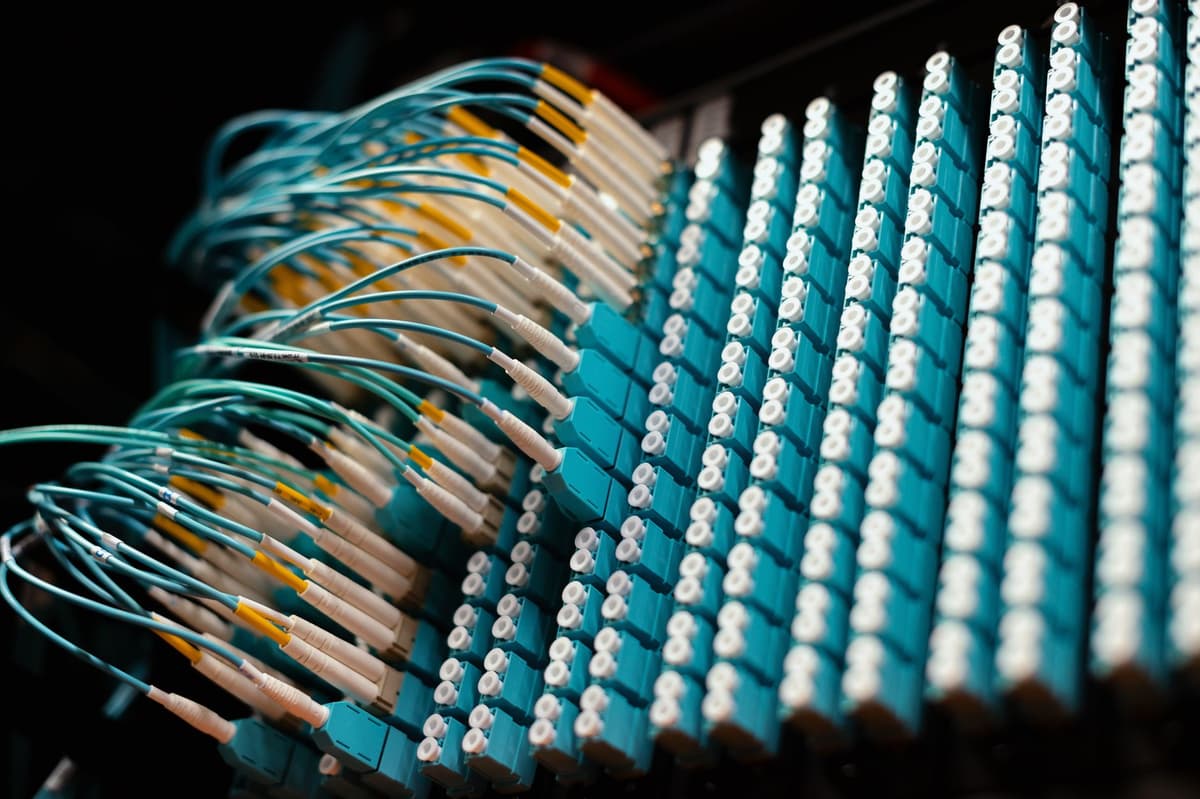
Photo by Brett Sayles on Pexels
Consider the specific data points of this migration. As of 2024, .xyz has consistently remained one of the most registered new generic TLDs, but its density within the 'Web3' and AI sectors is disproportionately high compared to its peers like .net or .org. This is because .xyz offers a blank canvas. It doesn't carry the weight of 'network' or 'organization.' It is mathematically sequential and linguistically empty, making it the perfect vessel for projects that aim to redefine what a digital entity can be.
- It functions as a digital border, separating the legacy web from the programmable web.
- It provides a cohesive identity for decentralized autonomous organizations (DAOs) that cannot exist under traditional corporate structures.
- It aligns with the aesthetic of 'minimal viable bureaucracy,' where the infrastructure is as lean as the code it hosts.
The Rise of the Algorithmic Zip Code
We are moving toward a fractured internet, but not in the way many predicted. It is not a fracture of geography, but of intent. The .com web will continue to exist as the layer for mass-market consumption, government services, and traditional retail. It is the 'public square' where the rules of the old world still apply. But parallel to this is the developing technical layer—the algorithmic zip code where the next generation of the internet is being built.
In this space, the domain name is more than an address; it is a cryptographic handshake. When a developer sees a .xyz domain, they make assumptions about the tech stack: they expect open APIs, perhaps a connection to a blockchain, and a focus on interoperability. The 'prestige' of .com is being replaced by the 'utility' of the neutral TLD. It is a move from the prestige of the landlord to the prestige of the architect.
This shift also reflects a broader disillusionment with the way the 'standard' internet has been governed. The centralization of the .com registry and the predatory market for legacy domains created an environment where only the well-funded could play. By moving to a new territory, the technical subculture has effectively bypassed the gatekeepers. They didn't fight for a seat at the old table; they simply moved the table to a new room.
What This Actually Means
The migration to .xyz and other 'neutral' domains is the first physical evidence of a permanent split in the digital experience. We are no longer living on a single, unified web. Instead, we are seeing the emergence of a two-tiered system: a curated, commercial layer for the general public and a raw, technical layer for builders and early adopters.
This isn't a fad or a branding exercise. It is a fundamental realignment of digital sovereignty. As AI and decentralized protocols become the dominant forces in technology, the aesthetics of the 'Post-COM' world will become the standard for anything that claims to be cutting-edge. The .com address is becoming the digital equivalent of a landline—functional, perhaps necessary for some, but no longer where the conversation is happening.
Ultimately, the success of .xyz proves that culture follows infrastructure. When you change the way we address the internet, you change who feels welcome on it. The builders have claimed their territory, and they have no intention of moving back to the suburbs of the legacy web.
Quick Answers
Is .com actually dying?
No, but its role is changing from a universal standard to a specific commercial category for legacy businesses and mass-market retail.
Why did .xyz win over other TLDs like .tech or .io?
Its linguistic neutrality and lack of specific industry baggage allowed it to become a flexible 'blank slate' for a wide variety of technical subcultures.
Does a domain name really affect a project's credibility?
Within high-level technical circles, yes; a .xyz domain signals an alignment with the decentralized, builder-centric ethos of the modern web.
Is this just about Google using it?
Google's use of abc.xyz provided initial institutional cover, but the TLD's growth is driven by the bottom-up adoption of the crypto and AI communities.**