The Ghost in the Sorting Machine
There is something almost romantic about the idea of a physical stamp, but the reality of modern shipping is just data encoded into a barcode. I find myself wondering at what exact point the United States Postal Service—an organization that literally helped build the American frontier—became just another API for hackers to exploit. When the USPIS recently moved to shut down thousands of sites selling counterfeit labels, they weren't just fighting scammers; they were fighting a highly optimized, automated shadow economy that turned the physical mail stream into a digital vulnerability.
It makes me wonder how a package with a fake label actually feels to the system. To a high-speed sorter, a counterfeit barcode looks identical to a paid one. The infrastructure is built on trust and high-volume throughput, which are the two things most easily weaponized by modern software. We’ve moved from the era of the 'Individual Scammer' to the era of 'Fraud-as-a-Service,' where a teenager in a bedroom can run a logistics empire by piggybacking on a multi-billion dollar federal network for the price of a thermal printer.
The Retail-Grade Sophistication of Theft
If you stumbled onto one of these shut-down sites, you wouldn't see a dark-web corner with green text on black backgrounds. You would see a sleek, Shopify-style interface. These platforms offer 'bulk discounts' and 'customer support.' It’s a complete inversion of how we think about crime. Usually, the criminal has to work harder than the legitimate business. In this case, the counterfeiters built systems that were often easier to use than the official USPS Click-N-Ship portal.
- They used Telegram bots to automate label generation.
- They leveraged social media influencers to 'normalize' the use of discounted shipping.
- They created a tiered subscription model for high-volume resellers.
I’m fascinated by the fact that the marketing for these services looked like any other B2B SaaS pitch. They talked about 'optimizing overhead' and 'increasing margins.' It’s a strange psychological trick: if you wrap a crime in a professional enough UI, does the person buying the $2 Priority Mail label convince themselves they’re just finding a 'hack' rather than participating in a federal felony? The digitization of the forgery makes the act feel clean, distant, and remarkably efficient.
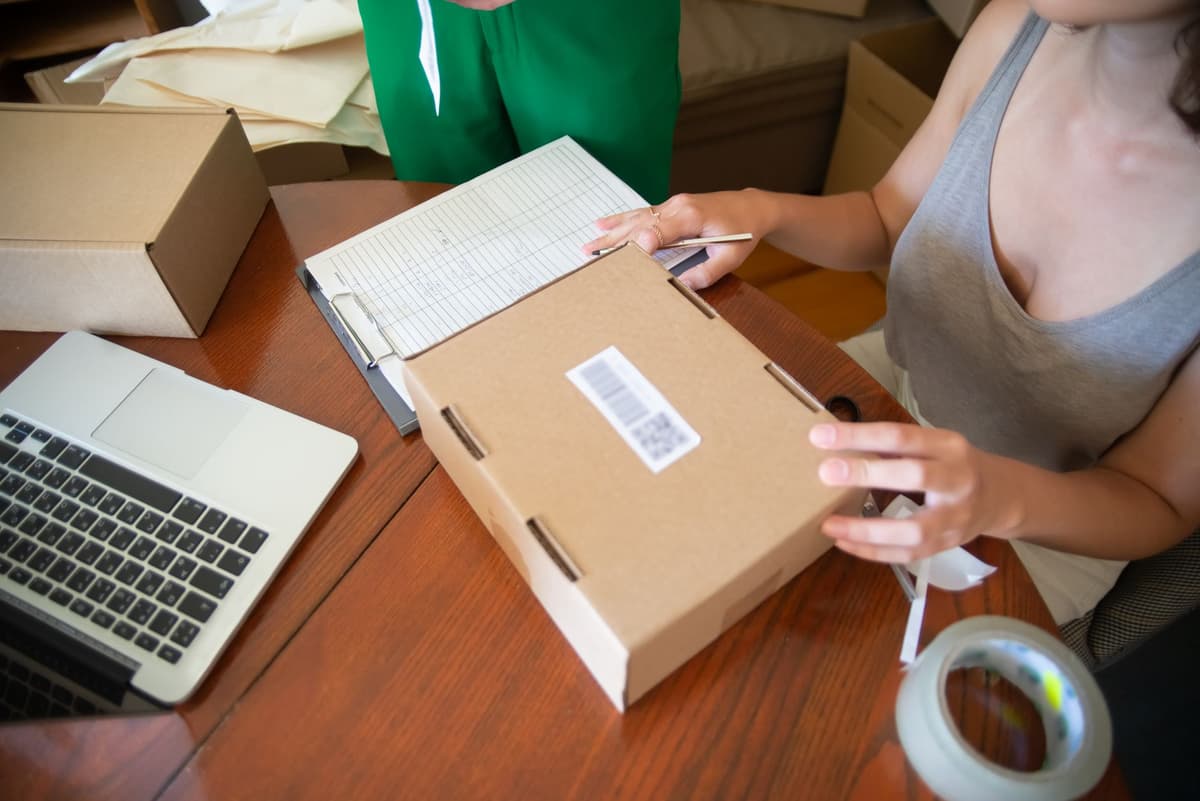
Photo by Kampus Production on Pexels
Why the Physical World is Losing to the Digital One
At the heart of this is a massive technological debt. The USPS processes roughly 421 million pieces of mail a day. You cannot stop a machine that moves that fast to verify every single cryptographic signature on every single label without the entire economy grinding to a halt. The counterfeiters figured out that the 'handshake' between a digital label and a physical scanner is the weakest point in the chain.
I keep thinking about the 1990s when people would use 'blue boxes' to trick payphones. This is the same thing, just scaled to the size of the global shipping industry. The counterfeiters aren't just printing pictures of stamps; they are reverse-engineering the logic of the postal barcodes. They are feeding the system its own language to make it do work for free. It’s a literal 'system crash' manifested in cardboard boxes.
How do you even defend against that? If you make the security too tight, you kill the speed. If you keep the speed, you leave the door open. The USPS reported a loss of over $6.5 billion in 2023, and while not all of that is fraud, the 'postal fraud as a service' model turns a leak into a flood. We are seeing a collision between 18th-century mandates and 21st-century script-kiddies, and right now, the scripts are winning.
What This Actually Means
This isn't just a story about people trying to save five bucks on shipping. It’s a preview of what happens when every physical process becomes a digital abstraction. When we turn 'value' into a string of numbers in a barcode, we make that value infinitely reproducible. The 'postal fraud' we are seeing today is likely just the beta test for how automated systems will eventually pick apart every other piece of physical infrastructure we have left.
I suspect we are heading toward a world where 'physical' verification becomes the new bottleneck. We might see a return to more manual checks, or perhaps a more intrusive digital tracking system that monitors the life of a package from the moment the label is printed. It’s a bizarre trade-off: to keep the mail cheap and fast, we might have to make it significantly less private and more surveyed.
Ultimately, I’m left wondering if we can ever actually secure a physical network in an age of automated forgery. If a bot can generate a 'perfect' lie in the form of a shipping label faster than a human can verify it, the very idea of a 'paid service' starts to feel a bit fragile. The USPS is the canary in the coal mine for the entire physical economy.
Quick Answers
How did these counterfeit sites stay open so long?
They operated like a game of whack-a-mole, using offshore hosting and constantly rotating domains to stay one step ahead of federal injunctions.
Is it illegal to buy these 'discounted' labels?
Yes, using counterfeit postage is a federal crime that can result in the seizure of your packages and significant fines or prison time.
How does the USPS plan to fix this?
They are currently rolling out new scanning technology designed to identify 'duplicated' or 'illogical' barcodes in real-time, effectively flagging fakes before they leave the sorting facility.