The $3,000 Paperweight in Your Kitchen
There was a time, not long ago, when a toaster was a simple machine involving a spring, some heat, and a prayer. Now, if you buy a high-end smart toaster, it has more processing power than the Apollo 11 lunar module and a Terms of Service agreement longer than Infinite Jest. If you don't agree to let the manufacturer track how often you consume gluten, the heating elements simply refuse to engage. We aren't buying appliances anymore; we are essentially leasing a very shiny hostage that lives in our kitchen and demands a monthly tribute of $9.99 for the 'Golden Crust' feature.
I saw a guy on a forum last week who had to 'decap' the firmware on his smart oven because a software update decided his favorite pizza stone was 'unauthorized third-party hardware.' Imagine standing in your underwear at 2:00 AM, wielding a soldering iron and a Linux laptop, just because your oven is gaslighting you into thinking it doesn't know what 425 degrees is. This isn't just a hobby; it’s a desperate rebellion against the fact that our dishwashers now have more DRM than a Marvel movie.
Manufacturers have realized that selling you a fridge once is a terrible business model compared to selling you a fridge that bricks itself if you don't buy the official $60 RFID-chipped water filter every six months. It is a digital protection racket. 'Nice ice cubes you got there,' the fridge whispers through its 10-inch touchscreen. 'Shame if something were to... happen to the dispense function because you used a generic charcoal filter.'
The Great Firmware Decapping Underground
Because of this corporate greed, we’re seeing the rise of the 'Firmware Freedom' movement. These are the people who spend their weekends reverse-engineering the BIOS of a $900 espresso machine so they can bypass the 'Descaling Lockout' that occurs every 100 shots. It is genuinely hilarious to think about a secret underground society of coffee nerds trading unauthorized code like they’re smuggling blueprints for the Death Star, all so they can make a latte without a cloud connection.
- The Solder Rebellion: People are literally melting the plastic off microchips to read the memory underneath. All this effort just to tell a washing machine that, yes, we actually can use the heavy-duty cycle without a premium membership.
- Custom BIOS for Blenders: There is a GitHub repository somewhere right now dedicated to making a blender run faster than the manufacturer intended. I want a blender that sounds like a jet engine and ignores every safety protocol ever written.
- The Subscription Killswitch: This is the Holy Grail of the movement—finding the single line of code that tells the device to stop checking the manufacturer's server for 'permission' to exist.
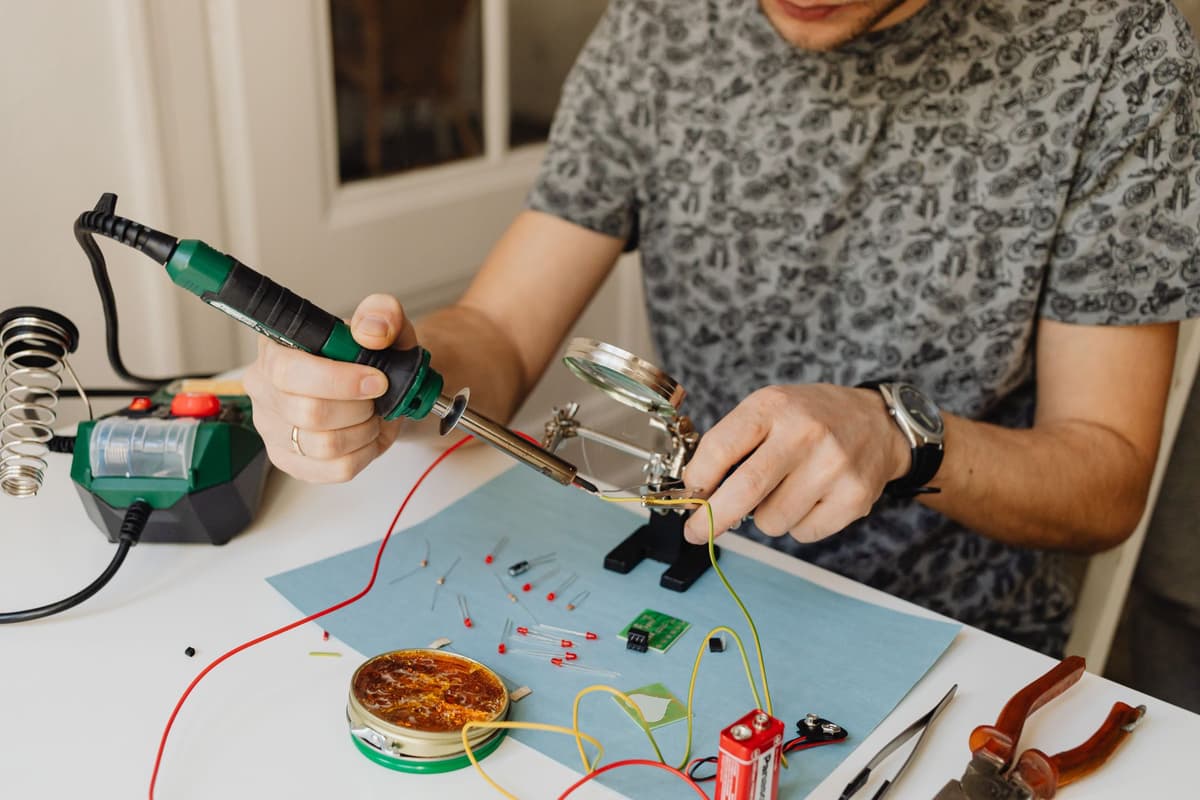
Photo by https://kaboompics.com/ on Pexels
This level of technical skill used to be reserved for state-level espionage or stealing cable TV in the 90s. Now, it’s what you need to ensure your smart bidet doesn't lock the 'Heated Seat' feature behind a paywall during a cold snap in January. If I have to hack my own toilet to get a warm posterior, the terrorists have already won.
Why Your Coffee Maker Needs a VPN
The absurdity peaked for me when I read about a 'smart' juicer that refused to squeeze juice packets if they were past their expiration date—as determined by a QR code scanner on the machine. The owners didn't just throw the machines out; they started printing 'fake' QR codes to trick the juicer into thinking the spinach was still fresh. We are literally lying to our kitchen appliances now. We are gaslighting the machines before they can gaslight us.
If you think this is just for nerds, wait until your dishwasher decides it won't run because it hasn't 'phoned home' in 48 hours and your Wi-Fi is down. You'll be in that forum too, downloading 'Dishwasher_OS_v2.1_NoBloatware.bin' and praying you don't accidentally turn your rinse cycle into a crypto-miner. The stakes are hilariously low until you’re the one standing over a sink full of dirty plates with a USB stick and a look of pure, unadulterated rage.
Companies claim this is about 'safety' and 'user experience.' That is a lie. If my toaster catches fire because I installed a custom BIOS that lets me toast bread for 12 minutes straight, that is my God-given right as an American. I don't need a Silicon Valley product manager to protect me from my own breakfast choices. I want my hardware to be as dumb and obedient as a golden retriever, not as fickle and demanding as a high-fashion influencer.
What This Actually Means
The 'Firmware Freedom' movement is the last line of defense between us and a future where we own absolutely nothing. If you can’t open it, you don’t own it. If you can’t fix it without a proprietary 16-digit code and a blood sacrifice to the corporate gods, you’re just renting it with a very high down payment. This isn't just about gadgets; it’s about the fundamental concept of private property in a world that wants to turn everything into a recurring bill.
We should support the hackers, the decappers, and the people writing open-source code for laundry machines. They are the frontline soldiers in the war against the 'Everything-as-a-Service' nightmare. Today they’re unlocking the ability to use third-party coffee pods; tomorrow they might be saving us from a car that won't start because our credit card on file expired and the 'Engine Ignition' subscription failed to renew.
Ultimately, the goal is simple: I want a fridge that keeps my beer cold and stays out of my business. No updates. No data mining. No 'Smart-Chill' premium tiers. Just a cold box that doesn't try to be my friend or my landlord. Until then, keep your soldering irons hot and your firmware unauthorized.
Quick Answers
Is it illegal to hack my own fridge?
In many places, it’s a legal gray area thanks to the DMCA, but if you’re just trying to make your own ice without a subscription, the FBI probably isn't going to kick down your door today.
Will custom firmware void my warranty?
Oh, absolutely. The moment you touch a soldering iron to that motherboard, the manufacturer will treat you like a pariah who just insulted their grandmother.
Why do they put Wi-Fi in everything anyway?
So they can sell your usage data to advertisers and brick the device remotely the second a newer model comes out; it certainly isn't so your toaster can 'get better over time.'