The shadow of Theranos has loomed over diagnostic medicine for a decade, obscuring a genuine scientific miracle under the soot of a $9 billion fraud. While Elizabeth Holmes was busy faking results on Siemens machines, legitimate researchers were quietly perfecting the art of sequencing cell-free DNA (cfDNA). These are the microscopic fragments of genetic material shed into the bloodstream by dying cells—including malignant ones. We are no longer guessing based on protein markers; we are reading the literal genetic signatures of tumors from a standard blood draw.
This is the Multi-Cancer Early Detection (MCED) revolution. It is not a miracle cure, but a mathematical triumph over biology. Companies like GRAIL, with its Galleri test, are now able to screen for over 50 types of cancer simultaneously. In the PATHFINDER study, this technology successfully identified cancer signals in patients who had no symptoms and no reason to suspect they were ill. The fraud was a distraction; the reality is a fundamental shift in how we define the onset of disease.
The Genetic Debris of a Hidden Enemy
To understand the gravity of this shift, you have to understand the sheer scale of the data involved. A single milliliter of blood contains thousands of fragments of DNA. Most of it is healthy debris from normal cellular turnover. Detecting the signal of a nascent tumor is like trying to find a specific grain of sand on a crowded beach while the tide is coming in. Yet, through high-intensity sequencing and machine learning, we can now identify the methylation patterns—the chemical tags on DNA—that act as a fingerprint for specific organs.
This means a blood test doesn't just say "you have cancer." It says "there is a high probability of a squamous cell carcinoma in your left lung." This level of specificity was unthinkable twenty years ago. In 2023, data suggested that these tests could maintain a false-positive rate of less than 1%, a critical threshold for any population-level screening tool. We have moved from the era of searching for symptoms to the era of searching for signals.
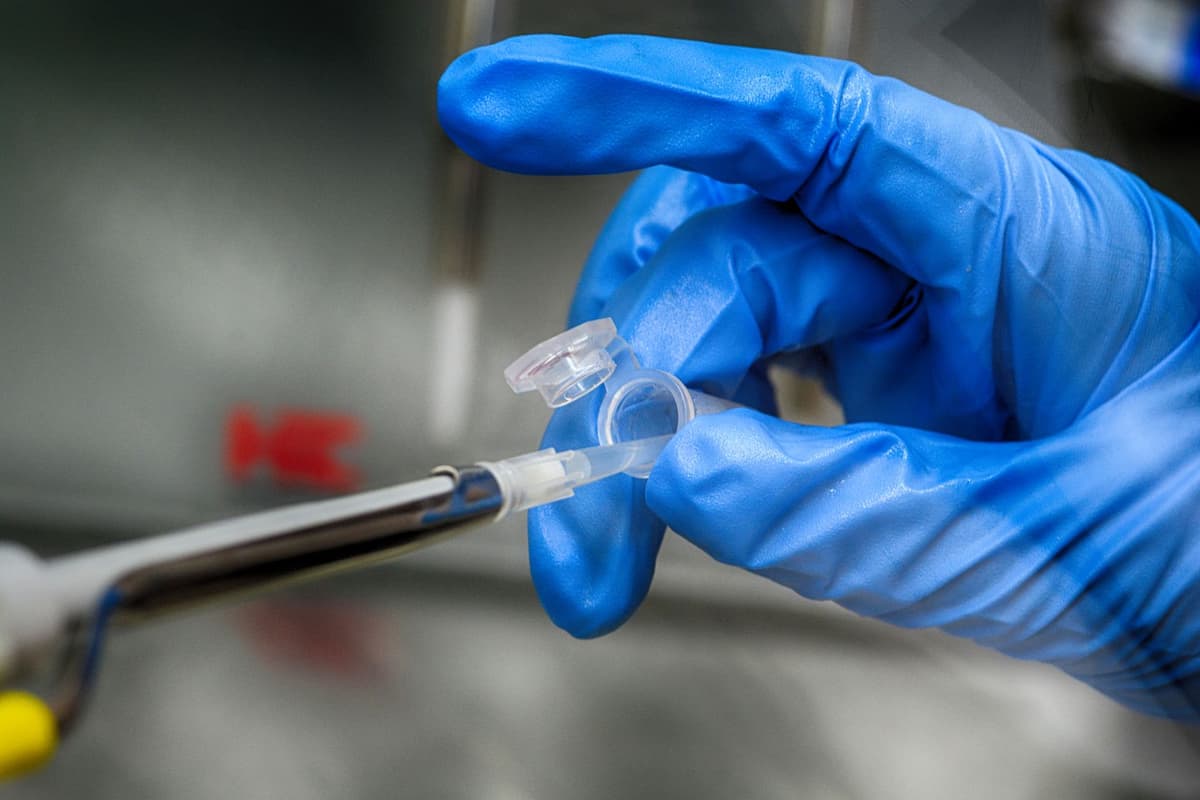
Photo by Jorge Sepúlveda on Pexels
The Purgatory of the Invisible Tumor
However, the success of liquid biopsies has birthed a terrifying new clinical category: the person with a positive genetic signal but a clean radiological scan. We have reached a point where our molecular sensors are more sensitive than our visual ones. When a blood test screams that a patient has pancreatic cancer, but a $3,000 MRI shows a perfectly healthy organ, the medical establishment hits a wall. This is the "invisible" stage of cancer, a micro-tumor perhaps only a few hundred cells large.
For the patient, this is a psychological catastrophe. They are told they have a lethal disease, yet no surgeon can cut it out because they don't know where it is. No radiologist can zap it. We have effectively created a class of "pre-patients" who must live in a state of high-stakes surveillance, waiting for their cancer to grow large enough to finally be seen on a screen. The ethical burden of this knowledge is immense. Are we saving lives by finding it early, or are we simply extending the number of years a human being spends as a cancer patient?
- The psychological toll of "watchful waiting" for an invisible malignancy is largely unstudied.
- Current insurance frameworks are not designed to cover treatments for tumors that cannot be visualized.
- Over-diagnosis remains a risk, as some micro-tumors might be cleared by the immune system without intervention.
Sovereignty Over the Molecular Self
We are forced to grapple with the definition of what it means to be "sick." Traditionally, sickness required a manifestation—a lump, a pain, a shadow on an X-ray. In the MCED era, sickness is a data point. This transition demands a total overhaul of clinical guidelines. We cannot use 20th-century protocols to manage 21st-century data. If we find a signal for an aggressive liquid tumor, do we begin systemic chemotherapy without a biopsy? Most oncologists would say no, but waiting six months for the tumor to materialize might be the difference between a cure and a death sentence.
Furthermore, the cost of these tests—often hovering around $950 per kit—creates a new frontier of medical inequality. If the wealthy can afford to screen their blood annually for the earliest whispers of malignancy, while the rest of the population waits for a palpable lump, we have codified a biological caste system. The revolution is here, but it is unevenly distributed and ethically unmoored.

Photo by Cedric Fauntleroy on Pexels
What This Actually Means
The fall of Theranos was a story about human greed, but the rise of cfDNA is a story about human limits. We have finally achieved the "magic bullet" of diagnostics, only to realize that our ability to see is still lagging behind our ability to detect. We are now capable of knowing too much, too soon, without the infrastructure to act on that knowledge.
We must resist the urge to dismiss blood-based screening as another tech-bro over-promise. The science is robust, the data is mounting, and the potential to reduce late-stage cancer deaths is real. But we must also prepare for the fallout of making the invisible visible. The next decade of oncology won't be defined by better drugs, but by the courage to decide how to treat a patient who, by every traditional metric, isn't yet a patient at all.
Quick Answers
Is this just another Theranos-style scam?
No, unlike Theranos, these companies publish peer-reviewed data in journals like The Lancet and Nature and use standard, validated sequencing equipment.
Can a liquid biopsy replace a colonoscopy or mammogram?
Not yet; currently, these tests are intended to complement traditional screenings, catching the cancers that standard methods frequently miss.
What happens if the test is positive but the scan is negative?
Patients usually enter a rigorous monitoring program, repeating the blood test and imaging every few months until the source of the signal is located or the signal disappears.