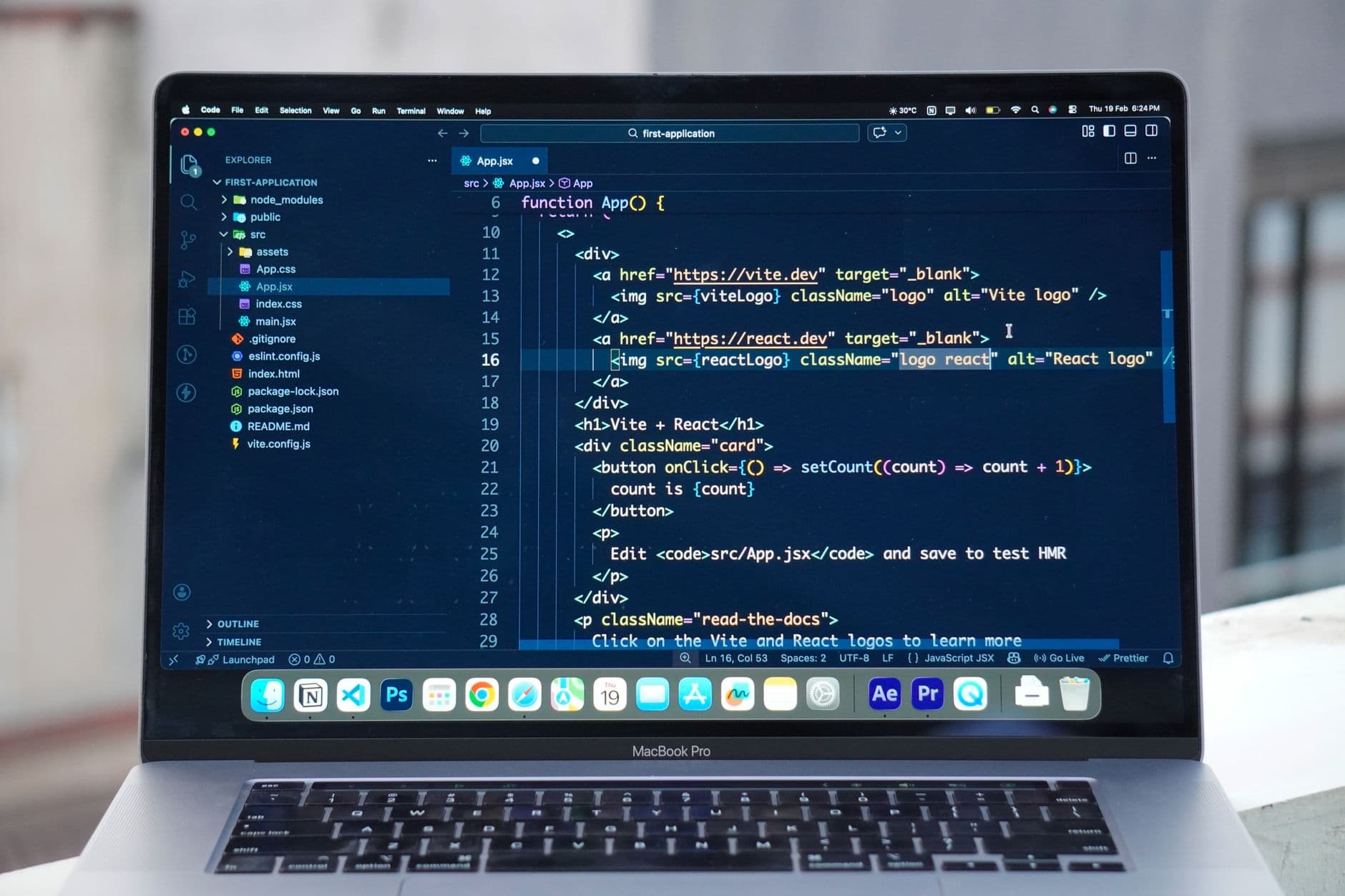
The Uninvited Guest in Your Circuitry
Imagine you bought a toaster, and the toaster suddenly announced it was also a life coach. You didn’t ask for a life coach. You just wanted a piece of sourdough that wouldn't shatter your teeth. But now, every time you drop the lever, the toaster whispers, "Are we sure we want carbs today, Dave? I've noticed your heart rate is up." This is the current state of consumer hardware. Apple, Microsoft, and Google are currently in a polyamorous relationship with Neural Engines, and they’ve decided we’re all part of the throuple whether we like it or not.
We used to have a choice. You could buy a computer, and it was a silent, obedient hunk of aluminum and glass. Now, the hardware comes pre-loaded with a 'personality' that is essentially a hyper-active golden retriever that has been trained on the entire history of Reddit. It wants to summarize your boss’s passive-aggressive Slack messages. It wants to retouch your selfies until you look like a blurred thumb with eyes. And most importantly, it really, really doesn't want you to find the 'Off' switch.
The Great Toggle Hunt
Trying to disable 'Apple Intelligence' or its Windows equivalent, Recall, is like playing a game of 'Where’s Waldo' where Waldo is a tiny, grayed-out menu option hidden behind four layers of sub-directories and a legal disclaimer that implies you’re a Luddite who hates progress. It’s the digital equivalent of trying to cancel a gym membership in 1998. You have to navigate through 'General,' then 'Privacy,' then 'Advanced Features,' then 'Are You Sure?', then 'No, Seriously, We Worked Hard On This,' and finally 'Fine, But Don't Come Crying To Us When You Can't Auto-Generate A Haiku About A Spreadsheet.'
IT managers are currently losing their collective minds. Imagine being the guy in charge of security for a $500 million hedge fund and realizing that every laptop in the building is essentially a sophisticated tape recorder that wants to 'summarize' confidential trade secrets for the sake of 'user delight.' It’s a nightmare. We’ve reached a point where the most valuable feature on a $3,000 MacBook Pro isn't the M4 chip or the Liquid Retina display—it's the ability to lobotomize the thing so it stops eavesdropping on your Zoom calls.

The Neural Engine is the New U2 Album
Remember when Apple forced that U2 album onto everyone’s iPhone back in 2014? It was the ultimate 'we know what’s good for you' move. AI hardware features are exactly like that, except instead of mediocre stadium rock, it’s a silicon brain that is constantly trying to predict what word you’re going to type next. The friction comes from the fact that tech giants treat these features as 'default-on' because they need the data to prove to their shareholders that the billions they spent on AI wasn't just a fever dream induced by too much kombucha and fleece vests.
- The 'Opt-Out' Trap: If a feature is 'opt-out,' it means the company assumes you're too lazy to change it. They're betting on your apathy.
- The Power User Revolt: People who actually know how computers work are the first ones to reach for the digital scalpel. If the smartest people in the room are trying to kill a feature, maybe the feature is a vampire.
- Silicon Gaslighting: When you try to disable these tools, the UI makes it feel like you’re turning off the oxygen on a space station. 'Disabling this may affect system stability.' No, it won't. It will just stop the computer from guessing that I want to end every sentence with 'Best regards.'
Your Laptop is Not Your Friend
There is a fundamental misunderstanding in Cupertino and Redmond. They think we want our devices to be 'proactive.' I don't want a proactive laptop. I want a reactive laptop. I want it to sit there and do absolutely nothing until I hit a key. If I wanted something that anticipated my needs and constantly interrupted me with unhelpful suggestions, I’d get a parrot or a very enthusiastic intern.
We are seeing the rise of 'Air-Gapped Hardware' as a luxury status symbol. In 2025, the ultimate flex won't be having the fastest AI processor; it will be having a device where you can physically see the traces on the circuit board that prove the Neural Engine is dead and buried. Personal digital autonomy is becoming a premium feature. We’re paying thousands of dollars for the privilege of being left alone.
What This Actually Means
This isn't just about a few annoying pop-ups. This is a battle over who actually owns the hardware in your backpack. When you buy a device but can’t control its core functions without a PhD in systems administration, you haven't bought a tool—you've leased a surveillance pod. The 'Opt-Out' friction is a deliberate design choice intended to wear down your resistance until you just accept that 'The Algorithm' is now your co-pilot.
For the enterprise world, this is a dealbreaker. Companies with actual secrets can't afford 'helpful' AI that might hallucinate their proprietary code into a public cloud. We are going to see a bifurcated market: 'Toys' for people who want their phone to turn their cat into a Pixar character, and 'Tools' for people who need to get work done without their hardware snitching on them.
Ultimately, the pushback is a healthy sign. It means we haven't totally surrendered to the idea that 'smart' is always better than 'functional.' Sometimes, the smartest thing a computer can do is shut up and wait for instructions. If I wanted a device that thought for itself, I’d talk to my cat. At least the cat doesn't try to summarize my tax returns.
Quick Answers
Can I actually turn off Apple Intelligence?
Yes, but you’ll feel like you’re performing a DIY appendectomy while the computer begs you to stop. Look in the Siri & Intelligence settings and prepare for a guilt trip.
Why is IT so mad about these features?
Because 'helpful' AI is just a fancy word for 'data leak waiting to happen,' and IT guys don't want to spend their weekends explaining to the CEO why the company’s Q4 strategy was used to train a chatbot.
Will computers ever go back to being 'dumb'?
Only if you pay a massive premium for 'Pro' hardware that lets you toggle the brain off. Silence is the new luxury good.