Remember when money grew on trees, and those trees were conveniently located in the venture capital forest? Ah, those halcyon days. Now, apparently, we've all collectively decided that our wallets are less 'bottomless pit' and more 'sad little coin purse found under the couch cushions.' Suddenly, everyone's embracing the 'hard budget cap,' and frankly, it's hilarious to watch. It's like the corporate world collectively decided to go on a juice cleanse after years of binging on artisanal avocado toast and 'synergy' consultants. Good luck with that detox, fellas.
The Party's Over, Grab Your Coats and Your ROI Reports
For years, the mantra was 'growth at all costs!' It was less a business strategy and more a frat party philosophy: keep throwing money at it until something sticks, or until the neighbors call the cops. Companies, especially in tech, operated with budgets looser than a retired rock star's moral compass. Want to build a new app that duplicates an existing app but with slightly different shade of blue? Fund it! Need a team of 30 people to 'ideate synergies' in a custom-built meditation pod? Approved! The golden era of 'move fast and break things' often meant 'move fast, break the bank, and then wonder why your stock price looks like a flatline on an ECG monitor.'

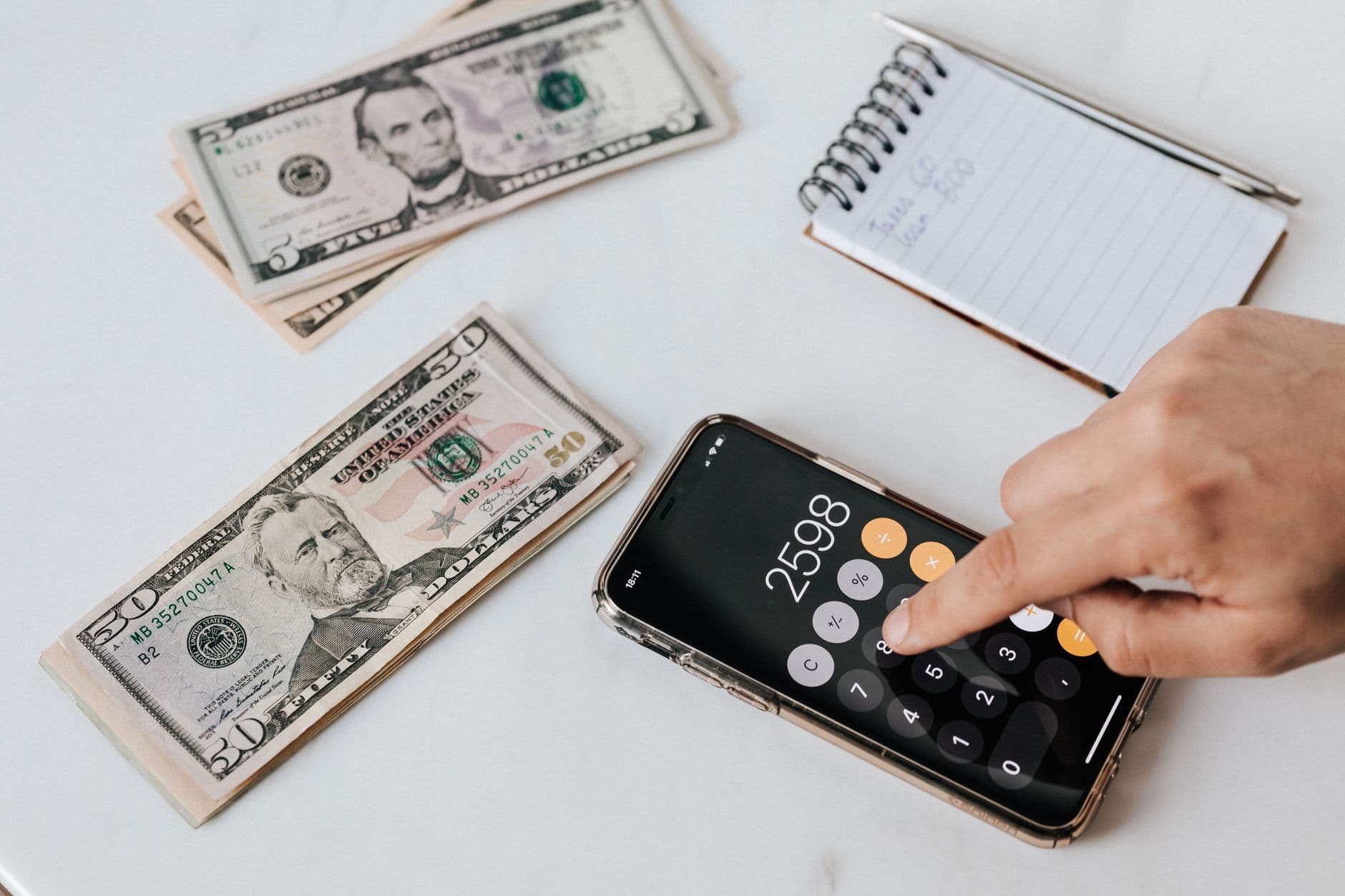
Photo by Andre Taissin on Pexels
Now, the pendulum has swung so hard it's probably dislocated a few shoulders in finance departments worldwide. The new philosophy? 'Hard budget caps.' It's not just a suggestion; it's a financial chastity belt. This isn't your grandma's flexible budget, where you could discreetly move a few dollars from 'office supplies' to 'emergency desk llama fund' without anyone noticing. Oh no. This is a budget so rigid, it makes a supermodel's diet plan look like an all-you-can-eat buffet. Every dollar has to perform a song and dance, prove its lineage, and probably provide references from its previous budget cycles. It's basically financial speed dating, and most line items are getting ghosted.
Zero-Based Budgeting: The Marie Kondo of Finance
This shift has dragged 'Zero-Based Budgeting' (ZBB) from the dusty annals of business school textbooks right into the fluorescent glare of corporate boardrooms. For those blissfully unaware, ZBB is where every single line item, every expense, every penny, starts at zero and has to justify its existence from scratch. It's not 'let's adjust last year's budget by 3%'; it's 'why do we need this thing at all?' It's the financial equivalent of Marie Kondo showing up at your desk and asking if that stapler 'sparks joy.' If it doesn't, it's out. And let's be honest, very few staplers truly spark joy. They just... staple.
The tech sector, previously the poster child for 'spend it if you got it,' is now scrambling. Imagine explaining to a VP that their team's monthly kombucha tap isn't 'directly contributing to key performance indicators.' It's like telling a toddler they can't have cake for breakfast. Tears will be shed. PowerPoint presentations will be created with increasingly convoluted ROI metrics. Suddenly, that $10,000 annual subscription to a 'motivational meme generator' is under scrutiny. This level of scrutiny would make a diamond cutter blush. We're talking about going from 'unlimited snacks and nap pods' to 'is this pen absolutely essential, or can we share?'
The Absurdity of the 'Unicorn' Gone Frugal
It’s fascinating to watch companies that were once valued in the billions for their 'disruptive innovation' now sweating over the cost of paper clips. We used to hear stories of lavish corporate campuses with dry cleaning services and personal trainers. Now, I fully expect to see inter-departmental memos about optimizing toilet paper usage. 'Please use only two squares per visit. Studies show it's optimal for both hygiene and shareholder value.' It's a comedic goldmine, really. The same executives who once greenlit projects costing millions with vague promises of 'synergy' are now demanding three-page justifications for a new ergonomic mouse pad.
And let's not forget the government. The discourse around government waste has been a perennial favorite, right up there with complaining about the weather. But now, the idea of 'hard caps' is floating around, promising to rein in spending. One can only imagine the chaos. 'Sorry, Senator, we can't fund that bridge this year; we hit our hard cap after buying 10,000 pens that write in invisible ink. The ROI on those was, shall we say, theoretical.' It's a noble goal, but trying to impose hard caps on sprawling bureaucracies is like trying to teach a cat to file its taxes – theoretically possible, but good luck getting any cooperation.
What This Actually Means
This isn't just about tightening belts; it's about fundamentally rethinking how organizations view money. For too long, especially in certain sectors, budgets were seen as suggestions, not commandments. The shift to hard caps and ZBB forces a level of financial discipline that was largely absent during the boom times. It means that every dollar needs a job, a purpose, and a measurable outcome. It’s less about cutting costs blindly and more about strategically allocating resources where they actually generate value, not just 'feel-good' vibes or 'potential future growth' that never materializes.
It also means that managers and teams are going to have to get a lot smarter about justifying their existence. No more vague 'we need this' requests. Now, it's 'we need this because it will demonstrably increase revenue by X% or decrease costs by Y% within Z timeframe.' It's going to lead to some truly uncomfortable conversations and, let's be honest, probably a lot of creative accounting to make things look essential. But hey, at least we'll get some hilarious anecdotes out of it. Like the time the HR department tried to justify a professional napper to improve employee well-being.
Quick Answers
What are 'hard budget caps'?
They are rigid, automated spending limits that cannot be easily exceeded, forcing organizations to operate within strict financial boundaries. Think of it as a financial straitjacket, but for good.
How does this relate to 'Zero-Based Budgeting' (ZBB)?
Hard caps often necessitate ZBB, where every expense must be justified from a base of zero, rather than simply adjusting previous budgets, to ensure all spending aligns with core objectives and ROI.
Why are companies suddenly adopting this?
After years of 'growth at all costs' leading to perceived waste and inefficiency, especially in the tech sector, companies are responding to economic pressures and investor demands for greater fiscal responsibility.
Will this make my company more efficient?
Potentially, yes. It forces a rigorous evaluation of all spending, eliminating wasteful expenditures and reallocating resources to higher-impact areas. Or, it could just lead to a lot of very stressed accountants. Time will tell!