The Architecture of Intent
The operating system as we know it is a fossil. Since the introduction of the Macintosh in 1984, the fundamental contract between user and machine has remained static: the OS provides a space to store files and a way to launch discrete applications to manipulate them. We have spent decades being the connective tissue between our own data, manually moving information from a PDF into a spreadsheet, or from a browser into a document. This era of manual labor is ending because the underlying hardware is finally capable of understanding the context of the work itself.
We are moving toward a 'Post-App' interface where the OS is no longer a window manager but a reasoning engine. When you run a model locally through an environment like Ollama or LM Studio, you aren't just using a new piece of software. You are fundamentally changing what the computer is for. It is shifting from a tool that waits for instructions to a system that synthesizes intent. This transition is not a minor update; it is a re-architecting of the human-computer relationship.
The Sovereignty of Local Silicon
The most critical component of this shift is the reclamation of privacy. For the last decade, the tech industry convinced us that intelligence required the cloud. They sold us a lie that for a computer to be smart, it had to be a terminal for a remote server farm. This created a massive privacy deficit where every thought, draft, and query was indexed by a third party. The emergence of high-bandwidth memory in consumer chips—specifically the unified memory architecture in Apple’s M-series or the latest NPU-heavy silicon from Qualcomm—has rendered the 'cloud-only' argument obsolete.
By executing these models locally, the operating system regains its role as a secure vault. A $2,000 laptop today can run a 7-billion parameter model with enough speed to process a user's entire local document library in minutes. This data never leaves the device. The 'Reasoning OS' doesn't need to phone home to summarize your tax returns or suggest a reply to a sensitive email. It treats your data as a private knowledge base rather than a product to be harvested for training sets.
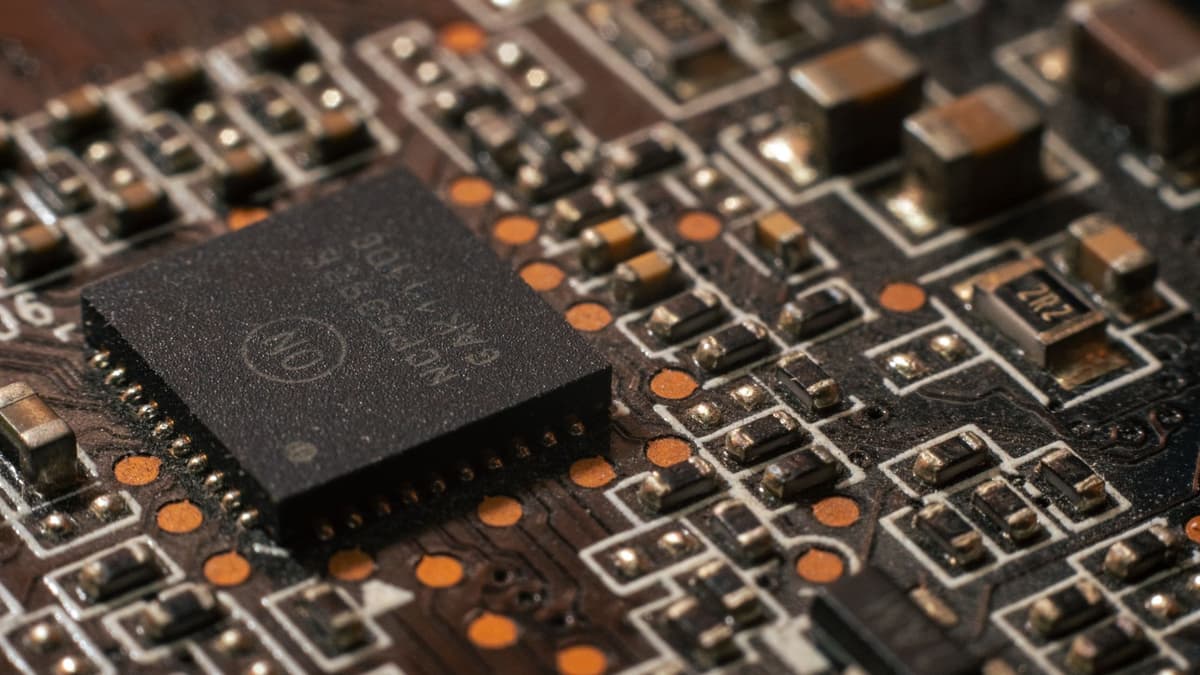
Photo by Ivan Chumak on Pexels
- Latency: Local execution removes the 200ms round-trip delay of the cloud, making the interface feel like an extension of thought.
- Resilience: A reasoning engine that works offline ensures that the most critical functions of a computer are not dependent on a subscription or an internet connection.
- Security: The attack surface is reduced to the physical device rather than a sprawling cloud infrastructure.
From Applications to Actions
The application model is the greatest friction point in modern computing. We currently live in a world of silos where your calendar doesn't know what's in your emails, and your browser doesn't know what's in your code editor. A reasoning-centric OS treats 'apps' as nothing more than specialized sets of tools that the central engine calls upon. You shouldn't have to open Photoshop to resize an image; you should tell your OS to 'prepare these assets for the presentation,' and the OS should orchestrate the necessary tools in the background.
This shift mimics the way we actually think. We don't think in terms of '.docx' or '.png' files; we think in terms of projects, goals, and outcomes. The OS of the near future will use local LLMs to index everything—every screen pixel, every keystroke, every file—to create a persistent, searchable, and actionable memory of your digital life. This is the 'semantic file system,' where files are found by their meaning and relationship to other work, not by which folder they were accidentally saved in three months ago.
What This Actually Means
The transition to local reasoning engines means we are finally moving past the 'toy' phase of AI. When AI is an app or a website, it is a gimmick. When AI is the core logic of the operating system, it becomes infrastructure. This changes the hardware we buy. We will stop caring about raw CPU clock speeds and start obsessing over tokens-per-second and memory bandwidth. The 'Pro' machine of 2025 is defined by how much of a model it can hold in its active memory.
We are also seeing the end of the SaaS-everything era. If my local machine can reason as well as a mid-tier cloud model, I have no incentive to pay a monthly fee to a company that might change its terms of service or leak my data tomorrow. The power is shifting back to the edge. The individual user is becoming a sovereign entity again, equipped with a machine that doesn't just store data, but understands it.
Ultimately, this is about agency. The file-and-folder OS made us digital filing clerks. The reasoning OS makes us directors. It is a return to the original promise of the personal computer: a bicycle for the mind, but one that finally knows where you are trying to go.
Quick Answers
Does this mean I won't need a browser or apps anymore?
No, but they will become secondary. Apps will serve as 'plugins' for the OS, providing specific capabilities while the OS handles the high-level logic and data integration.
Why does local matter if I'm always online anyway?
Local execution isn't just about connectivity; it's about speed and total data ownership. Processing a thousand private documents locally is safer and eventually faster than uploading them to a third-party server.
Will my current computer be able to do this?
Likely not at a high level. Reasoning engines require massive memory bandwidth and dedicated AI hardware (NPUs) that older systems simply lack, which will trigger a significant hardware refresh cycle.