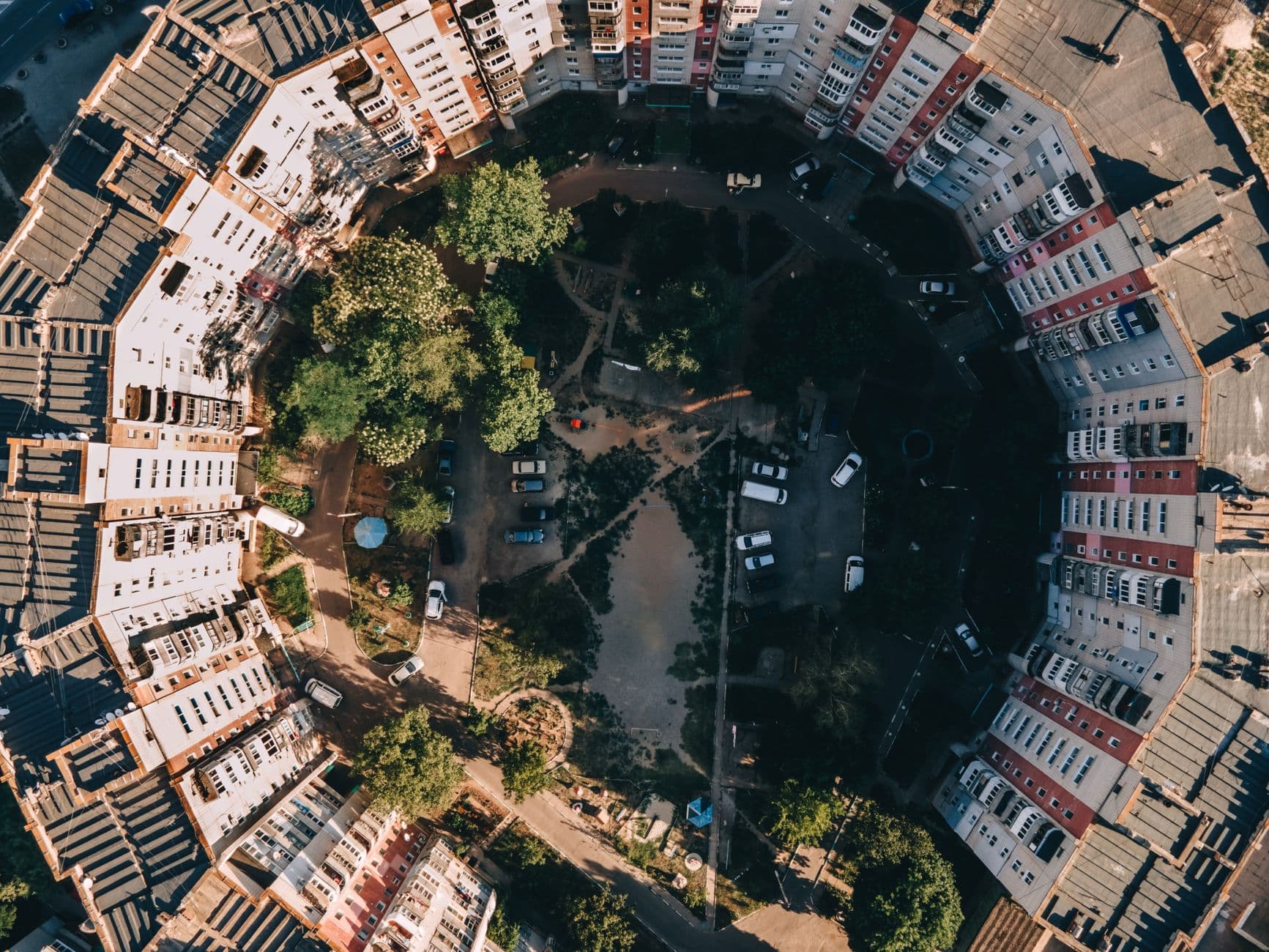
The Blue Screen of Death but for Sewage
Traditional urban planning is basically a 400-page PDF written by a man named Gary who retired in 1994 and whose primary hobby is hating shadows. If you want to change a bike lane in a standard city, you have to attend three town halls, sacrifice a goat to the Zoning Board of Appeals, and wait for a geological epoch to pass. It is the ultimate 'imperative' system: do this, then do that, then realize you forgot the drainage pipes and start crying in a Perkins parking lot.
But the Dutch—bless their stroopwafel-eating hearts—are pivoting to a declarative model. In the NixOS world, you don't 'install' things; you describe the final state of the universe in a config file and tell the computer to make it so. Now, urban planners want to do this with actual concrete. Imagine a city where the mayor doesn't hire a contractor, but instead pushes a commit to GitHub that says pedestrian_safety = true and car_dependence = null.
We are talking about 'Declarative Urbanism,' a movement where the city is treated like a software stack. If the new bridge causes a traffic jam, you don't spend ten years studying the impact. You just hit git revert and the bridge physically retracts into the river like a turtle's head that saw something it didn't like. It’s a beautiful, chaotic dream where the city council is replaced by a group of guys in hoodies arguing about whether the new stadium should be a containerized microservice.
Dependency Hell in the Meatspace
Every developer knows the pain of trying to install a simple library only to find out it requires a version of Python that was discontinued during the Obama administration. Urban planning has the same problem, but with higher stakes. You want to build a high-speed rail line? Sorry, that has a dependency conflict with a 19th-century historical landmark that is currently being used as a storage unit for artisanal pickles.
In a NixOS-fied city, the 'Digital Twin' serves as the global config file. You can’t build the new Starbucks if it breaks the checksum for the local water table. It’s an immutable infrastructure approach to the physical world. If the city experiences a 'crash'—let's say a giant sinkhole opens up because someone tried to 'overclock' the power grid—you simply roll back to the state the city was in last Tuesday.

Photo by Andrea Piacquadio on Pexels
The comedy here is thinking that bureaucracy can actually handle version control. Imagine a public hearing where a 70-year-old grandmother has to submit a Pull Request to get a stop sign on her corner. 'I’m sorry, Mrs. Higgins, but your request to add a crosswalk failed the CI/CD pipeline because it increased the latency of the morning commute by 0.4 seconds. Also, you have three linting errors in your proposal.'
Patching the Potholes with Code
Let’s talk about the 'reproducible' city. In theory, if you have a perfect configuration for a walkable, vibrant neighborhood in Amsterdam, you should be able to copy-paste that code into a suburb of Phoenix. You just run nixos-rebuild switch --flake .#phoenix and suddenly the 12-lane highway is replaced by a canal and a shop that sells only expensive cheese.
- Version 1.0: Basic survival. Dirt roads, one well, a guy named Jebediah who screams about the plague.
- Version 2.1 (The Industrial Patch): Added smog, child labor, and a very rudimentary understanding of germs. Fixed a bug where horses would clip through the saloon walls.
- Version 3.5 (The Suburban Hotfix): Introduced lawns and existential dread. Deprecated the sidewalk.
- Version 4.0 (The Declarative Update): Everything is a modular pod. If you don't like your neighbor, you just move their house to a different 'namespace' in the cloud.
This would mean the end of the 'Master Plan.' No more glossy booklets that cost $2 million and are immediately used as coasters. Instead, we’d have a live-updating repository. If someone spray-paints a phallus on a statue, the system detects the unauthorized modification, compares it against the master branch, and automatically dispatches a drone to 'revert' the statue to its original state. It’s like living inside a giant, polite antivirus program.
The Great Reboot of 2029
The biggest risk of a declarative city is the 'Reboot.' We’ve all seen what happens when Windows updates at the wrong time. Imagine you’re halfway through a root canal and the entire hospital suddenly goes dark because the city decided to update its kernel. You’re lying there in the dark while a robotic voice says, 'Applying updates... 42% complete. Please do not turn off your city.'

There’s also the 'Forking' problem. What happens when the North side of town decides they want to run on a 'Community Edition' of the urban OS while the South side sticks to the official government build? You’d have two different sets of physics on either side of the street. One side has flying taxis and automated trash pickup; the other side is still running on MS-DOS and you have to use a floppy disk to pay the toll for the bridge.
What This Actually Means
At its heart, the 'NixOS-fied' government is a desperate, hilarious attempt to make the messy reality of human existence as predictable as a computer program. We’re tired of the 'spaghetti code' of modern cities—the layers of conflicting laws, ancient pipes, and weirdly specific zoning rules that say you can’t sell flowers on a Thursday if you’re wearing a hat. We want to be able to hit 'Undo' on the 1960s.
But cities aren't servers. You can't just 'containerize' a community and expect it to thrive without the weird, non-declarative friction that makes life interesting. If we actually managed to build a perfectly reproducible, modular city, we’d probably hate it within a week. We need the bugs. We need the occasional 'unhandled exception' that turns a vacant lot into a community garden instead of a 'standardized green-space module.'
Still, watching a city council try to resolve a merge conflict over a new bike lane would be the greatest reality TV show ever produced. It’s better than the current system, where the 'config file' is a pile of damp paper in a basement and the 'system administrator' is a guy who hasn't answered his phone since the Reagan administration. If the Dutch can pull off a NixOS government, the rest of us should at least be allowed to chmod 777 our own driveways.
Quick Answers
Does this mean I need to learn Linux to buy a house?
Not yet, but you might need to understand YAML just to get your trash picked up. If your trash can isn't 'compliant' with the latest update, it will simply refuse to open until you've updated its firmware.
What happens if the city's 'Digital Twin' gets a virus?
In a worst-case scenario, every traffic light in the city turns green at the same time and the public fountains start spraying Mountain Dew. It’s basically the plot of a 90s hacker movie, but with more paperwork.
Can we actually 'roll back' a bad building?
Physically? No. But with declarative urbanism, we can 'deprecate' it, which means we just stop acknowledging its existence until it eventually despawns from the server. It's the ultimate form of ghosting.