European industry has spent the last decade trapped in a dangerous paradox of high-tech reliance and low-tech control. While German engineering remains the global gold standard for physical manufacturing, the digital intelligence powering that machinery has been almost exclusively leased from providers in Northern California. The launch of Kolibri, Germany’s first major sovereign AI model, is the first serious attempt to break this cycle of dependency. It is not just a software release; it is a declaration of digital mercantilism.
For years, the narrative around AI has been dominated by the 'move fast and break things' ethos of corporate monopolies. But for a nation like Germany, whose economy is anchored by the Mittelstand—thousands of specialized, high-precision medium-sized enterprises—outsourcing core intelligence to a black-box API is an unacceptable risk. Kolibri represents the realization that if you do not own the weights of your model, you do not truly own your industrial future.
The High Cost of Digital Clientelism
When a nation relies on foreign proprietary models, it subjects its entire industrial base to the pricing whims and shifting terms of service of a few trillion-dollar entities. This is more than a budgetary concern. It is a structural vulnerability. If an American AI provider decides to pivot its pricing structure or restrict access based on shifting trade policies, German manufacturing could find its automated supply chains paralyzed overnight.
Furthermore, the data-privacy risks inherent in the 'AI-as-a-Service' model are antithetical to European legal standards. Sending proprietary industrial secrets into a foreign cloud to be processed by a closed-source model is a security nightmare that most German boardrooms are—rightly—unwilling to entertain. By building Kolibri as an open-weight model, the German government is providing a framework where data stays local and the intelligence remains auditable.
This shift mimics the historical logic of mercantilism: protect domestic industry by ensuring that the most valuable tools of production are produced and governed within your own borders. In 2024, the most valuable tool of production is no longer coal or steel; it is the foundational model.
Why Open-Weight is the Only Path Forward
There is a specific tactical brilliance in choosing an open-weight architecture over a closed system. Closed models are cathedrals—imposing, secret, and centralized. Open-weight models like Kolibri function more like infrastructure, allowing companies to fine-tune the engine for specific, niche industrial applications without leaking their trade secrets back to the original developer.
- Transparency: Engineers can inspect the architecture to understand how decisions are reached, a requirement in high-stakes manufacturing.
- Localization: Models can run on-premise, removing the latency and security risks of trans-Atlantic data transfers.
- Cost Stability: Once the model is downloaded and deployed, a company is no longer subject to the per-token fluctuations of a foreign vendor's API.
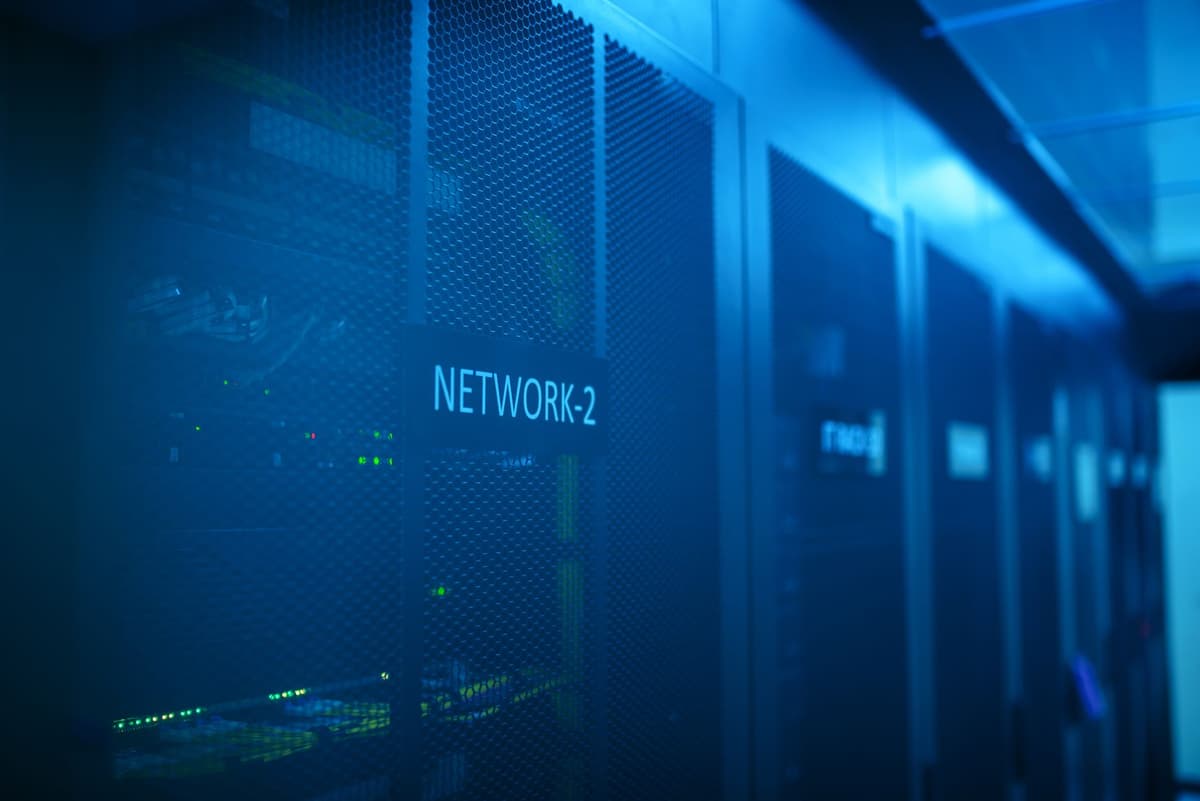
Photo by panumas nikhomkhai on Pexels
This approach levels the playing field for the German Mittelstand. A small specialized manufacturer in Baden-Württemberg can now deploy a world-class AI specialized for its specific chemical processing needs without needing a direct line to San Francisco. It allows for a level of customization that generic, one-size-fits-all models from the tech giants simply cannot provide.
The Geopolitics of Computation
We are entering an era where 'Sovereign Compute' will be discussed with the same gravity as energy independence. Just as the 2022 energy crisis forced Europe to reckon with its reliance on foreign gas, the AI boom is forcing a reckoning with 'compute dependency.' Kolibri is the first pillar of a broader strategy to ensure that European values and European law are baked into the silicon.
This isn't just about Germany. It is a blueprint for how medium-sized powers can survive in a world increasingly bifurcated by the US-China tech rivalry. By establishing a sovereign alternative, Germany creates a buffer. It ensures that its domestic industries are not collateral damage in trade wars they didn't start. This is about maintaining the 'state of the art' without sacrificing the 'state of the nation.'
What This Actually Means
The launch of Kolibri signifies that the era of the 'digital colony' is ending. For too long, European nations have been content to be the world’s most regulated consumers of technology rather than its most ambitious producers. This model changes the math by treating AI as a public utility—a fundamental layer of the economy that must be secured at the state level.
Success will not be measured by whether Kolibri 'beats' GPT-4 in a vacuum of benchmarks. Success will be measured by how many German factories integrated it into their workflows by 2026. It will be measured by the number of developers who build local startups on top of its weights rather than renting space on a foreign platform.
Ultimately, sovereign compute is about the right to self-determination in the age of automation. If Germany succeeds, it will prove that you don't need to be a global superpower to own your digital destiny. You just need the courage to build your own tools.
Quick Answers
Is Kolibri meant to replace models like GPT-4?
Not directly; it is designed to provide a secure, sovereign alternative for domestic industries that cannot risk using closed, foreign-owned APIs for sensitive data.
Why does 'open-weight' matter for a government project?
It allows private companies to host the model on their own hardware, ensuring that their proprietary data never leaves their control while allowing for deep customization.
Is this a form of protectionism?
It is digital mercantilism; while it doesn't ban foreign models, it uses state resources to ensure domestic industry has a viable, home-grown alternative to foreign monopolies.