A Brave New World of Not Crashing During Surgery
For decades, we’ve collectively agreed that the software running high-stakes medical imaging should be held to the same stability standards as a 2004 era copy of Limewire. We accepted that real-time surgical AI might occasionally hallucinate a phantom limb or a geometric void simply because a developer forgot to manually deallocate a block of memory in C++. It’s a charming quirk of the industry, really. We demand surgeons spend fifteen years in school, but we let the code powering their robotic scalpels run on the digital equivalent of a Jenga tower built on a vibrating washing machine.
Enter the "Safe-Silicon" revolution, a term likely coined by a marketing executive who just realized that "Silicon That Doesn't Randomly Fail" was too honest. By shifting to Rust for GPU programming—bolstered by Nvidia’s latest toolset—the medical field is attempting something radical: writing code that the computer actually understands before it tries to run it. It’s a bold departure from the traditional method of 'shipping it and hoping the surgeon has a good malpractice lawyer.'
The Thrilling Mystery of the Black Box
There is a certain romanticism to the 'black box' reliability crisis in MRI reconstruction. Before Rust entered the fray, an MRI machine was basically a $3 million lottery ticket. Would you get a crystal-clear image of a spinal cord, or would a memory-related glitch transform the patient’s vertebrae into a series of jagged neon artifacts? Nobody knew. It added a layer of mystery to the clinical environment that I, for one, will miss.
The problem with C++ and its older siblings is that they are incredibly trusting. If a programmer tells the GPU to look for data in a place where no data exists, the GPU says "Sure thing, boss" and proceeds to output a visual glitch that looks suspiciously like a stage-four glioblastoma. Rust, however, is a pedantic killjoy. It uses a borrow checker to ensure that memory is handled with the obsessive-compulsive rigor of a librarian in a silent film. If the code isn't safe, it won't even compile. The audacity of wanting things to work correctly the first time is truly staggering.
- No more null pointer dereferences during a bypass.
- No more data races where two threads fight over the same pixel until one of them gives up and dies.
- No more buffer overflows that turn a gallbladder into a digital kaleidoscope.
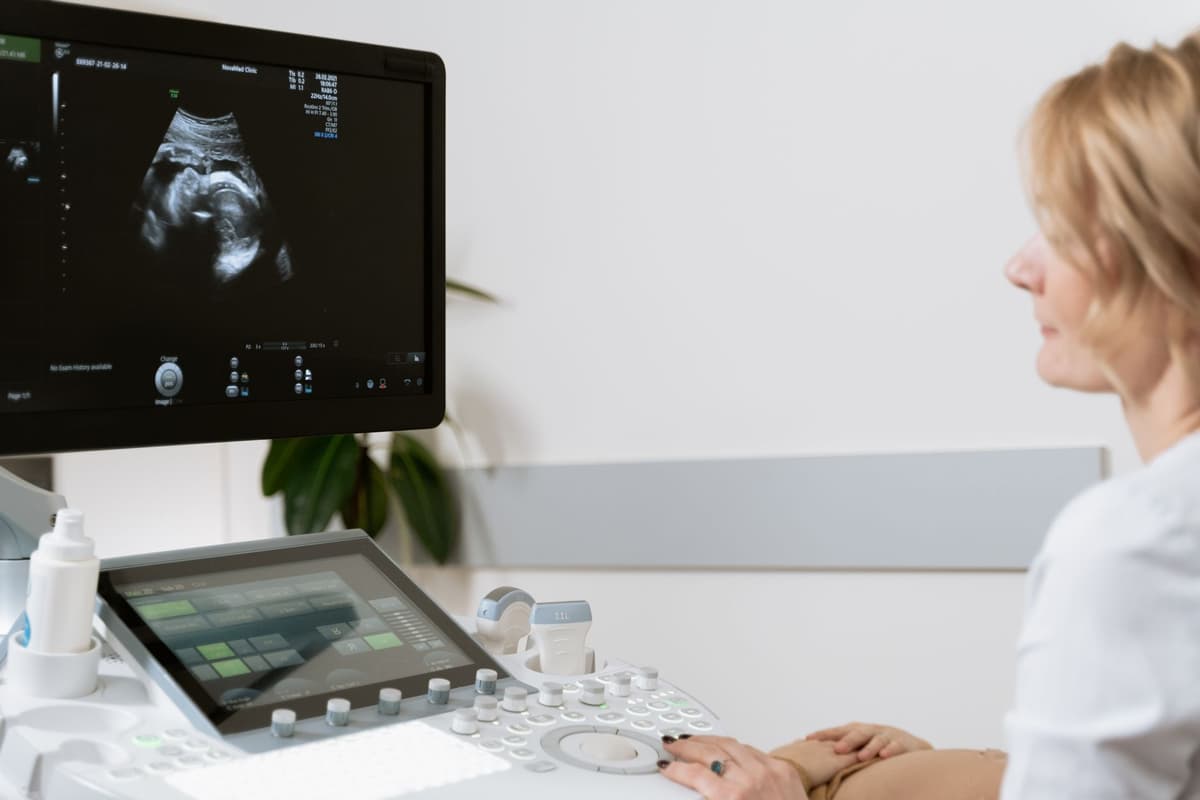
Photo by MART PRODUCTION on Pexels
Nvidia Decides Life Is Better Without Segfaults
Nvidia’s expansion into Rust-friendly toolsets wasn't an act of charity; it was an admission of defeat against the sheer chaos of legacy code. When you’re pushing billions of pixels in a real-time surgical AI, the overhead of traditional safety checks usually slows things down to a crawl. The industry's solution for years was simply to ignore the safety checks and pray to the gods of throughput.
Now, we have zero-cost abstractions. We can have our high-speed GPU performance and our 'not killing the patient' safety too. It’s the ultimate middle-class compromise. By moving the heavy lifting of MRI reconstruction—tasks that involve terrifyingly complex math—into the Rust ecosystem, we are effectively telling the hardware that it’s no longer allowed to improvise. The "Safe-Silicon" movement is basically just putting a leash on the GPU and reminding it that its job is to show us a kidney, not a postmodern art piece.
What This Actually Means
What this actually means is that the era of the 'glitch-induced misdiagnosis' is becoming a niche hobby for historians rather than a daily reality for radiologists. We are finally admitting that 'memory safety' isn't a luxury for web developers; it’s a prerequisite for anyone claiming to provide life-saving technology. If your surgical AI can’t manage its own memory without crashing, it shouldn't be allowed in the room, let alone near a human artery.
The shift to Rust in medical hardware is the digital equivalent of doctors finally deciding to wash their hands before surgery. It seems obvious in retrospect, yet we spent years pretending that the 'randomness' of software was just an unavoidable law of nature. It wasn't. It was just lazy engineering tolerated by an industry that moved slower than the glaciers it’s currently helping to melt.
Ultimately, this move to native GPU programming in Rust ensures that when a surgeon looks at a screen, they are seeing the patient, not a bug report. It’s a boring, stable, and predictable future. And in medicine, boring is the highest possible compliment.
Quick Answers
Is my current MRI scanner going to crash?
Statistically, it’s about as stable as a house of cards in a wind tunnel, but don't worry—the radiologist is trained to squint through the artifacts.
Why did it take so long to use a 'safe' language?
Because for decades, the industry valued the raw speed of unmanaged code over the minor inconvenience of the patient’s data being accurate.
Does Rust make the AI smarter?
No, it just makes the AI less likely to have a nervous breakdown while it's looking at your internal organs.