We spent forty years searching for a pharmaceutical miracle that could kill our primal urge to devour an entire sleeve of Oreos at midnight. We found it, but there was fine print. Now, the collateral damage of vanishing body fat is running a shadow economy larger than the GDP of several Baltic nations.
Here is how pharmacology works in the twenty-first century: you inject a tiny peptide that tricks your brain into believing a single almond is a Thanksgiving feast. You shed thirty pounds. You feel like a Greek deity. Then you look in the bathroom mirror under unforgiving fluorescent lighting and realize your face looks like a deflated volleyball that washed ashore in 1997. Your hair is jumping off your scalp like passengers fleeing a burning ferry. Your fingernails have taken on the structural integrity of wet saltine crackers.
Naturally, the free market looked at this biological horror show and did not say, "Oh dear, are you okay?" The free market rubbed its hands together, adjusted its fleece vest, and whispered, "Babe, wake up, a brand-new downstream TAM just dropped."
The Great Facial De-Plumping of 2024
The initial wave was purely dermatological panic. "Ozempic face" entered the cultural lexicon not as a medical pathology, but as an aesthetic emergency. When human beings shed twenty percent of their body mass in four months, fat does not politely exit from only the areas where we keep our regrets. It vacates the cheekbones first, leaving behind the hollowed-out, haunted expression of an 18th-century French poet dying of consumption in an unheated garret.
Plastic surgeons who spent the last decade warning people away from cheek implants suddenly found themselves running twenty-four-hour dermal caulking operations. In 2023 alone, the global facial injectables market topped $5.8 billion, driven largely by patients demanding that someone re-inflate their cheeks before their next Zoom call. Medspas didn't just survive the sudden drop in liposuction inquiries. They pivoted overnight into architectural restoration.
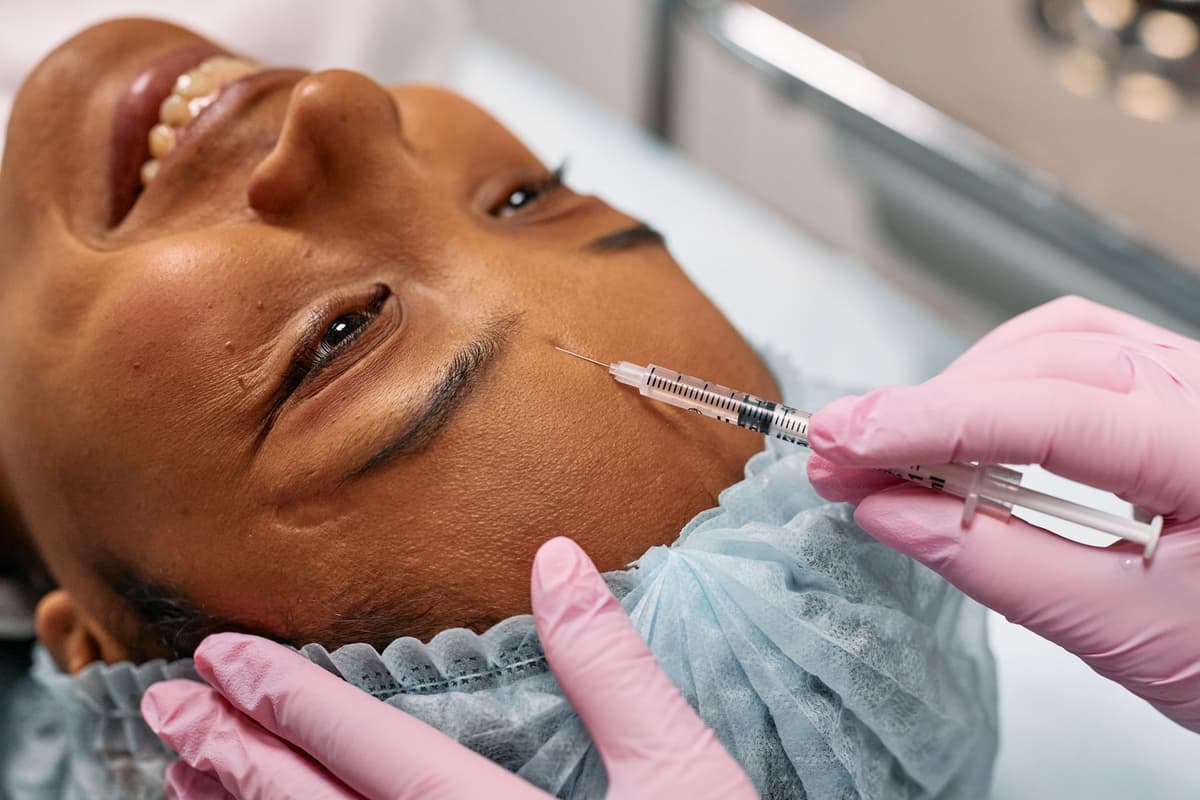
Photo by cottonbro studio on Pexels
It turns out that if you eliminate an entire demographic's desire to spend $400 a week on UberEats and boutique cocktails, that capital does not simply sit in a high-yield savings account. It flows directly into hyaluronic acid, biostimulatory threads, and panic-bought jawline sculpting rollers. We did not eradicate consumer excess; we just rerouted it from the gut directly to the zygomatic arch.
The Hair Loss Hustle and Brittle Nail Boom
Skin was merely the opening act. Rapid weight loss triggers telogen effluvium, an extraordinarily fancy medical term that means "your hair follicles get spooked by the calorie deficit and collectively decide to retire early."
Suddenly, the venture capital community—which previously thought hair was just something you transplant in Istanbul after an IPO—realized that every GLP-1 patient with a thinning crown is willing to pay $120 a month for specialized nutraceuticals. Cue the barrage of bespoke hair serums. Companies that previously sold generic biotin pills re-labeled their inventory as "Metabolic Transition Scalp Fortifiers," slapped a matte-beige label on the bottle, and raised their margins by 400 percent.
Now, the frontier has moved south to the fingertips. The latest cosmetic casualty making the rounds in clinical case studies is nail dystrophy: bizarre ridges, spoon-shaped depressions, and nails so brittle they snap when you open a car door.
- Dermatologists are creating dedicated "GLP-1 nail restoration protocols" that cost more than a set of winter tires.
- High-end nail salons in Manhattan and West Hollywood have quietly swapped standard acrylics for medical-grade keratin wraps.
- Founders are raising seed rounds for "gut-to-cuticle" bio-available peptide broths that taste like ground chalk and cost $9 a sachet.
We have essentially invented a drug that turns people into walking DIY home-renovation projects. Every time you patch the drywall in the living room, the roof starts leaking in the pantry.
The Involuntary Biological Subscription Model
The sheer macroeconomic elegance of this ecosystem is staggering. For decades, the wellness industrial complex operated on a simple loop: shame people about their weight, sell them a cabbage soup diet, watch them fail, and sell them a gym membership. It was sloppy. It relied on willpower, which is notoriously unreliable and prone to collapses at 11:00 PM in front of a refrigerator.
GLP-1 agonists solved the willpower problem by surgically severing it from the equation. But in doing so, they created something venture capitalists love even more: mandatory secondary consumption.

Photo by Los Muertos Crew on Pexels
If you take a weekly shot that keeps you thin, you are now economically obligated to buy four supplementary products to prevent yourself from turning into a pile of dust and loose skin. You need the high-protein meal replacement shake because you cannot stomach solid food. You need the collagen peptides to coax your hair into staying attached to your skull. You need the bi-monthly filler touch-up so your coworkers don't ask if you have an untreated tropical illness. You need the specialty cuticle lacquer to keep your fingernails from shattering when you type an email.
It is the inkjet printer business model mapped directly onto the human anatomy. The injection is the cheap hardware; your face, hair, and nails are the outrageously expensive proprietary ink cartridges you must replace until you die.
What This Actually Means
We are witnessing the birth of the first truly captive adjunctive consumer class. Modern biotechnology did not cure vanity; it merely relocated the battlefield from the scale to the vanity mirror.
Every time medicine manages to untangle one thread of human frailty, the private sector immediately sets up five toll booths along the detour. We thought the blockbuster weight-loss drug would crater the consumer economy by wiping out the snack food, alcohol, and diet industries in one fell swoop. Instead, it just created a hyper-specialized triage economy for people who are physically incapable of eating a muffin but deeply alarmed by what gravity is doing to their jawlines.
Human biology is an intricate, vindictive machine. It does not surrender its body fat without taking a hostage. Right now, that hostage is your cuticles, and there is a venture-backed startup in San Francisco waiting to negotiate their release for $89 a month.
Quick Answers
Is 'Ozempic face' an actual medical diagnosis?
No, it is just rapid volume loss. When you drop significant weight in a short window, your face loses subcutaneous fat, which causes skin to sag and hollows to deepen.
Why are GLP-1 drugs making people's nails brittle?
Severe caloric deficits and rapid weight loss frequently lead to temporary micro-nutrient deficiencies and protein drops, which halts the production of healthy keratin.
Can hair loss from these medications be reversed?
Yes. Telogen effluvium is almost always temporary, meaning your hair typically starts regrowing once your weight and nutritional intake stabilize, even without buying a $90 designer serum.