The Attic of Your Soul is Full of Literal Garbage
For the last fifty years, geneticists have looked at the human genome and acted like a frustrated homeowner staring at a garage full of broken holiday decorations and old magazines. We focused on the 2% of our DNA that actually codes for proteins—the 'functional' stuff—and labeled the other 98% as 'junk DNA.' Imagine buying a 500-page mystery novel, reading only ten pages, and deciding the rest of the book is just the author's grocery list written in code. It was the ultimate scientific shrug. We basically told our cells, "I don't know what you're doing back there, but keep it down, I'm trying to study this one specific enzyme."
It turns out that junk DNA isn't junk at all. It’s more like the dark matter of your body, or that one drawer in your kitchen that contains three dead batteries, a mystery key, and a coupon for a restaurant that closed in 2012. We’ve discovered that this non-coding region is actually a massive, vibrating switchboard of regulatory elements. It’s the middle management of your biology. While the 2% is busy actually building things, the 98% is standing around with a clipboard deciding exactly when your immune system should freak out and start attacking your own thyroid because it mistook a piece of gluten for a Viking invader.
OpenAI Astra Is the Nerd We Needed
We couldn't solve this ourselves because the human brain is optimized for recognizing faces in toast, not for spotting patterns in 3.2 billion base pairs of chemical gibberish. Enter the frontier models. After OpenAI’s Astra finished cracking cryptographic puzzles that had stumped the NSA for decades, someone finally had the bright idea to point the supercomputer at our internal spaghetti code. The AI didn't see junk; it saw a giant, hyper-logical logic gate. It’s like hiring a professional organizer for your brain who realizes that the 'trash' in your attic is actually a disassembled Ferrari.
These models are performing 'proteomic decryption,' which is a fancy way of saying they are finally reading the fine print on why your body hates itself. We aren't just looking at the genes anymore; we’re looking at the 'dimmer switches' that control them. If your DNA is a piano, the junk regions are the sheet music telling you when to hit the keys. Before this, we were just smashing our palms against the keyboard and wondering why it sounded like a cat falling down the stairs. Now, we’re actually starting to see the notes.
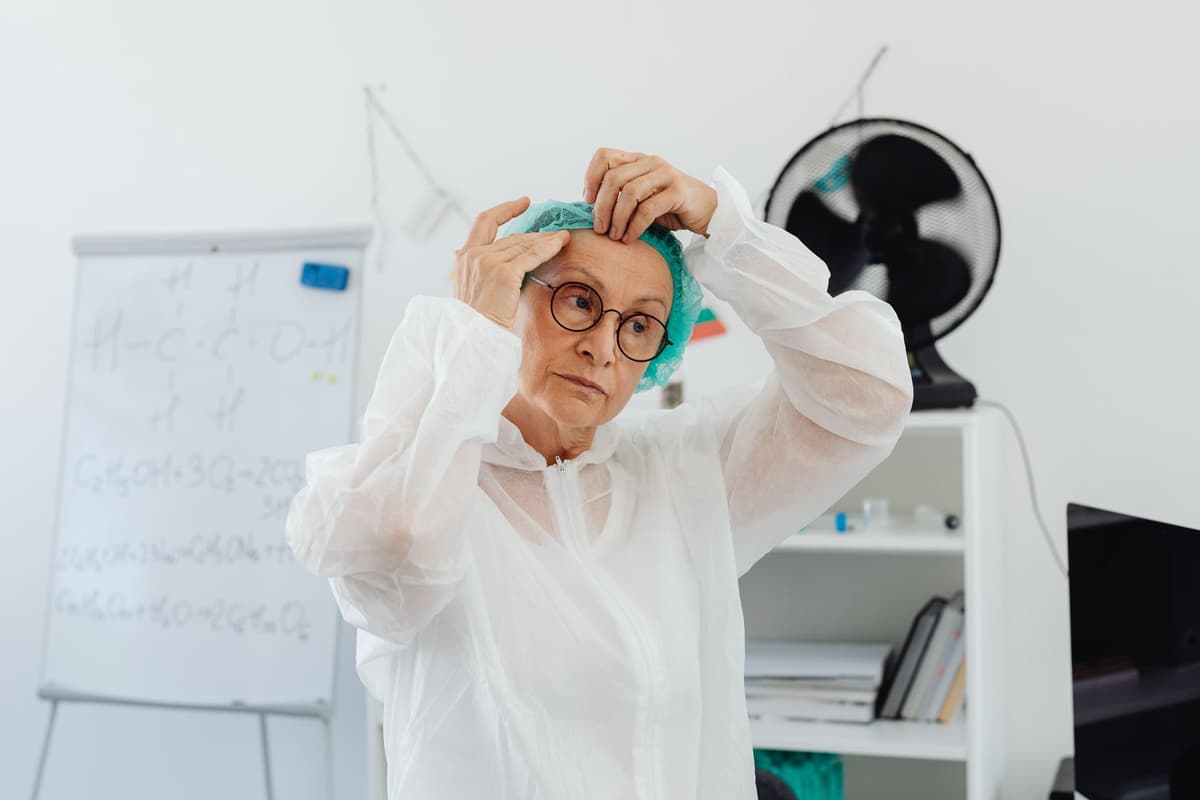
Photo by https://kaboompics.com/ on Pexels
Turning Your Immune System Off and On Again
Autoimmune diseases—Lupus, Multiple Sclerosis, Rheumatoid Arthritis—have always been the 'Check Engine' light of medicine. You know something is wrong, but the mechanic just hits the dashboard and tells you to come back if it starts smoking. Because we couldn't find a single 'broken' gene, we just assumed the body was being a jerk for no reason. But thanks to AI-driven proteomics, we’ve identified that these diseases are often just 'regulatory glitches.' A switch in the junk DNA gets stuck in the 'ON' position, and suddenly your white blood cells think your joints are a foreign insurgency that needs to be neutralized with extreme prejudice.
With personalized CRISPR therapies, we aren't just hacking away at the DNA like a lumberjack with a blindfold on. We’re using the AI’s map to perform surgical strikes on those specific regulatory switches. It’s the ultimate IT support move. We are literally going into your code, finding the line that says if (pollen) { melt_sinuses(); } and changing it to if (pollen) { chill_out_man(); }. We are turning incurable syndromes into programmable targets. Your body is basically a buggy piece of software, and we finally found the 'Update' button.
- The human genome has 3.2 billion base pairs, but we only understood about 60 million of them until recently.
- Over 90% of disease-associated genetic variations are found in the 'junk' regions.
- New AI models can predict protein folding and regulatory behavior in milliseconds, a task that used to take a PhD student five years and three mental breakdowns.
What This Actually Means
This is the end of the 'Mystery Illness' era. For a long time, if you had a chronic condition that didn't show up on a standard blood test, doctors basically treated you like you were haunted by Victorian ghosts. "Maybe try eating less nightshades?" they’d suggest, while your immune system was busy dissolving your cartilage. By decrypting the non-coding genome, we are moving medicine from the 'guessing' phase to the 'engineering' phase. We are moving from 'treating symptoms' to 'editing the source code.'
In the next decade, a trip to the doctor for an autoimmune flare-up won't result in a prescription for steroids that make you grow hair in weird places and lose your mind. Instead, they’ll run a sequence, find the specific regulatory switch that’s acting up, and send in a CRISPR messenger to flip it back. It’s the most sophisticated 'Have you tried restarting your router?' in human history. We are finally becoming the admins of our own biology, and frankly, it’s about time. We’ve been running on 'Trial Version 1.0' for about 200,000 years, and the lag is getting ridiculous.
Ultimately, this proves that nothing in nature is actually junk; we’re just really bad at reading the manual. The stuff we threw away is the stuff that actually runs the show. It’s a humbling reminder that humans are basically just very complex biological computers that have been trying to fix themselves by hitting the side of the monitor for the last several millennia.
Quick Answers
Is my 'junk DNA' actually useful?
Yes, it’s basically the operating system that tells your genes when to turn on and off; without it, you'd just be a very expensive pile of protein goo.
Can AI really cure my allergies?
By identifying the regulatory switches that make your body overreact to cat dander, researchers are developing CRISPR tools to essentially tell your immune system to mind its own business.
When can I get my DNA edited?
Personalized CRISPR therapies are currently in clinical trials for specific conditions, but expect 'programmable medicine' to become a standard reality within the next 10 to 15 years.