It is strange to realize that Elizabeth Holmes was entirely right about the destination, even as she lied about every step of the journey. For years, the story of Theranos felt like a cautionary tale about Silicon Valley hubris, black turtlenecks, and the danger of treating human biology like software code. But looking at the diagnostic pipeline in 2024, something stranger is happening: the disaster didn't kill the dream of single-drop blood testing. It purified it.
When Holmes was sentenced to over 11 years in federal prison in November 2022, the immediate consensus was that micro-volume diagnostics was radioactive. No venture capitalist with a pulse would touch a blood-testing startup. The technology was deemed a physical impossibility, a violation of fluid dynamics and thermodynamic limits at the micro scale. Yet here we are, watching companies quietly publish peer-reviewed papers that do precisely what the Edison machine pretended to do, except this time the data is real.
The Physics Problem We Pretended Was a Software Bug
To understand why this is happening now, you have to look at why Theranos failed in the lab before it failed in court. Blood isn't just saline with some red dye. It is a thick, volatile slurry of cells, proteins, lipids, and salts that behave unpredictably the moment you pull them outside the body.
When you prick a finger, you don't just harvest venous blood. You crush capillary beds. You release interstitial fluid, the clear liquid that bathes our tissue cells, which instantly dilutes the sample. A single drop—roughly 50 microliters—often contains wildly inconsistent concentrations of biomarkers compared to the standardized 5 to 10-milliliter tubes drawn from an arm vein. Holmes tried to solve that biological reality with secrecy, dilution tricks, and off-the-shelf Siemens machines hidden behind keycard doors.
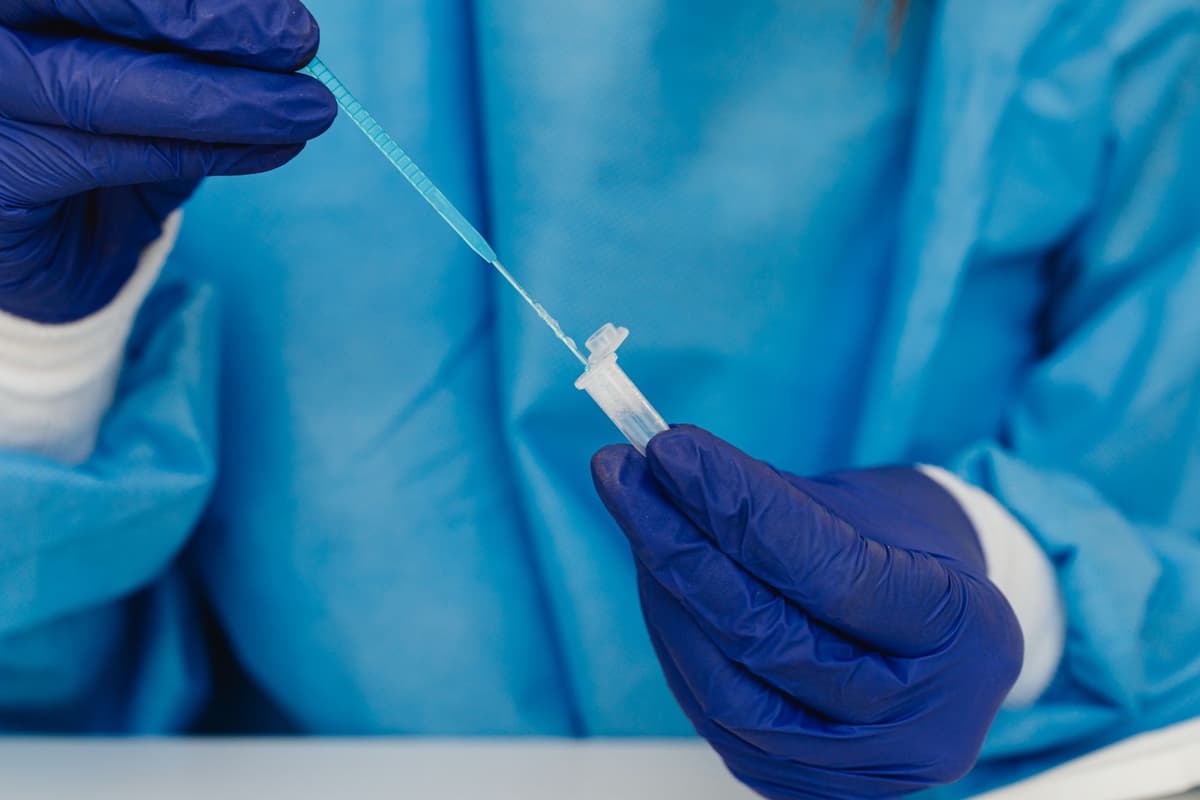
Photo by https://kaboompics.com/ on Pexels
The founders working on this today didn't start with marketing decks; they started with microfluidics and mass spectrometry. They had to solve fundamental physics questions:
- How to isolate cellular debris without high-shear centrifugation that bursts delicate red blood cells
- How to counter the 'capillary edge effect' where target proteins adhere to the walls of tiny collection wells
- How to amplify protein signals at picomolar concentrations without creating exponential noise
- How to normalize for the variable volume of interstitial fluid inherent to every fingerstick
Instead of pretending these constraints didn't exist, this new cohort treated them as the whole point of the exercise. They traded charisma for math.
The Radical Inconvenience of Open Science
Theranos thrived because diagnostic tests famously slipped through an FDA regulatory loophole known as Laboratory Developed Tests (LDTs). Holmes insisted on trade secrets over peer review, claiming transparency would surrender their competitive edge to Quest or LabCorp. The new guard of diagnostic biotech has taken the exact opposite bet: performative, almost aggressive transparency.
Take companies like Babson Diagnostics or Drawbridge Health. Instead of building opaque proprietary black boxes, Babson spent years running joint clinical trials with retail partners and publishing their accuracy metrics directly against conventional venipuncture standards. They collect small blood samples from the finger, but they deliberately don't push for Holmes' impossible 'one drop for everything' fantasy. They aim for small volumes—say, a third of a tube—that reliably run on standard, vetted analytical equipment.
Or look at platforms utilizing high-plex protein profiling, such as Olink and SomaLogic, which can measure thousands of proteins from a single microliter of plasma. They aren't trying to hide the instruments. They sell the reagents and instruments directly to academic research hospitals. They run blinded validations. Every single claim is hung out in the open air, practically begging the scientific community to tear it apart.
I find myself wondering if this shift would have happened without the scandal. Silicon Valley spent decades worshipping the idea of 'stealth mode'—the notion that brilliant outsiders must protect their genius from the entrenched establishment. Theranos proved that in biology, stealth mode is usually just a camouflage net thrown over broken equipment. The post-Holmes standard demands receipts before capital.
The Real Prize Was Never Just Convenience
We always framed the Theranos pitch as a story about squeamishness: nobody likes big needles, so a tiny poke sounds friendlier. But that was always the least interesting part of the thesis. The real prize is frequency.
Think about how we practice preventive medicine right now. You visit a clinic once every twelve or twenty-four months. A phlebotomist fills three purple-top tubes. You get a static snapshot of your lipid panel, your fasting glucose, and maybe your liver enzymes. It is the medical equivalent of trying to understand the plot of an eighty-hour film by looking at two random freeze-frames captured a year apart.
If diagnostic medicine can reliably shrink sample requirements and move the collection point to local pharmacies or even kitchen tables, the entire paradigm flips. We move from episodic monitoring to longitudinal trends. You can track early markers of autoimmune flare-ups, monitor systemic inflammation shifts, or catch early circulating tumor DNA (ctDNA) signals when a cancer recurrence is measured in hundreds of cells rather than palpable tumors.
That transition requires staggering precision. If your test has an error margin of five percent, but the biological signal you are tracking only swings by three percent, your data is garbage. Holmes never cared about that math because her timeline was set by fundraising cycles. The current wave of researchers seems content to spend five years staring down a single signal-to-noise problem before even writing a press release.
What This Actually Means
The most fascinating legacy of Elizabeth Holmes is that she accidentally created the ultimate stress-test for medical innovation. By poisoning the well so completely, she forced diagnostic science to become the most scrutinized, hyper-validated corner of the biotech universe.
The bar wasn't just raised; it was bolted into bedrock. Investors who used to accept vague answers about proprietary algorithms now bring molecular biologists and microfluidic engineers to their initial pitch meetings. Regulators are systematically closing the loopholes that allowed Theranos to operate in the shadows for a decade.
Progress in hard science is painfully slow, stubbornly physical, and deeply resistant to the charms of charismatic founders. The machine that can tell you everything about your health from a solitary bead of blood is actually coming. It just won't be made by someone who promises it can do everything tomorrow.
Quick Answers
Was the core Theranos idea of finger-prick testing scientifically impossible?
No, but testing hundreds of disparate diseases from a single tiny drop simultaneously was impossible with their methods. Modern approaches focus on specific biomarker panels with carefully calibrated microfluidic tools rather than an all-in-one magic box.
Are fingerstick blood tests commercially available now?
Yes, but for specific, validated use cases rather than general omnibus health screening. Several companies now have FDA clearances for small-volume capillary testing covering lipid panels, hemoglobin A1c, and certain infectious disease assays.
How are today's biotech startups avoiding the Theranos trap?
They publish their methodology in peer-reviewed journals, run blinded multi-site clinical trials against standard venous blood draws, and pursue explicit FDA clearances rather than relying purely on trade secrets.