The Great Biological Identity Theft
I’ve spent the last three hours staring at diagrams of cellular pathways, and I can't shake the feeling that we've been looking at aging all wrong. For decades, the dominant metaphor for getting older was the 'rusting car.' You drive the car, the gears grind down, the paint chips, and eventually, the engine seizes. But the latest breakthroughs in transient cell identity suggest that your 'car' isn't actually rusting. Instead, the steering wheel is slowly deciding it wants to be a hubcap again, and the spark plugs are wondering if they’d be happier as unrefined iron ore.
Researchers are finding that cells in aging bodies enter these strange, 'embryonic-like' chaotic states. They don't just stop working; they lose their professional identity. A heart cell forgets how to beat rhythmically and starts acting like a confused generalist. It’s not a failure of mechanics. It’s a failure of memory. We are witnessing a biological regression where the specialized wisdom of a mature cell dissolves back into the frantic, unformed potential of an embryo.
This isn't just a metaphor. Scientists have identified specific markers of this 'identity loss' in skin, liver, and brain tissues. When a cell loses its way, it stops performing its job, which we perceive as organ failure or aging. But the cell itself isn't 'dead' or even necessarily 'damaged' in the way we thought. It’s just lost its resume. It’s in a transient state, floating between what it was and a primitive version of what it used to be before it grew up.
The Librarian of the Genome
If the DNA is the instruction manual, the epigenome is the librarian who decides which pages you’re allowed to read. In a young body, the librarian is strict. If you’re a lung cell, the librarian keeps the 'how to be a bone cell' chapter locked in the basement. You stay focused. You have a career. You have a purpose. But as time passes—specifically through the accumulation of epigenetic noise—the librarian gets tired. The locks break. Suddenly, the lung cell is reading snippets of the bone manual and the eye manual, and it gets paralyzed by the options.

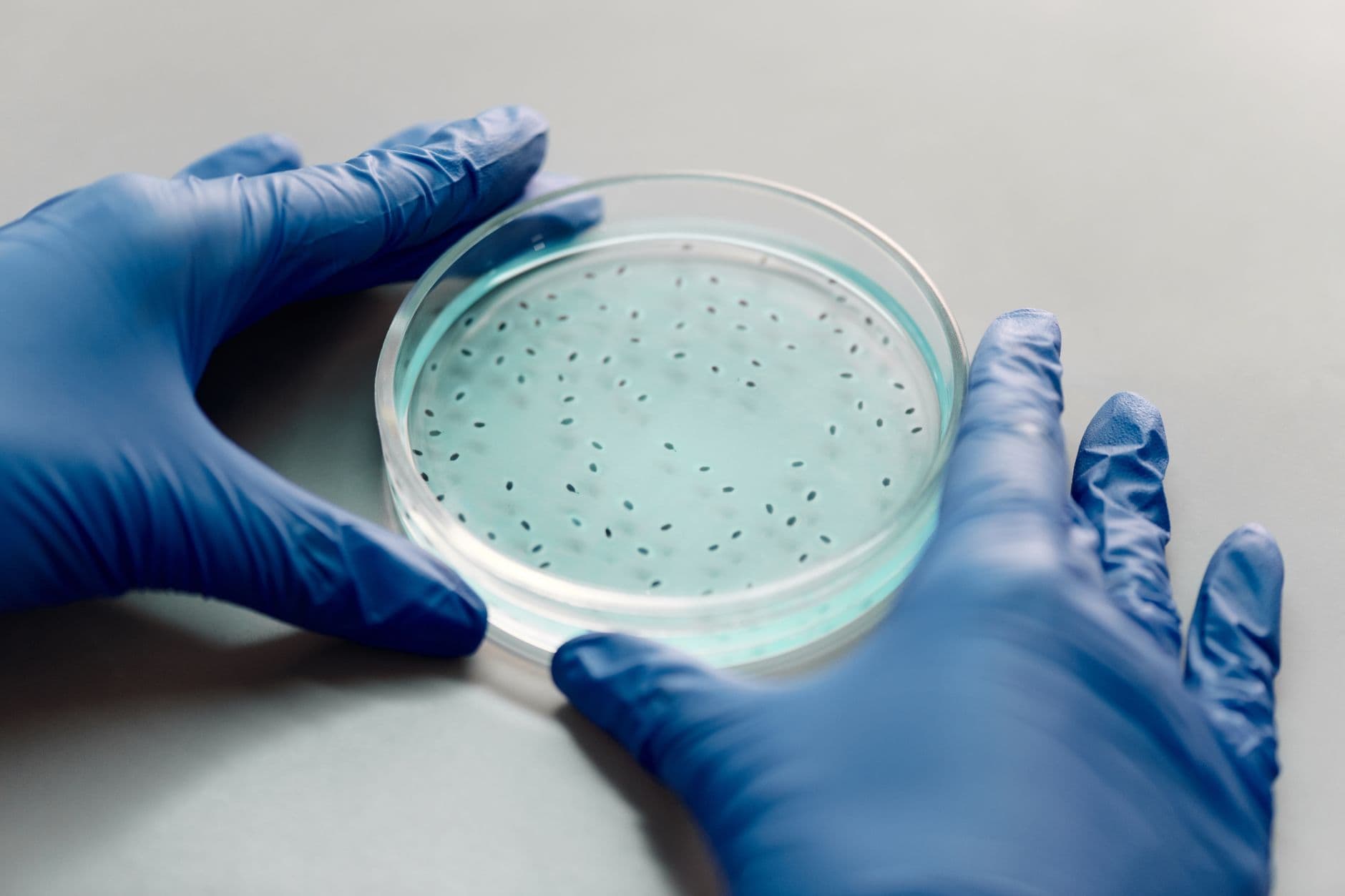
Photo by Tyler Mascola on Pexels
This loss of specificity is what researchers are now calling 'epigenetic noise.' It’s the background static that drowns out the signal of who a cell is supposed to be. In a study published in Cell in early 2023, researchers demonstrated that by using 'Yamanaka factors'—a cocktail of proteins that can turn adult cells back into stem cells—they could partially reset this noise. They weren't trying to 'repair' broken DNA. They were just re-organizing the library so the cell could remember its original job description.
What fascinates me is that this implies the 'information' of youth is still there. It’s not deleted; it’s just buried under a mountain of poorly filed paperwork. If we can find the right way to signal the cell, we might not need to replace the organ. We might just need to give the cell a very firm reminder of its professional obligations. It shifts the entire goal of medicine from 'replacement' to 're-education.'
Reminding the Heart to be a Heart
We are moving toward an era of 'epigenetic reprogramming,' and the implications are slightly terrifying but mostly beautiful. If aging is a loss of identity, then 'healing' becomes a form of storytelling. We are telling the body the story of what it was when it was healthy. We’ve seen this work in mice—literally reversing vision loss by 'reminding' retinal cells how to function—but the jump to humans requires a level of precision we’re only just beginning to grasp.
- The 2006 discovery of Yamanaka factors proved we could reset the clock entirely, but that created a new problem: if you reset a cell too far, it becomes a stem cell, which can lead to tumors.
- The new goal is 'partial reprogramming.' We want to turn the clock back from 80 to 20, not from 80 to 'unborn.'
- This involves exposing cells to these factors for just long enough to scrub the 'noise' without erasing the identity of the cell itself.
There is a profound philosophical shift happening here. If a cell can 'forget' it is old, does that mean 'old' is just a state of mind for a molecule? We used to think time was a one-way street of decay. Now, it looks more like a messy room that just needs to be cleaned. The fundamental building blocks aren't rotting; they're just cluttered.
What This Actually Means
This research suggests that the 'biological limit' of the human body might be much more flexible than we ever imagined. We aren't fighting against the laws of thermodynamics as much as we are fighting against a loss of information. If we can master the art of 'reminding' our cells of their identities, the diseases of old age—from Alzheimer's to heart disease—stop being inevitable collapses and start looking like solvable data management problems.
It makes me wonder what else our bodies 'know' but have forgotten. If we can trigger a cell to remember its identity, could we eventually trigger it to remember how to regenerate a limb? Or how to fight off a virus it hasn't seen in decades? We are moving away from the 'war on cancer' or the 'battle against aging' and moving toward a conversation with our own biology. We are learning to speak the language of the epigenome.
Ultimately, this gives me a strange kind of hope. It suggests that the vitality we feel in our youth isn't something that is 'used up' like fuel in a tank. It’s a blueprint that stays with us, hidden in the background, waiting for someone to clear the static and let the signal through again. We aren't breaking; we're just getting a little bit confused by the noise of living.
Quick Answers
Is this the same as stem cell therapy?
No, stem cell therapy usually involves injecting new cells into the body, whereas epigenetic reprogramming aims to 'refresh' the cells you already have by cleaning up their internal data.
Can I buy a pill for this yet?
Not even close. While labs are testing small molecules that might mimic this effect, the tech is currently in the high-stakes experimental phase with significant risks of causing uncontrolled cell growth if not calibrated perfectly.
Does this mean aging isn't real?
Aging is very real, but this research suggests it's a software problem (epigenetics) rather than a hardware problem (DNA damage). The hardware is still mostly functional; the operating system is just glitching out after 80 years of uptime.