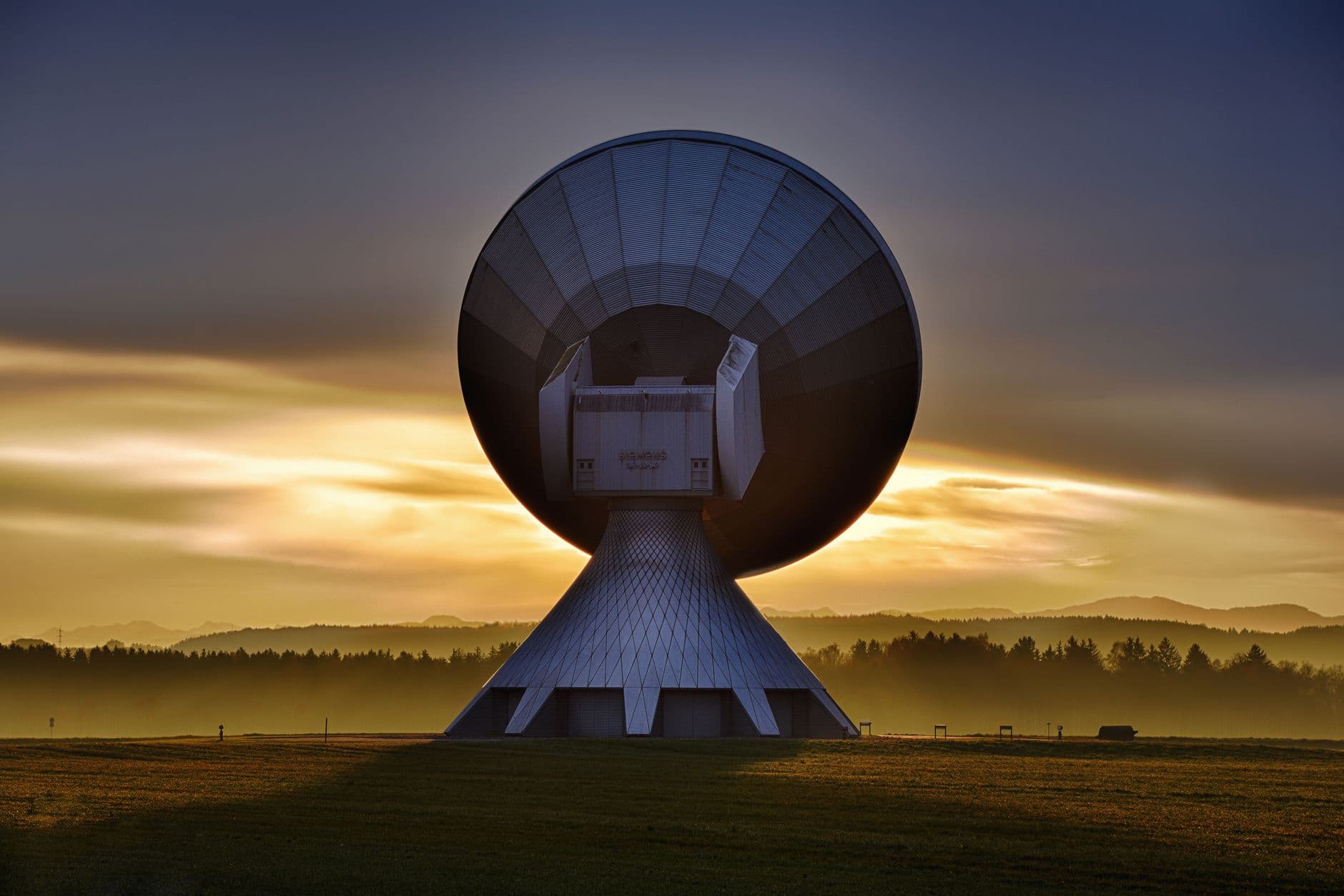
For decades, radio astronomy operated on the hoarder logic of a retired dentist saving every rubber band in the tristate area. The operating philosophy was simple: capture literally every electromagnetic wobble in the cosmos, dump it into spinning hard drives, and let a graduate student cry over it in 2041. That delusion officially died when the Square Kilometre Array realized its full sensor array would spit out roughly 710 petabytes of raw data per day, which is less of a scientific harvest and more of a digital firehose pointed directly into an empty wallet.
Enter the new wave of hyper-efficient reasoning chips loaded with featherweight open-weights architectures like DeepSeek-V3 and GLM-5.3-Flash. Instead of dutifully archiving three exabytes of interstellar dead air, we are putting ruthless bouncers directly onto the silicon at the base of the dishes. The era of the telescope as a faithful recording tape is dead; long live the telescope that aggressively leaves the universe on read.
The Grand Cosmic Noise Dump
Space is not a poetic tapestry of celestial wisdom. Space is loud, messy, and mostly screaming static produced by ancient hydrogen gas having the thermodynamic equivalent of a boring Tuesday afternoon. If you point a hyper-sensitive radio telescope toward the heavens, 99.999% of what you get is the astronomical version of a pocket dial.
To make matters worse, human civilization won't shut up. A high-gain antenna in the Australian Outback doesn't just listen for pulsars; it picks up a diesel truck engine sparking fifty miles away, an errant Wi-Fi leak from someone microwaving a burrito, and Starlink satellites chattering like caffeinated squirrels. Historically, astronomers wrote clumsy algorithmic band-pass filters to clean this up. These filters had all the nuance of a sledgehammer, routinely throwing out actual fast radio bursts because they looked slightly too much like an electric fence turning on in Perth.
The math broke entirely with the Square Kilometre Array's mid-frequency dishes. You cannot buy enough hard drives on Earth to store the unvarnished radio spectrum of the southern sky without bankrupting a mid-sized European nation by Thursday. The data cannot make it down the mountain. It has to die where it was born, out in the red dirt, within three milliseconds of hitting the sensor.
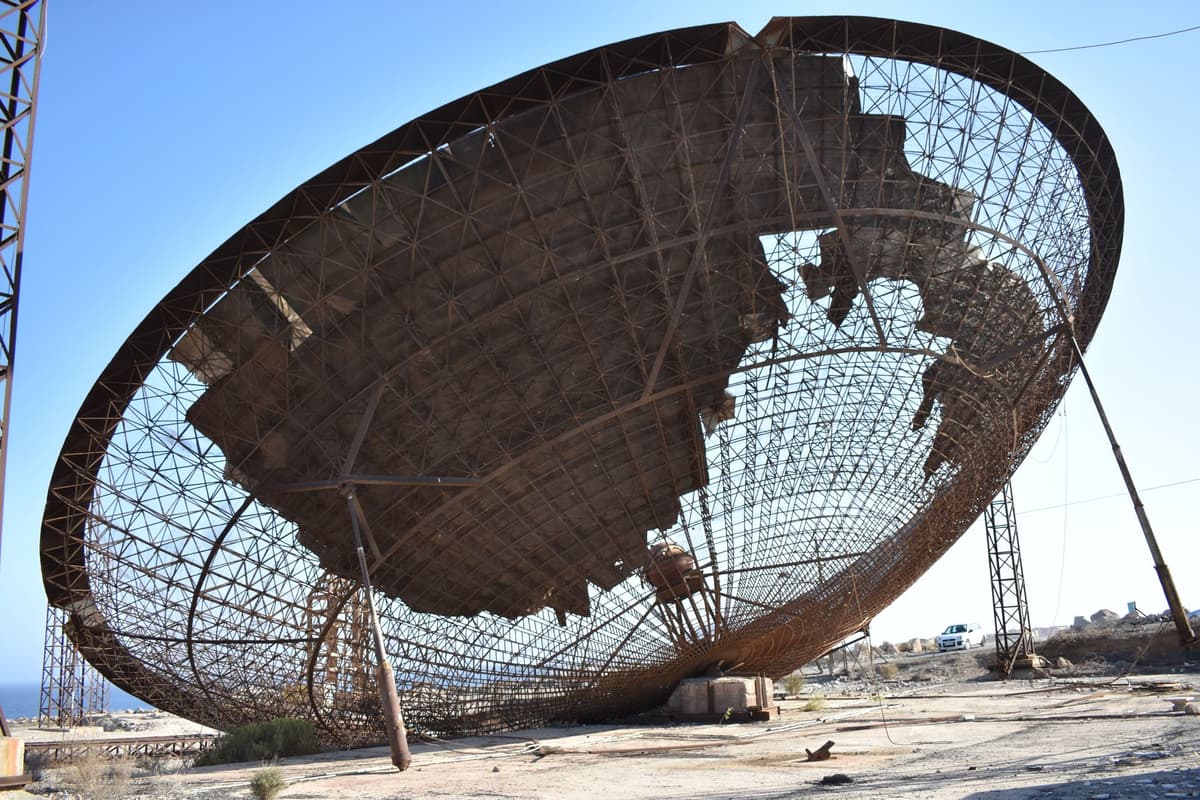
Photo by Ciprian Andrei Pavel on Pexels
Giving a Shovel to a Very Fast Toddler
Until recently, the artificial intelligence community was convinced that "intelligence" meant chaining twelve thousand liquid-cooled enterprise GPUs together to produce a model that consumes the electrical output of Denmark just to write a mildly convincing limerick about supply chains. Running that kind of compute inside an antenna housing located two hundred miles from running water was an obvious non-starter.
Then the architectural pivot happened. Models like GLM-5.3-Flash and the architectural distillations spinning out of DeepSeek-V3 showed up, proving you could achieve razor-sharp contextual filtering using sparse Mixture-of-Experts routing on chips that sip fewer watts than an espresso machine. Instead of waking up twenty billion parameters to inspect every cosmic ray, the system activates a microscopic subnet that effectively asks two questions: Is this a pulsar? No? Is it a dying star? No? Then trash it.
- The dish catches a massive radio transient.
- An on-chip edge model assesses the signal dispersion in under 12 microseconds.
- The model realizes it is just an Airbus A380 transponder reflecting off a weather balloon.
- The file is deleted before the byte even settles into cache memory.
- Total energy consumed: roughly 0.004 watt-hours and zero human tears.
We have essentially installed a world-class cynic inside the telescope. It does not marvel at the majesty of the heavens. It hates almost everything it sees, throws 99.9% of the universe straight into the trash can, and only rings the bell when something genuinely bizarre happens.
The Horror of Trusting the Shredder
Astronomers hate this with a visceral, bone-deep terror. To an astrophysicist, permanently discarding unexamined raw data feels like burning down the Library of Alexandria because you didn't like the font. The entire historical foundation of the discipline relies on archival serendipity: finding an anomaly in 1987 data that makes sense only after someone invents a new theory of gravity in 2024.
When you stick an inference-scale model at the edge, you are trusting a quantized matrix multiplication engine to decide what is real science and what is garbage. If GLM-5.3-Flash decides that a novel signal from Alpha Centauri looks a little too much like someone starting a leaf blower in Geraldton, that signal evaporates forever. Gone. Not saved to tape. Not queued for cold storage. Just converted into waste heat and blown across the desert scrub.
Yet the alternatives are worse. Option A is saving nothing because the storage arrays crash under an avalanche of unformatted static. Option B is paying Amazon Web Services $400 million a month to host raw white noise. Faced with these choices, the scientific community took a deep breath, looked at the efficiency curves coming out of the open-source model ecosystem, and quietly handed the digital paper shredder to an edge inference chip.
What This Actually Means
We are witnessing the quiet death of the passive observational instrument. A telescope is no longer an eye; it is a brain with a very narrow, highly judgmental attention span. The transition from "collect everything and pray" to "deduce immediately or discard" marks the boundary line where big science officially surrendered to the realities of data gravity.
This shift is going to migrate everywhere. Ocean floor sensor networks, high-energy particle colliders, and planetary climate arrays are all hitting the exact same wall. The universe produces information at a rate that treats human storage infrastructure as a laughable rounding error. If an instrument cannot think before it records, it will simply choke to death on its own intake.
The real punchline is that our first contact with an alien civilization probably won't be decoded by a wise sage squinting at an oscilloscope in a darkened lab. It will be caught by a ruthlessly stripped-down edge model that took one look at an incomprehensible beacon from deep space, sighed, decided it didn't look like an Australian toaster, and finally pinged the group chat.
Quick Answers
Why can't we just build bigger data centers next to the telescopes?
The sheer volume makes it physically impossible; the SKA observatory generates data rates that outstrip the transcontinental backhaul bandwidth of entire continents, meaning the data must be discarded at the sensor level or lost entirely.
Won't cheap inference models accidentally delete a major discovery?
Yes, occasionally they might, but tuning the thresholds allows models to keep anything with high entropy or unusual dispersion, meaning the risk is vastly lower than losing the whole system to buffer overflows.
Why use lightweight models instead of traditional algorithmic code?
Traditional statistical thresholding gets fooled constantly by unpredictable terrestrial radio interference, whereas tiny reasoning models evaluate the contextual morphology of a signal instantly without hardcoded rules.