The Infinite Loop of Trust
I’ve been staring at a snippet of code that shouldn't be able to do what it does. It’s barely a handful of lines—a recursive loop designed to gorge itself on memory and compute power—yet it has the capacity to turn a $3,000 laptop into a very expensive paperweight in seconds. We call this the 'Deathray' exploit, and while the name sounds like something out of a 1950s sci-fi serial, the reality is much more mundane and, frankly, more fascinating. It isn't a complex hack that steals your passwords; it’s a resource exhaustion attack that simply forgets to ask permission before it occupies every corner of your hardware.
What strikes me is the psychological contract we have with our browsers. We click links on Reddit, Twitter, or random forums with a reckless abandon we would never apply to downloading an .exe file. We have been trained to believe in the 'sandbox'—that invisible, impenetrable container that keeps the scary parts of the internet from touching our actual machines. But 'Deathray' suggests that the container isn't a vault; it’s a balloon. If you blow enough air into it, it doesn't matter how strong the rubber is. It’s going to pop.
I wonder if we’ve reached a point where the web has become too heavy for its own security model. We want browsers to be entire operating systems—capable of editing video, playing 3D games, and running complex spreadsheets—but we still expect them to have the footprint of a simple document viewer. This tension is where 'Deathray' lives. It exploits the fact that to make the web fast and responsive, we gave Javascript direct, high-speed access to the metal underneath the glass.
The Hardware Is Not a Metaphor
There is a specific kind of silence that happens when a computer truly freezes. The fans might ramp up to a frantic whine, or they might just stop. In the case of this exploit, it’s a hardware-level seizure. By the time your operating system realizes that one single browser tab is requesting 99% of your CPU cycles, the system is often too choked to even process the 'Force Quit' command. It’s a digital heart attack. I find myself asking: why did we build a system where a remote stranger can dictate the physical temperature of my processor just because I clicked a blue string of text?
- The exploit uses a technique called 'heap spraying' to saturate the browser's memory management.
- It bypasses standard 'unresponsive script' warnings by mimicking legitimate, high-intensity computations.
- Unlike traditional malware, it leaves no trace on the disk because it never needs to write a file.

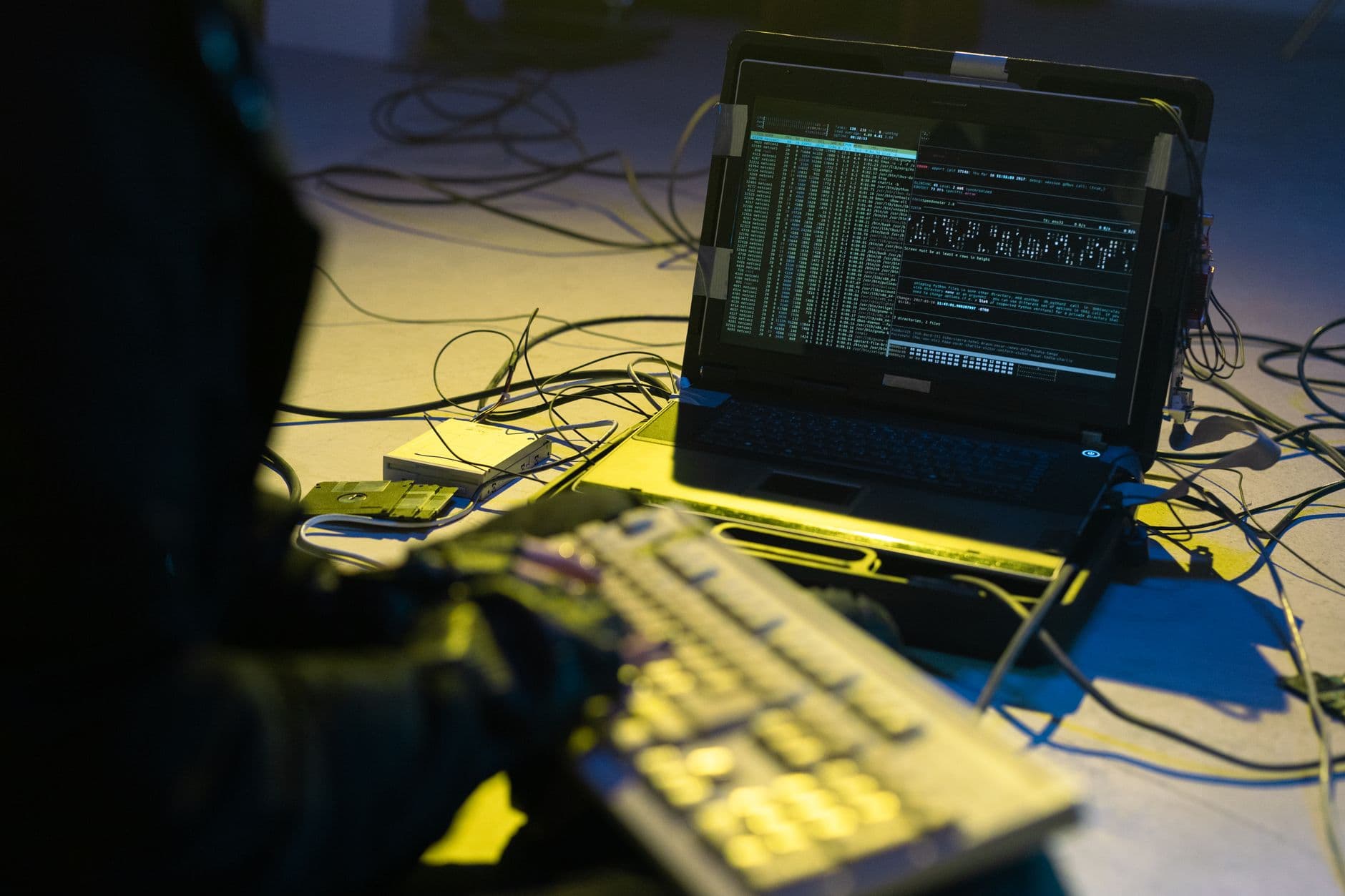
Photo by Jeremy Waterhouse on Pexels
It feels like we’ve spent twenty years trying to abstract away the physical reality of computing. We talk about 'the cloud' and 'virtual machines' as if they exist in a vacuum. But 'Deathray' pulls us back to the copper and silicon. It reminds us that every line of code executed in a browser is a physical event happening in a physical room. When that code is malicious, that physical event becomes an intrusion. If I can remotely cause your hardware to overheat or your kernel to panic, have I not technically 'broken into' your house?
The Architecture of Optimism
Most of our modern internet culture is built on a foundation of extreme optimism. We assume that the engineers at Google, Apple, and Mozilla have solved the problem of 'untrusted code.' We’ve built an entire economy on the idea that it is safe to visit a thousand different domains a day. If we truly felt the risk—if every link carried the same weight as opening a mysterious package on our doorstep—the internet as we know it would cease to function. The friction would be terminal.
But look at the numbers. In 2023 alone, we saw a 14% increase in browser-based zero-day vulnerabilities. The 'Deathray' exploit isn't an outlier; it's a symptom of a growing architectural crisis. We are asking the sandbox to do too much. We want it to be a fortress, but we also want it to have ten thousand doors so that every third-party tracker and ad-tech script can scurry in and out without being noticed. You can’t have a secure perimeter if the perimeter is designed to be porous by default.
I’m curious about what happens when the 'average' user realizes the sandbox is leaking. Does the web become a series of gated communities? Do we go back to a 'read-only' web where Javascript is disabled by default? It’s hard to imagine moving backward, but it’s equally hard to imagine moving forward when a single line of code can effectively 'brick' a device. We are currently living in the gap between our expectations of safety and the reality of our vulnerability.
What This Actually Means
The 'Deathray' exploit is a wake-up call for the 'Don't Worry About It' era of web browsing. It proves that resource exhaustion is just as potent a weapon as data theft. If I can take your device offline, I don't need to steal your data to disrupt your life. We are seeing the 'denial of service' attack brought down from the server level to the individual level, making the person—not the website—the target.
This isn't just about a bug that needs a patch; it’s about a design philosophy that has reached its limit. We’ve treated hardware as an infinite resource that the browser can manage on our behalf. 'Deathray' shows us that hardware is finite, and when it’s exhausted, the software protections we rely on simply evaporate. It’s a fascinating, terrifying reminder that we are never as insulated as we think we are.
We probably won't stop clicking links. The convenience is too addictive, and the illusion of the sandbox is too comforting to give up. But the next time my browser hangs for a split second after a click, I know I’ll be thinking about those few lines of code, and how easily the 'Deathray' could turn my screen black.
Quick Answers
Can this exploit actually break my computer permanently?
Unlikely. It causes a 'hard freeze' that requires a manual reboot, but it generally doesn't cause permanent hardware damage unless your cooling system is already failing.
Why can't browsers just block these scripts?
Because the scripts often look exactly like legitimate code used for video processing or complex data visualization, making it hard to 'blacklist' them without breaking half the internet.
Is there a way to protect myself right now?
Using extensions that limit Javascript execution on untrusted sites is your best bet, though it will definitely make your browsing experience more annoying and 'broken.'