The $34 Billion Safety Net
I’ve been staring at the technical specs of Nvidia’s recent announcement regarding native Rust support for GPU kernels, and I can't shake the feeling that we’re looking at a tectonic shift hidden inside a compiler update. For thirty years, if you wanted to talk to a chip at the speed of light, you had to speak C++. It’s the language of the gods and the language of catastrophic, billion-dollar memory errors. Hedge funds have historically spent millions—sometimes tens of millions—on 'safety' teams whose entire job is to make sure a stray pointer doesn't accidentally liquidate a fund's entire portfolio during a Tuesday afternoon session.
Now, Nvidia is effectively baking safety into the silicon conversation. Rust, with its obsessive focus on memory safety without a performance penalty, is finally being allowed to run natively on the H100s and Blackwell chips that power the world's most aggressive trading algorithms. I wonder how many lines of defensive code are being deleted as I write this. Is the 'C++ Tax'—that massive overhead of human verification and fear—about to just evaporate? If the compiler can prove the code won't crash the system, what does that do to the speed of innovation in a space where a millisecond is an eternity?
The Democratization of the Dark Pool
There is a specific kind of gatekeeping that happens in high-frequency trading (HFT). It’s not just about who has the fastest microwave towers; it’s about who can afford the wizards capable of writing stable, low-latency C++. I’m curious if this shift commoditizes the 'secret sauce' of execution. If a mid-sized fund can now write safe, GPU-accelerated code in half the time with a third of the staff, does the moated castle of the top-tier firms start to look a little less formidable?
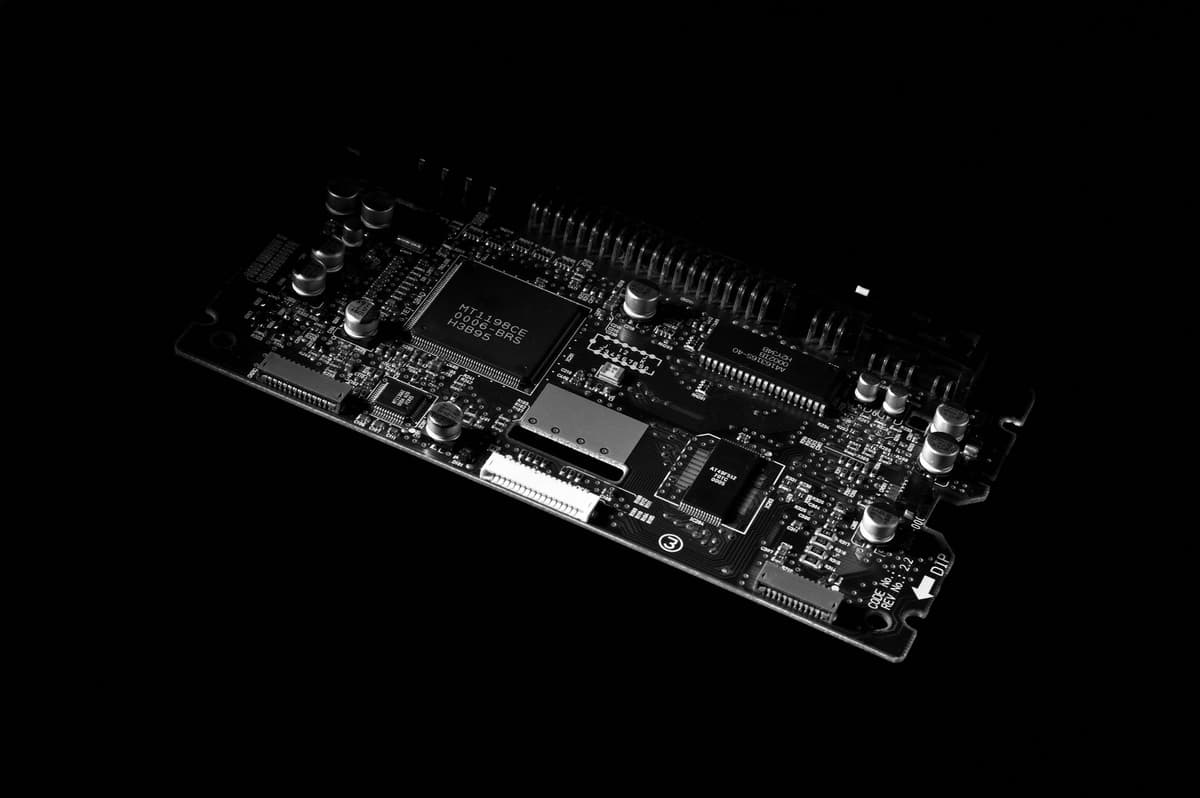
Photo by Miguel Á. Padriñán on Pexels
Think about the structural barriers. Usually, you choose: you can have 'fast and dangerous' or 'slow and safe.' Rust broke that trade-off on the CPU, but the GPU remained a wild west of CUDA and manual memory management. By bringing Rust to the GPU, Nvidia is essentially handing a power tool to a much larger group of builders. I keep coming back to the idea of 'developer velocity.' In a world where the markets react to news in 200 microseconds, the firm that can test and deploy a new strategy in a week instead of a month wins. We might be moving from an era of 'who has the best engineers' to 'who has the best ideas.'
Why Now and Why This?
I find the timing of this fascinating. Nvidia is sitting on a market cap that rivals the GDP of major nations, and they chose this moment to bridge the gap to the Rust community. It feels like an admission that the complexity of modern financial models has outgrown the tools we used to build them. When you’re running simulations with trillions of data points, 'mostly stable' isn't good enough anymore. The sheer scale of the Blackwell architecture—with its 208 billion transistors—demands a language that can handle that much density without falling over.
I’m also thinking about the environmental and economic cost of 'bad code.' We talk about the energy consumption of AI and data centers, but we rarely talk about the compute cycles wasted on inefficient memory management or the energy spent debugging systems that shouldn't have been able to compile in the first place. If Rust makes GPU kernels 10% more efficient because developers aren't afraid to push the hardware to its limit, what does that look like when scaled across a global fleet of servers?
What This Actually Means
This isn't just a win for people who like curly braces and strict compilers; it’s a fundamental change in how we perceive risk in the financial system. We are moving toward a reality where 'systemic risk' caused by software bugs becomes a smaller and smaller slice of the pie. If the structural barriers to high-performance execution fall, the competition shifts entirely to the quality of the underlying mathematical models. The 'C++ Tax' was a barrier to entry that favored the incumbents who could afford the highest-paid plumbers in the world.
I suspect we’ll look back on this as the moment the 'black box' of high-frequency trading started to crack open. When the tools become safer and easier to use, the mystery fades. We might see a surge in specialized, boutique quant firms that use Rust to outmaneuver the giants. It’s an exciting, slightly terrifying prospect—a world where the only thing stopping you from competing with a multi-billion dollar fund is the quality of your logic, not the depth of your pockets for specialized talent.
Ultimately, I'm left wondering if this leads to a more stable market or just a faster one. If everyone is using the same safe, hyper-optimized tools, does volatility decrease because there are fewer 'fat finger' software errors, or does it increase because everyone is hitting the same exit door at the exact same microsecond? Only the tape will tell, but for the first time in a long time, the tools are actually keeping pace with the ambitions.
Quick Answers
Is C++ actually going to die in finance?
Not tomorrow, but its status as the 'only' choice for high-performance GPU work is officially over. Legacy systems will linger for decades, but new projects are almost certainly looking at Rust first.
Does this make trading 'safer' for the average person?
Indirectly, yes, by reducing the likelihood of a 'flash crash' triggered by a simple memory corruption bug in a major firm's execution engine. However, market volatility remains a function of strategy, not just software stability.
Why did Nvidia wait so long to do this?
Building a native compiler backend for a language as complex as Rust while maintaining the performance of CUDA is a massive engineering hurdle that required the Rust ecosystem to mature significantly. It’s a matter of the language finally being ready for the hardware, and vice versa.