Around 1177 BC, the entire civilized world collectively forgot how to write because nobody bothered to plant a backup vegetable. We like to imagine ancient people as filthy dirt farmers gnawing on raw leeks, but they had actually engineered a supply chain so stupidly complex that a single bad summer caused a multi-continental system reboot. One minute you are a Mycenaean prince lounging in imported Egyptian linen while snacking on Cypriot figs, and the next minute your palace is on fire, your accountant is eating his sandals, and nobody remembers what the letter 'B' sounds like.
Historians love dressing this up with fancy academic terms like "systems collapse" or "polycrisis." But if we strip away the PhD-speak, the Late Bronze Age Mediterranean was essentially a bunch of kings who decided that food sovereignty was for peasants and that relying on a 600-mile maritime daisy chain for wheat was pure operational genius. It was just-in-time delivery run by rowboats.
The Ur-DoorDash of the Aegean
The Eastern Mediterranean was not a scattered collection of isolated mud-brick tribes; it was an integrated, high-strung, incredibly smug trading bloc. The Hittites had the muscle, Egypt had the grain, Cyprus had copper, and the Mycenaeans had olive oil, wine, and an apparently terminal allergy to growing basic carbs.
It was an ancient trade agreement held together entirely by mutual economic addiction. Everyone specialized. Specialization is what your economics professor gets emotional about over a chalkboard, but in practice it meant Ugarit stopped growing barley to dedicate all its prime dirt to luxury vineyards. Why get your hands dirty with coarse grain when you can send a few amphorae of pinot noir to Pharaoh and receive three barge-loads of premium Nile Delta wheat in return?
- Cyprus mined copper until their hills were bald, assuming someone else would always bring the bread.
- Mycenae manufactured perfumed oil and high-end ceramics like a boutique gift shop with an army.
- The Levant operated as a hyperactive logistics hub, skimming margins off every boat that didn't immediately sink.
- Egypt sat on a mountain of silt and acted as the regional Costco, quietly judging everyone.
This works beautifully right up until the exact microsecond it doesn't.
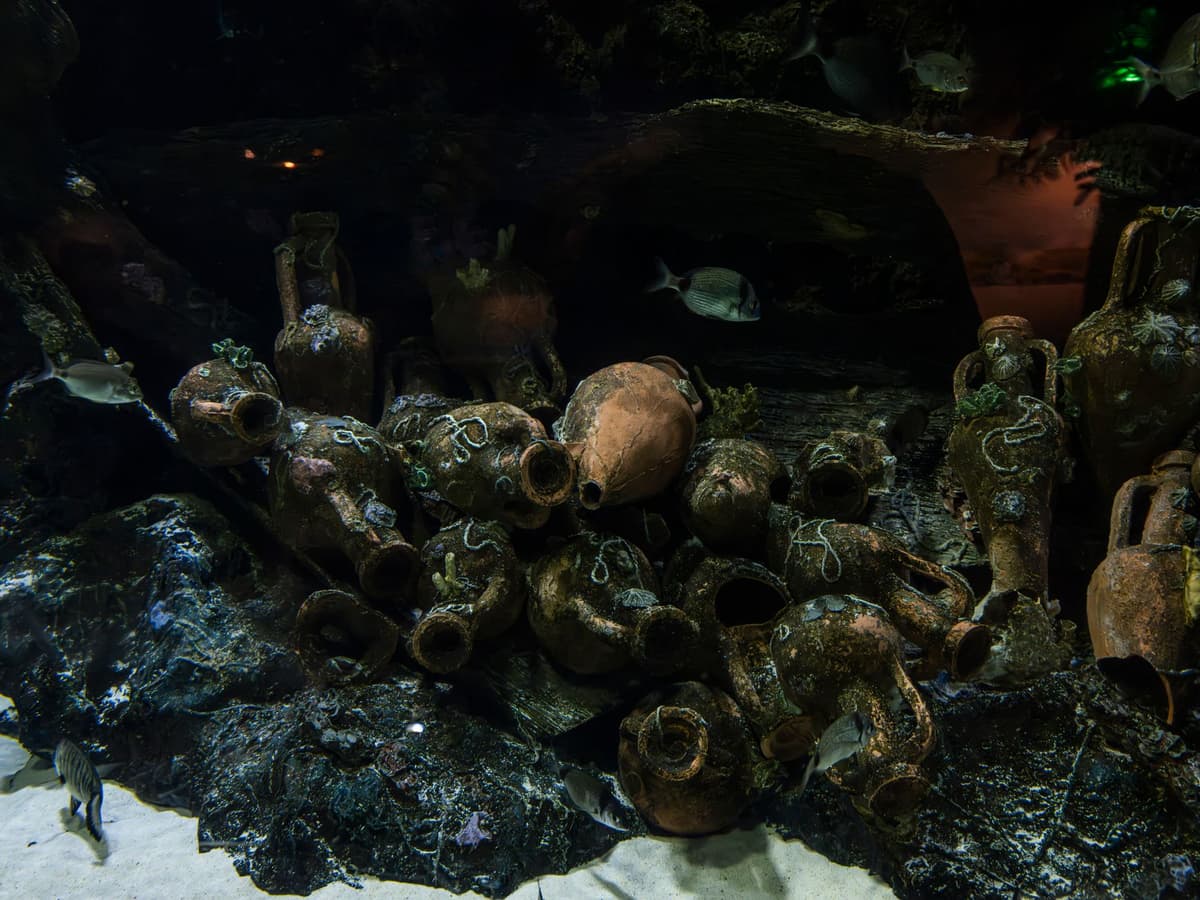
Photo by Engin Akyurt on Pexels
Enter: Five Very Dry Years and Some Annoying Boats
Around roughly 1200 BC, the climate pulled a cruel prank. Modern pollen cores from the Sea of Galilee show a mega-drought that hung over the region like an uninvited houseguest for decades. When the rains failed, the system did not just bend. It snapped with the sound of a dry celery stalk.
If you grow your own turnips and a drought hits, you get skinny and irritable. But if your entire civilization relies on shipping 40 tons of wheat across the open water to pay miners to dig up the tin required to alloy the copper to make the spears that keep the locals from throwing you down a dry well, a bad rainfall in Anatolia triggers a catastrophic domino run.
Suddenly, the breadbasket regions could not even feed their own staff. Ugarit sent panicked clay tablets begging foreign kings for grain—tablets we later dug up from the ashes of Ugarit's destroyed archives, because the grain never showed up. It is the Bronze Age equivalent of watching your UberEats map while the driver does three inexplicable U-turns in the ocean and then sets his own car on fire.
To make matters worse, hungry displaced people from the periphery—the vaguely defined "Sea Peoples" who historical texts describe with the terrified energy of a toddler watching a lawnmower approach—started showing up in boats. They were not evil masterminds. They were just starving, armed, and deeply unimpressed by your palace frescoes.
The Ultimate Organizational Faceplant
Within a window of about fifty years, nearly every major city between Greece and the Euphrates was violently sacked or abandoned. Hattusa, the mighty Hittite capital with its terrifying stone lions? Gone. Mycenae? Toasted. Knossos? Ruined. Egypt barely survived by hunkering down behind its sand dunes, coughing up blood, and swearing never to talk to foreigners again.
Photo by Ahmet Yüksek ✪ on Pexels
The comedy here is the sheer asymmetry of the failure. The technology of bronze casting, epic poetry, multi-tiered bureaucratic administration, and international diplomacy did not protect them; it actively killed them because the entire structure depended on zero margin for error. Linear B, the Mycenaean writing script, wasn't used for philosophy or love songs. It was used exclusively by neurotic palace clerks to track exactly how many sheep skins, wheels, and jars of honey were entering the back door.
When the food trade evaporated and the palaces burned, nobody needed to inventory sheep skins anymore. So the scribes stopped writing. Within two generations, the entire culture literally forgot how to read. They plummeted into a four-century Dark Age because their supply chain was built like a Jenga tower on a vibrating washing machine.
What This Actually Means
We love to look at antiquity and marvel at how primitive they were, right before we open our phones to order avocados flown from Mexico, salmon hauled from Norway, and garlic packaged in China. We live inside the exact same clown-car economics, just scaled up to container ships and refrigerated rail cars.
Today, four global trading firms—the ABCD group—control an estimated 70% to 90% of the world grain trade. A handful of narrow choke points like the Suez Canal, the Bab-el-Mandeb strait, and the Panama Canal handle the calories that keep hundreds of millions of human beings from rioting in the streets. We have turned whole nations into monoculture factories where one country grows soybeans for pigs, another builds microchips, and a third runs server farms, all assuming the weather will behave and diesel will stay cheap forever.
The Hittites also thought their contracts were eternal. They had treaties stamped on silver tablets that invoked the sun, the storm, and the immortal mountains as guarantors of their grain shipments. The storm god apparently did not read the fine print. When you design an agricultural model that requires absolute perfection across three seas to make breakfast happen, you aren't running an economy. You're running a countdown.
Quick Answers
Did the Bronze Age Collapse happen overnight?
No, it played out over about fifty to a hundred agonizing years, roughly between 1200 and 1150 BC. It was less like a bomb going off and more like an excruciatingly slow corporate bankruptcy where everyone eventually starves.
Who were the "Sea Peoples" really?
Nobody knows for sure, but they were likely a loose coalition of displaced Mediterranean migrants, refugees, and opportunists. Think armed, desperate boat-people who realized burning a rich city's granary was quicker than farming rocks.
Could Egypt have saved everyone with its grain reserves?
Egypt could barely save Egypt. While the Nile flooded reliably enough to prevent total extinction, Pharaoh Ramesses III spent virtually all his resources fighting off invaders and barely kept his own government functioning.
Are modern food supply chains just as fragile?
Yes, absolutely. We have better refrigeration and satellites, but our reliance on single-origin breadbaskets and narrow maritime bottlenecks means a synchronized climate shock would make us miss the Mycenaeans.