
Living in a Human Centipede of Real Estate
We love to talk about the 40 whacks and the mutton stew, but we don't talk enough about the fact that the Borden house was basically a high-stakes game of Tetris where the pieces are all angry relatives. The 1845 Greek Revival layout of 92 Second Street wasn't just 'cozy' or 'historic.' It was an architectural stress test designed to turn even the most chill person into a Victorian supervillain.
In a modern house, you have hallways. Hallways are the unsung heroes of domestic peace. They are the neutral DMZ where you can walk from the kitchen to your bedroom without making eye contact with anyone. In the Borden house, there were no hallways on the first floor. If you wanted to get from the front of the house to the back, you had to pass through every single room like a Mario Kart track. It’s called 'railroad style,' which is a fancy way of saying your living room is also a highway for your annoying sister.
Imagine trying to have a private breakdown or a snack you don't want to share when your only path of travel involves physically brushing past your father’s shoulder while he’s trying to read the paper. It is the architectural equivalent of being stuck in a middle seat on a Spirit Airlines flight that lasts for forty years. Eventually, someone is going to snap, and it’s usually the person who just wanted to get to the sink without being asked why they aren't married yet.
The Spite House Energy
This brings us to the glorious, petty world of 'Spite Houses.' While the Bordens were busy bumping into each other in their hallway-free purgatory, other people were weaponizing architecture to ruin their neighbors' lives. A spite house is what happens when a Victorian man gets his feelings hurt and decides to spend his entire inheritance building a structure that is four feet wide and sixty feet tall just to block someone else's view of the park.
Take the Richardson Spite House in New York, built in 1882. It was five feet wide. Five feet! You couldn't even lie down horizontally without hitting both walls, which I assume was the original inspiration for the 'planking' trend. The owner, Hyman Sarner, offered Joseph Richardson $1,000 for a tiny strip of land. Richardson said no, so Sarner built a house that looked like a very expensive piece of toast just to block Richardson’s windows.
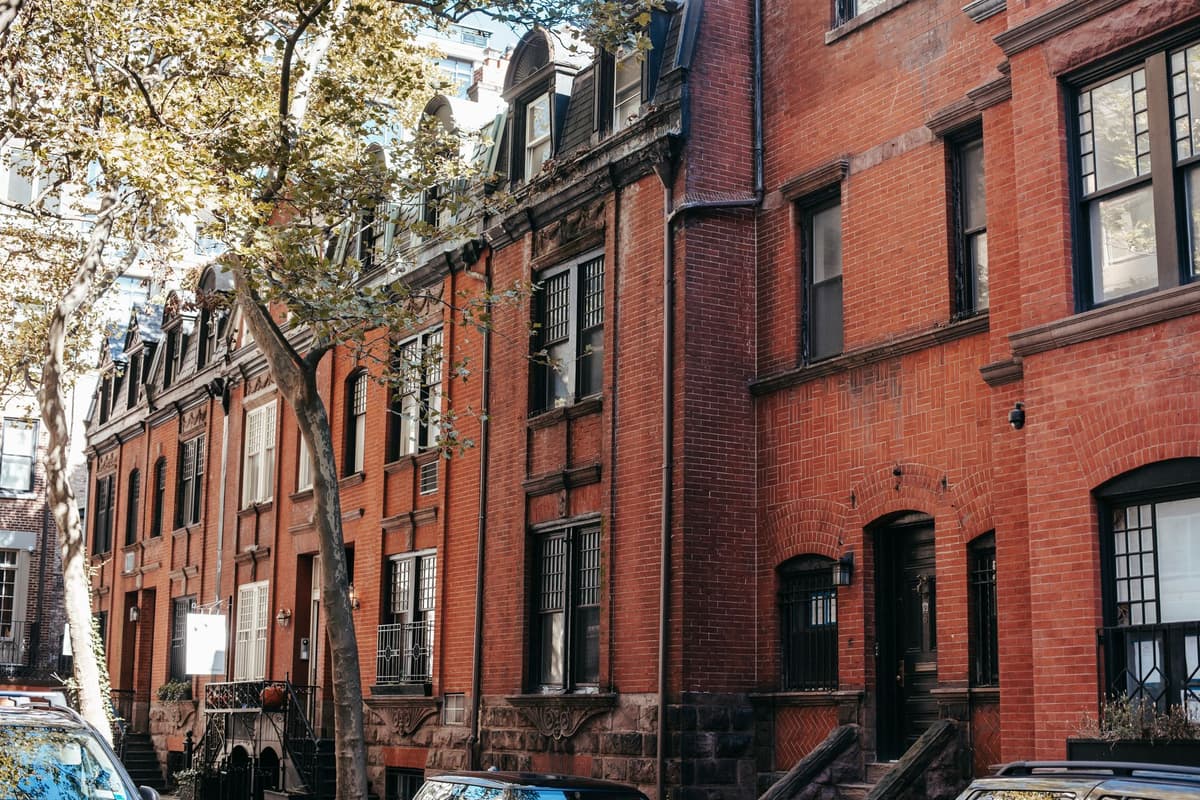
Photo by Charles Parker on Pexels
There is a specific kind of madness that comes from living in a space that shouldn't exist. When your house is a spite house, your entire identity is 'I am here to annoy you.' When your house is a railroad Victorian, your identity is 'I am constantly touching a doorknob that leads to another person.' Both of these lead directly to a psychiatric evaluation. If your bedroom door opens directly into your parents' bedroom door—which was the case for Lizzie—you aren't a daughter; you're a captive audience member in a play you never auditioned for.
The Physics of Domestic Volatility
Let’s look at the math of the Borden residence. There were six people in that house counting the maid, Bridget Sullivan. Because of the lack of private circulation, the 'social friction' coefficient was roughly equivalent to rubbing two sticks together in a dry forest during a heatwave. In 1892, the temperature in Fall River reached 100 degrees. Now, add the fact that the house had no indoor plumbing at the time of the murders.
So, it’s 100 degrees. You’re wearing fourteen layers of wool and a corset that has rearranged your internal organs into a decorative pile. You have to use a slop pail. To empty that pail, you have to walk through three rooms where your stepmother is judging your life choices. There is no escape. There is only the door, and the room, and the other door, and the other room.
- Room 1: Sitting Room (Father is there, breathing loudly)
- Room 2: Dining Room (Stepmother is there, existing intensely)
- Room 3: Kitchen (The maid is there, probably wondering why everyone is so weird)
By the time you get to the backyard to dump the pail, you’ve had three separate opportunities to start a blood feud. The Victorian Greek Revival style was essentially a pressure cooker with a roof. It eliminated the 'buffer zone' that human beings need to remain civil. You can’t have a 'cooling off period' when you have to ask permission to walk through the room where the person you’re mad at is currently eating a pear.
What This Actually Means
We treat the Borden case like a whodunnit, but it’s actually a 'where-they-did-it.' Architecture dictates behavior. If you put a group of people in a house where privacy is physically impossible, you aren't building a home; you're building a cage. The railroad layout was a product of efficiency and heating needs, but it ignored the fundamental human requirement to not be perceived for five minutes.
Lizzie Borden didn’t just live in a house; she lived in a series of interconnected boxes that forced her to be a 'daughter' twenty-four hours a day. There was no hallway to hide in. There was no secondary staircase to sneak down. Every movement was a public event within the family unit. When we look at modern open-concept floor plans today, we should be careful. We’re just one 'missing hallway' away from someone picking up a heavy garden tool.
Ultimately, the Borden house stands as a monument to the dangers of bad floor plans. It’s a warning that if you don't give people a way to walk around each other, they will eventually find a way to walk through each other. Next time you see a house with a long, beautiful, empty hallway, don't think of it as wasted square footage. Think of it as murder prevention.
Quick Answers
Was the Borden house really that small?
It wasn't tiny, but it was cramped for the wealth Andrew Borden had; he was worth about $350,000 in 1892 (roughly $11 million today) but lived like a guy who clips coupons for generic cereal.
Why did they build houses without hallways?
Hallways were hard to heat and seen as 'wasted' space in older architectural traditions, which prioritized keeping heat trapped in central living hubs.
Are spite houses still a thing?
Absolutely, though they usually take the form of weirdly tall fences or bright purple paint jobs now because modern zoning laws are the ultimate buzzkill for architectural petty-theft.