If you build a modern, energy-efficient visitor center out of lightweight steel and glass, tourists will genuinely act like you murdered a bald eagle in broad daylight. They want boulder. They want half an ancient redwood felled by hand and dropped across the threshold. Because one man, operating a massive wooden box camera in the 1930s, convinced three generations of Americans that nature only counts if it is framed by thirty-two tons of hand-hewn masonry.
His name was Ansel Adams. He took photos with contrast cranked so violently hard the sky looked like an existential crisis, and in doing so, he trapped the federal government in an inescapable, eternal rustic chokehold.
The Great Flinstone-Era Aesthetic Mandate
Walk into any major national park today. Yosemite, Yellowstone, Grand Canyon. What do you see? You see "Parkitecture," officially known as National Park Service Rustic. It is an architectural philosophy that dictates every single human structure, from a gift shop selling huckleberry taffy to a sewage pumping station, must look like it sprouted out of the earth during a bar fight between a lumberjack and a mountain.
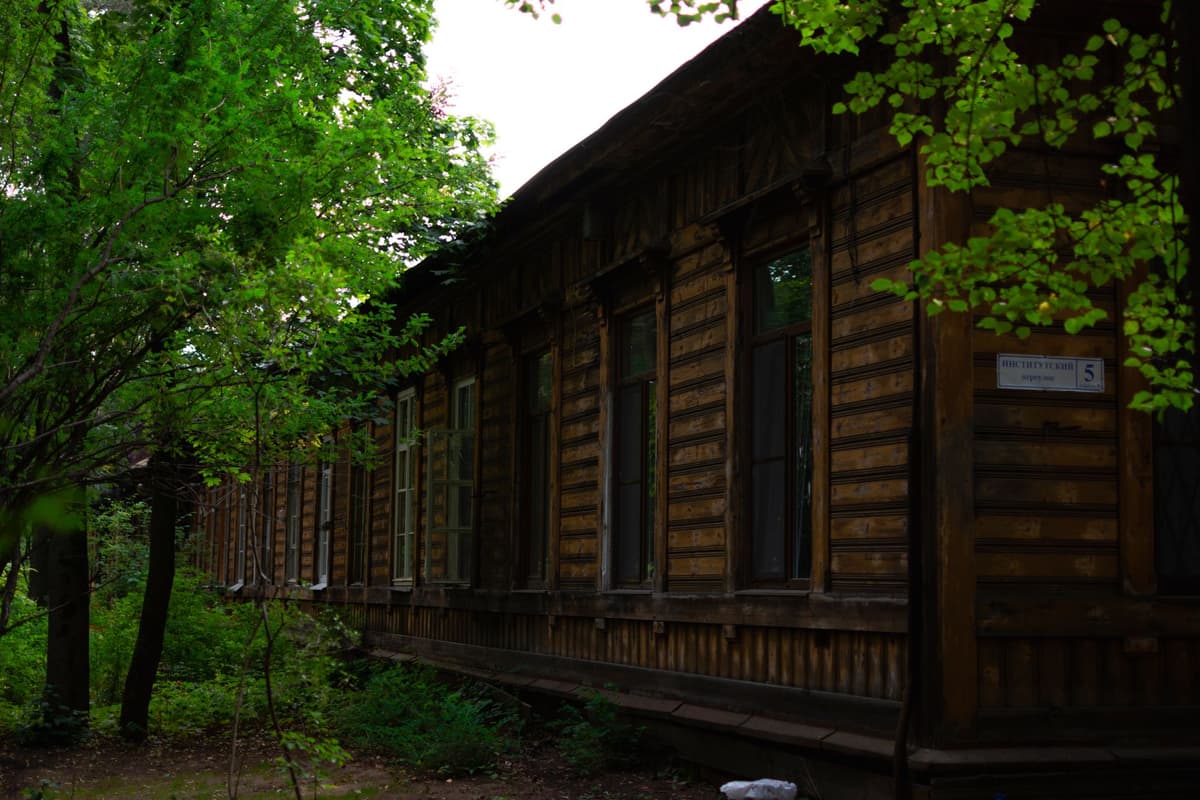
Photo by Vitali Adutskevich on Pexels
It is entirely theatrical. In the 1920s and 30s, the Park Service formalized this look. The rulebook basically commanded: conceal your structural steel, haul in rocks the size of a 1998 Honda Civic, and slap bark on anything that doesn't move. Why? Because the eastern elites taking the train out west didn't want to see actual functional 20th-century design. They wanted frontier fanfiction. They wanted to sit in a cavernous lobby under a chandelier forged from scrap iron and elk antlers, pretending they were rugged mountain men while waiting for a porter to bring them warm cider.
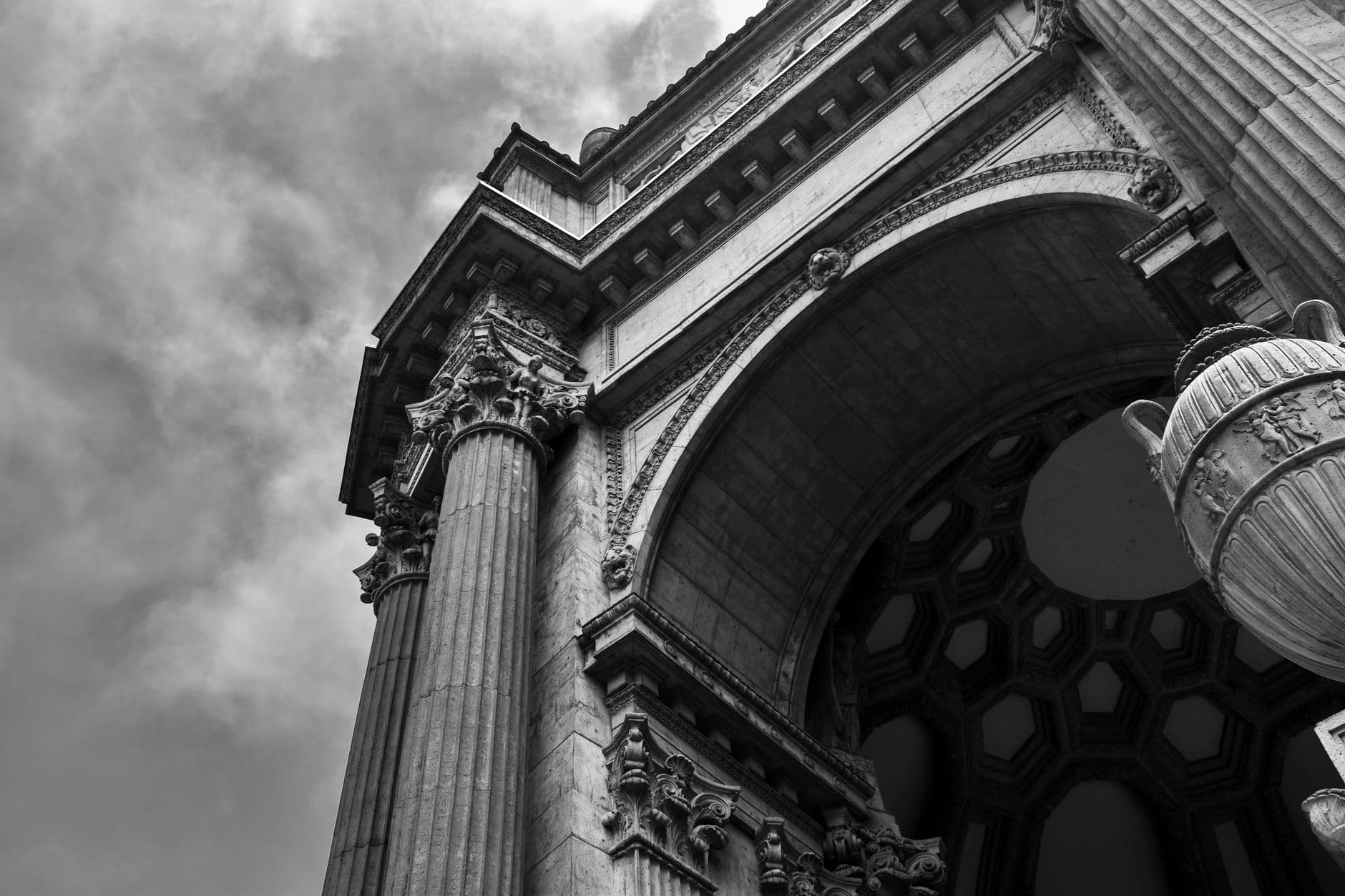
Then Ansel showed up with his Zone System. He snapped Monolith, the Face of Half Dome in 1927 using a red filter that turned the midday sky jet black, and society's collective brain broke. Nature wasn't just pretty anymore; it was an ominous, monochrome cathedral. If your building didn't look sturdy enough to withstand an artillery strike from God Himself, you were ruining the composition.
Ansel's Lens and the Crime of Being Flat
Adams did not invent mountains, though his estate's lawyers might dispute this. What he invented was a visual doctrine. His images eliminated the messy reality of the American West (the dirt, the dust, the tin shacks, the telephone wires) and replaced it with pure geological melodrama.
Look at how this poisoned the minds of architects:
- Weight fetishism: Modern architecture spent the entire 20th century trying to make buildings feel weightless. Parkitecture did the opposite. If the foundation doesn't look like it could crush a submarine, the Park Service rejects the permit.
- Rough-hewn everything: Sawn lumber is considered an insult to the wildlife. Wood must appear to have been gnawed down by an anxious beaver.
- The Camouflage Complex: A ranger station must hide behind a ridge and dress in dark brown timber so it doesn't interrupt someone's precious f/64 panoramic sweep.
By the time Adams was hired by the Department of the Interior in 1941 to shoot park murals for $22.22 a day, the trap was fully sprung. He was no longer just taking pictures of the scenery. He was handing the federal government the visual brand guidelines for the wilderness. If nature was high-contrast granite textures and moody shadows, the gift shop where you buy postcards had to look like a dragon's lair.
The $1 Billion Panicked Identity Crisis
In the mid-1950s, the National Park Service tried to escape. Park attendance exploded from 17 million in 1940 to over 50 million by 1955. The log-cabin outhouses were literally collapsing under the weight of baby-boomer bladder pressure.
So the government launched "Mission 66," an audacious ten-year, $1 billion modernization program. They hired legitimate mid-century modernist geniuses to build sleek, low-slung, poured-concrete visitor centers with giant plate-glass windows. Clean lines. Functional floorplans. Cheap, durable materials. It made complete logistical sense.
And the public absolutely despised it.
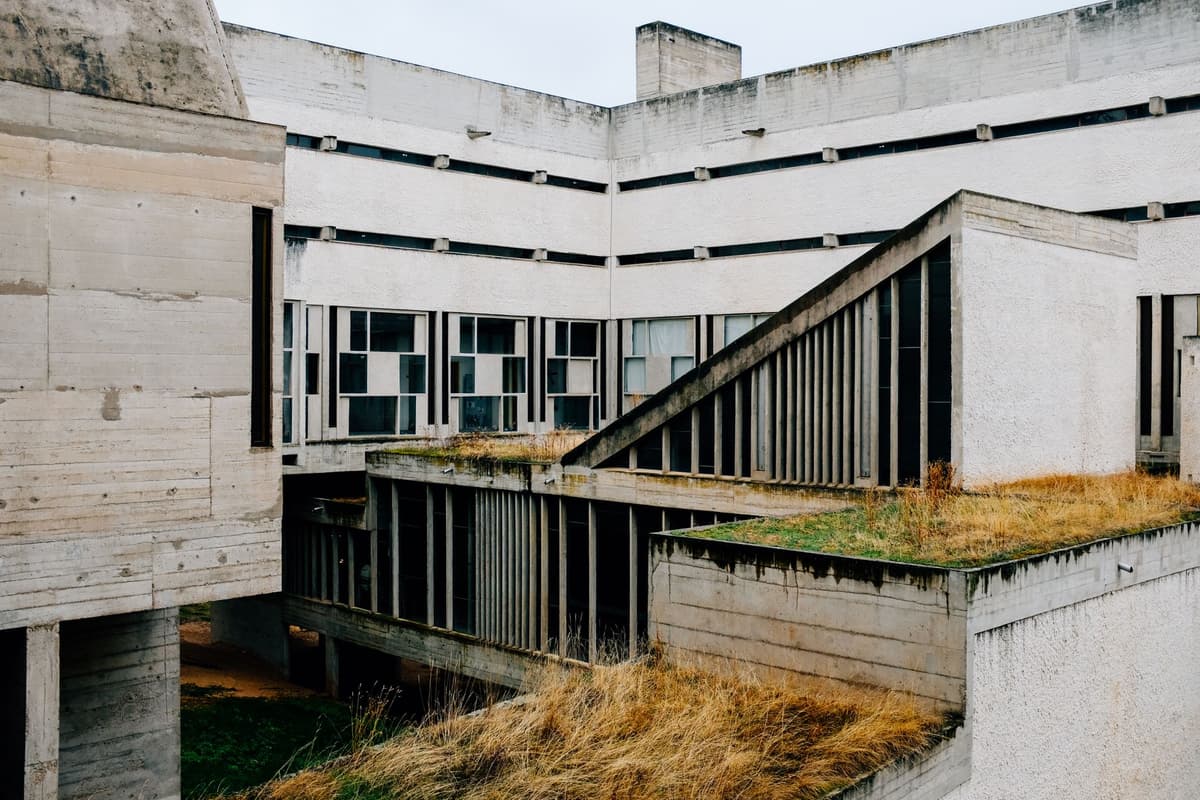
Photo by Adrien Olichon on Pexels
People rioted. Not with pitchforks, but with angry letters to their congressmen. Visitors looked at a pristine, elegant concrete structure nestled in the pines and screamed, "Where are the giant logs? Why is this not a medieval fortress built by sad pioneers?"
At Gettysburg, Richard Neutra built the magnificent Cyclorama building. Preservationists hated it so fiercely they spent decades fighting to tear it down, finally bulldozing it in 2013 just so the landscape could look "pure" again. You cannot reason with a populace whose aesthetic expectations were hard-coded by black-and-white gelatin silver prints before they were born.
What This Actually Means
We don't actually want nature to be natural. We want nature to look like our favorite photograph of nature, and we want our park amenities to wear a costume while we poop in them.
Every time the National Park Service has to spend $4 million replacing a simple pedestrian bridge because it has to be clad in locally quarried, hand-chiseled gneiss rather than structural aluminum, Ansel Adams wins another round from beyond the grave. We have trapped the infrastructure of the wild in amber, terrified that anything built after the Hoover administration will ruin our Instagram photos.
We pretend we're preserving the historic frontier spirit, but we're really just enforcing set design. We demand our parks be a movie set of raw ruggedness, supported by unseen, insanely expensive plumbing disguised beneath five layers of rough-split cedar shakes.
Next time you're standing in a national park bathroom with walls four feet thick, wash your hands and listen closely. That's not the wind rustling through the ponderosa pines. That's Ansel Adams, laughing at your inability to handle a flat surface.
Quick Answers
What is Parkitecture?
It's the informal name for National Park Service Rustic, an architectural movement from the early 1900s that mandated buildings use rough stone and heavy timber so they blend into their natural surroundings.
Did Ansel Adams actually design buildings?
No, but his iconic black-and-white photography popularized a dramatic, textured vision of the American landscape that made slick, modern architectural styles look utterly offensive to park visitors.
What was Mission 66?
A massive, $1 billion federally funded initiative between 1956 and 1966 that attempted to modernize national park facilities with mid-century modern design, which traditionalists immediately fought to undo.