The $300 Billion Paperweight
Apple spent years revolutionizing the way we touch glass, only to realize that humans are essentially fancy crows who just want to hold something heavy and shiny. The leaked backstory of the Apple Card reads like a heist movie where the treasure is just a piece of milled titanium that makes a specific thwack sound when dropped on a marble table. It turns out that even in a world of cloud computing and invisible pixels, the ultimate flex is still just carrying around a very expensive shiv.
I’m obsessed with the mental image of a room full of six-figure designers in Cupertino, weeping over the thickness of a coating. They weren't trying to fix the banking system or lower interest rates. They were trying to create a physical artifact that screamed "I have a 740 credit score" without saying a word. It’s the peak of digital irony: we moved our entire lives into the cloud, realized it felt a bit empty, and decided we needed a 14.7-gram slab of metal to ground our souls.
A Brief History of Heavy Things
There is a specific type of madness that occurs when a software company tries to do blacksmithing. According to the lore, the Apple Card wasn't just a credit card; it was a "tactile object" meant to signify prestige in an age where your bank account is just a flickering number on a screen. We’ve reached the endgame of the subscription economy. Since you don't actually own your movies, your music, or your software anymore, Apple decided you should at least own a piece of metal that can technically dent a mahogany desk.
- The card has no numbers on it, because numbers are for people who have to do math.
- It’s white, which is the bravest color for something that lives in a pocket full of loose change and lint.
- It’s heavy enough to be used as a backup weapon in a bar fight, provided that bar accepts Mastercard.
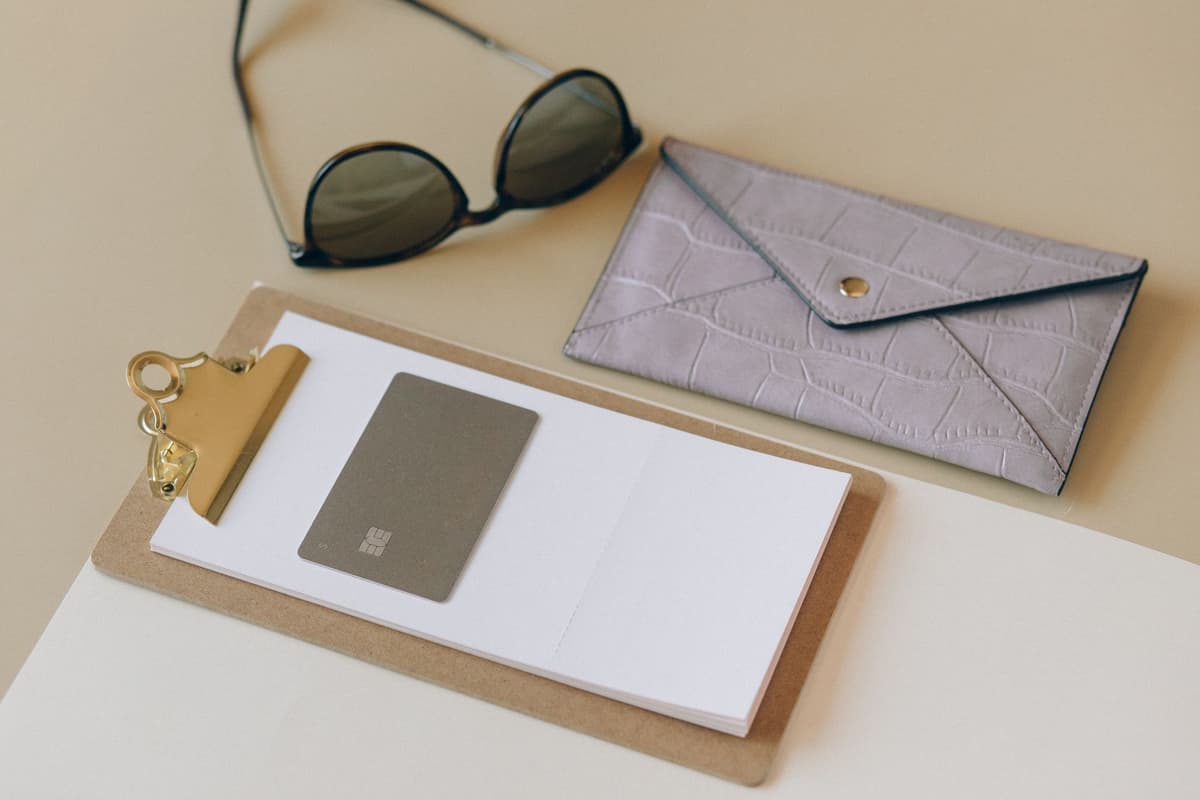
Photo by Nataliya Vaitkevich on Pexels
This is the "Invisible Flex." It’s the desperate need for a physical anchor in a world that is 90% PDFs and Zoom calls. If I’m going to pay $15 a month for a storage plan I don’t understand, I want a physical object that feels like it was forged in the heart of a dying star. Or at least a very high-end toaster factory.
The Engineering of the 'Clink'
Let’s talk about the sound. You know the sound. It’s the sound of someone accidentally dropping their Apple Card at a Starbucks and the entire line turning around to see who just dropped a piece of the International Space Station. That sound was engineered. There were likely whiteboards covered in acoustic frequencies trying to find the exact pitch that triggers a dopamine hit in the prefrontal cortex of a millennial who still uses a physical wallet.
If you drop a plastic Visa, it sounds like a dead moth hitting the floor. It’s depressing. It’s the sound of a late fee. But the Apple Card? It sounds like a knight’s gauntlet hitting a stone floor in 1415. It’s a call to arms. It tells everyone in the vicinity that while your checking account might be crying, your aesthetic is flawless. We are paying for the physics of the object, not the utility. It’s the same reason people buy mechanical keyboards that sound like a hailstorm on a tin roof—we just want to feel like we’re doing something real.

Photo by cottonbro studio on Pexels
The Looming Threat of the Digital Ghost
We are currently living through a crisis of tangibility. Everything is a stream. Everything is a license. I haven't held a physical piece of media in three years, and frankly, it’s making me twitchy. Apple realized this before any of us did. They knew that as they transitioned into a services company—selling us news, fitness, and TV shows that mostly involve people whispering in dark rooms—they needed to give us a totem. A physical horcrux for our digital wealth.
It’s a hilarious pivot. The company that told us the future was "wireless" and "portless" spent a decade obsessing over the exact radius of a physical rectangle. They made a card so beautiful that people were literally afraid to put it in their wallets because the leather might stain the white finish. Think about that level of genius. They sold us a tool for spending money that is too precious to actually be used for the act of spending money.
What This Actually Means
The Apple Card isn't a financial product; it’s a security blanket for the digital age. It’s a way to prove that your life isn't just a collection of logins and passwords. By making the card heavy, Apple tricked our primitive lizard brains into thinking the money behind it is "realer" than the money in a plastic card. It’s a $0-annual-fee psychological experiment in weight-to-value ratios.
Eventually, we’ll move past this. We’ll all have chips in our foreheads and we’ll pay for things by blinking twice at a vending machine. But for now, we are stuck in this weird middle ground where we need a piece of titanium to feel like a grown-up. It’s silly, it’s unnecessary, and it’s a masterpiece of marketing. I hate how much I like the sound it makes.
Next time you hear that metallic clink at a grocery store, don't look at the card. Look at the person holding it. They are desperately trying to stay tethered to the physical world, one artisanal transaction at a time. We’re all just crows, and Apple is the guy with the shiniest bottle cap.
Quick Answers
Is the Apple Card actually better than plastic cards?
Technically no, but it makes you feel like a secret agent when you pay for a burrito, which is worth at least 1% cash back in pure vibes.
Why did they make it white if it stains so easily?
Because nothing says "I am incredibly wealthy" like owning something that requires a specialized cleaning ritual involving a microfiber cloth and pure intentions.
Does the weight actually matter?
Only to your subconscious mind, which has been trained since the Stone Age to believe that heavy things are more likely to kill a mammoth or pay for a Netflix subscription.