The Hidden Code in the Smoke
I spent my morning thinking about the sheer arrogance of the present. We tend to look at the 1600s as a dark age of leeches and prayer, yet we are finding out that the men in dusty workshops were actually running complex chemical reactions we only 'discovered' decades ago. The problem wasn't their science; it was their language. They wrote in a fever dream of metaphor, hiding formulas for potent botanical extracts behind stories of red lions and green dragons to avoid being burned at the stake or robbed by rivals.
Large Language Models (LLMs) are uniquely suited for this specific brand of madness. While a human historian might take a decade to cross-reference a single collection of alchemical letters, an LLM can ingest forty thousand pages of 17th-century Latin, German, and cryptic shorthand in an afternoon. It isn't just translating words; it's identifying patterns in the 'noise'—recognizing that when a specific monk mentioned a 'star-regulus of antimony' in 1645, he was actually describing a purification process that yields a precursor to modern antimicrobial agents.
It makes me wonder how much 'lost' knowledge is currently sitting in basement archives simply because nobody has the patience to learn a dead man's personal slang. We are basically using high-dimensional math to talk to ghosts, and the ghosts are starting to give us recipes for medicine.
Computational Archaeogenetics is a Mouthful
Researchers are calling this 'computational archaeogenetics,' which is a fancy way of saying they are digging through the DNA of our chemical history. By feeding thousands of digitized historical texts into models like GPT-4 or specialized bio-LLMs, scientists are identifying botanical ingredients that have fallen out of the modern pharmacopeia. We aren't just talking about herbal tea; we are talking about complex, multi-stage syntheses that involve precise temperature controls and catalysts that the 'ancients' understood through trial, error, and a lot of exploded glassware.
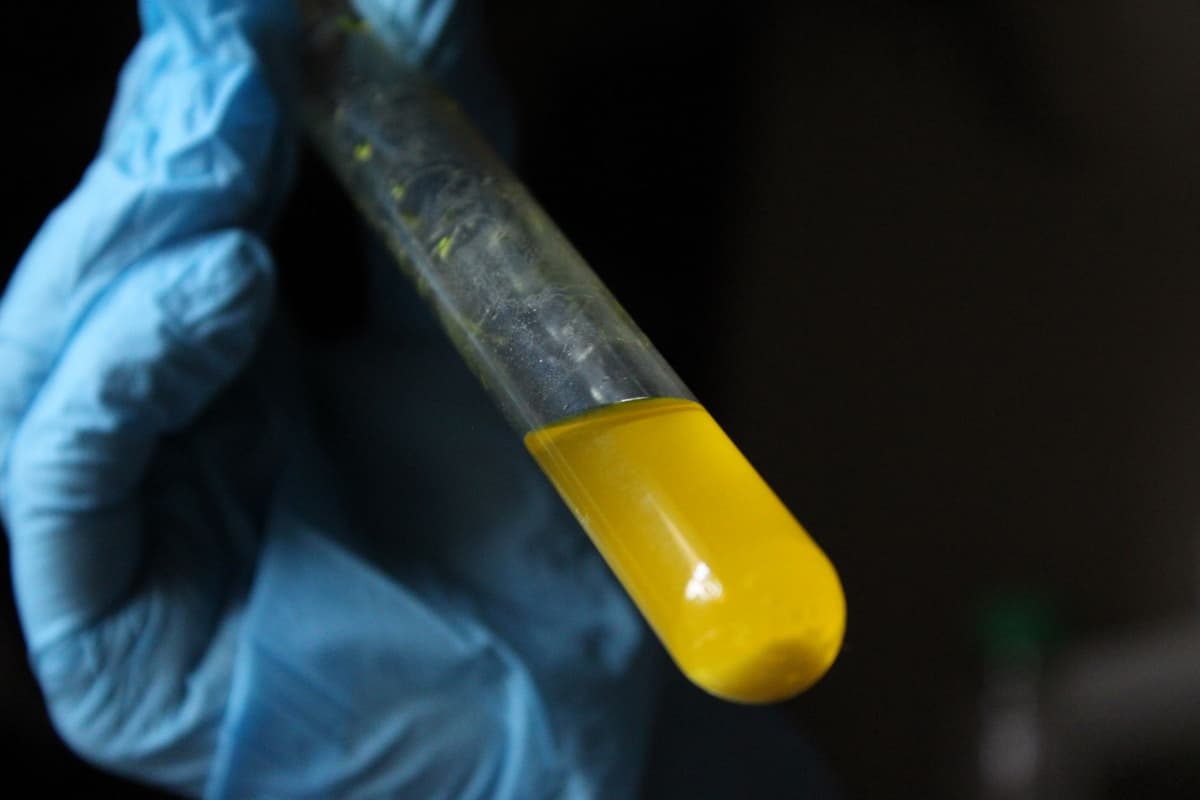
Photo by Jahra Tasfia Reza on Pexels
One of the most fascinating bits of data emerging involves 'lost' plant variants. In the 17th century, the chemical profile of a common weed might have been vastly different due to soil composition or a lack of industrial pollution. By mapping the descriptions found in these decoded texts against modern botanical databases, researchers can pinpoint which specific alkaloids were being targeted. It’s like finding a 400-year-old treasure map where the 'X' marks a molecular structure instead of a chest of doubloons.
- The scale is staggering: over 15,000 unstudied alchemical manuscripts exist in European libraries alone.
- LLMs can detect 'chemical synonyms'—linking terms like 'spirit of vitriol' to sulfuric acid across five different languages simultaneously.
- This isn't just theory; certain 'forgotten' recipes for treating skin infections are showing efficacy against antibiotic-resistant bacteria in preliminary lab tests.
Bridging the Gap Between Magic and Math
Why did they hide it? That’s the question that keeps looping in my head. In the 1600s, knowledge was a proprietary asset, often tied to religious or political power. If you found a way to synthesize a powerful painkiller from a specific root, you didn't publish it in Nature; you wrote a poem about a weeping queen and hid it in a drawer. The LLM acts as the ultimate de-obfuscator, stripping away the baroque imagery to reveal the raw data underneath.
There is a beautiful irony in using the most advanced technology we have—neural networks that require billions of dollars in hardware—to understand a guy who worked by candlelight with a bellows. It suggests that our path forward isn't just about inventing the 'new,' but about having the humility to re-examine the 'old' with better tools. We are essentially debugging the source code of modern chemistry.
What if the next major cancer breakthrough isn't a brand-new synthetic molecule, but a 1:1 reconstruction of a botanical compound that a Venetian apothecary perfected in 1682? We are realizing that the line between 'superstition' and 'science' is often just a matter of who has the better vocabulary. The data was always there; we just couldn't see the signal through the smoke.
What This Actually Means
This shift represents a fundamental change in how we think about drug discovery. For the last fifty years, we’ve been 'brute-forcing' it—testing millions of random synthetic compounds against diseases to see what sticks. Now, we are shifting toward 'informed' discovery, using the collective, albeit messy, experience of human history as a curated starting point. It’s significantly cheaper and faster to verify a 400-year-old lead than to invent something from scratch in a vacuum.
Beyond the labs, this tells us something profound about the nature of intelligence and time. It suggests that human curiosity has been operating at a high level for much longer than we give it credit for. We aren't smarter than the alchemists; we just have better record-keeping. By using AI to bridge that gap, we are finally inviting those historical innovators into the modern conversation.
Ultimately, this 'computational archaeology' might be the most human use of AI yet. It’s not about replacing researchers; it’s about giving them a time machine. It turns out the 'philosopher's stone' wasn't a rock that turned lead into gold—it was the accumulated knowledge of how the world works, waiting for a computer powerful enough to read it.
Quick Answers
Are we actually using 'magic' recipes for real medicine?
No, we are using AI to identify the actual chemical compounds hidden behind the metaphorical language of alchemists. It’s about extracting the raw science from the mystical storytelling.
Why can't humans just read these books ourselves?
Volume and complexity. There are millions of pages written in dead dialects and private codes; it would take thousands of human lifetimes to cross-reference them all, while an LLM can do it in weeks.
Has this actually produced a new drug yet?
Not a finished shelf-ready drug, but it has identified several 'forgotten' botanical precursors that are currently in successful phase-one laboratory testing for their antimicrobial properties.