Hosting a major multi-sport event has historically been an exercise in civic ego masquerading as economic development. For decades, cities have gutted their budgets to erect massive concrete totems that serve a two-week purpose before descending into decades of expensive rot. The 2026 Asian Games in Aichi-Nagoya represent a long-overdue pivot toward architectural humility, prioritizing 'Temporary Urbanism' over the disastrous pursuit of permanent legacy.
By utilizing modular, demountable structures instead of pouring millions of tons of carbon-intensive concrete, the organizers are challenging the fundamental assumption of the Olympic era: that a city’s worth is measured by the scale of its permanent ruins. This is not merely a cost-saving measure; it is a structural acknowledgment that the needs of a city in 2026 are not the same as those it will face in 2040. We are finally seeing the death of the white elephant.
The High Cost of Permanent Hubris
The math of permanent sports infrastructure is almost universally catastrophic. From the $1.1 billion Olympic Stadium in Montreal that took 30 years to pay off to the rusting hulks of Rio’s Barra Olympic Park, the pattern is clear. Cities take on massive debt for specialized facilities—velodromes, whitewater rafting courses, 60,000-seat stadiums—for which there is no viable local market once the international cameras stop rolling. Maintenance costs alone can consume 2% to 5% of the initial construction cost annually, creating a perpetual drain on municipal services.
Aichi-Nagoya is deviating from this path by leaning into the 'demountable' strategy. This involves the use of high-quality, pre-fabricated components that can be assembled quickly and, more importantly, disassembled and sold or repurposed elsewhere once the closing ceremony ends. Instead of a dead stadium, the city is left with a plot of land ready for its next logical use, whether that is housing, parkland, or commercial development. The flexibility of the site is the real asset, not the building sitting on top of it.
Architecture as a Service, Not an Asset
We need to stop viewing event architecture as a fixed asset and start viewing it as a temporary service. The 2026 Games are leveraging a philosophy where structures are leased rather than owned. This shift mirrors the broader 'circular economy' movement, where materials are kept in use for as long as possible. When a grandstand is designed to be unbolted and shipped to a high school football field or a local community center after the Games, the environmental and financial waste is neutralized.
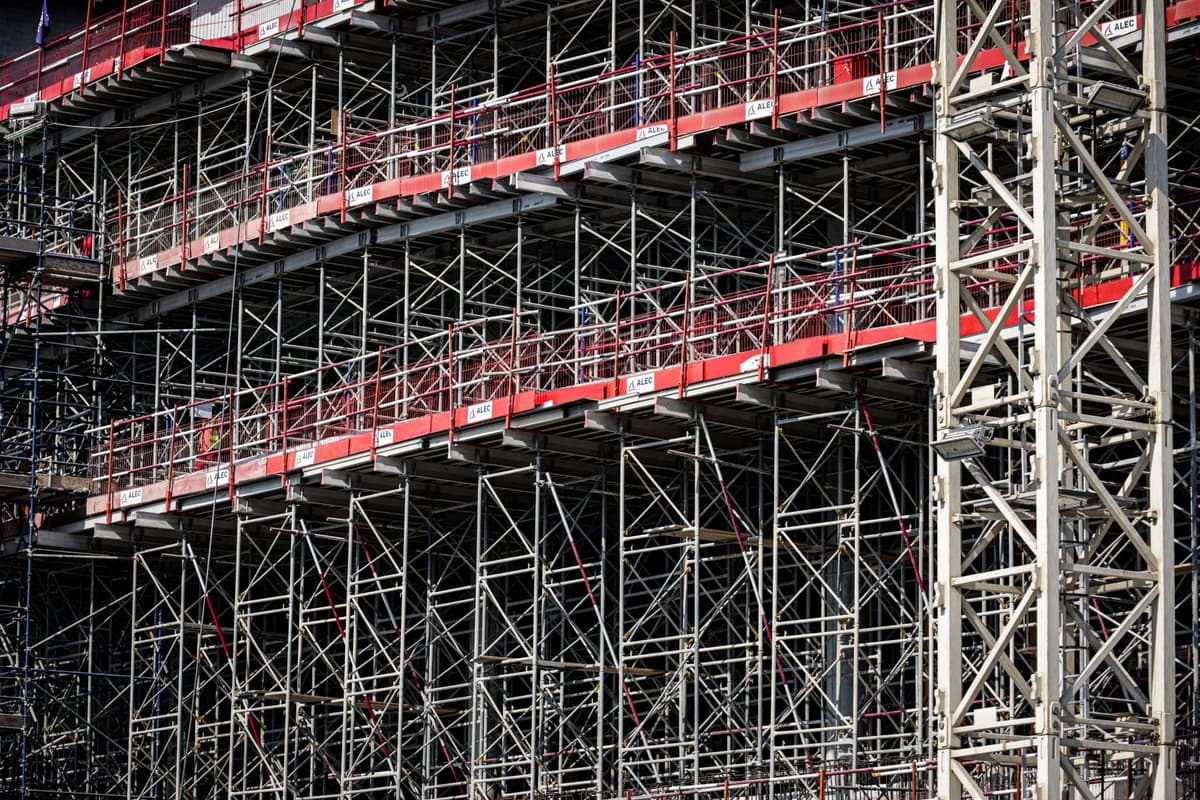
Photo by Magda Ehlers on Pexels
This approach requires a higher level of engineering precision than traditional construction. Permanent buildings can hide mistakes behind drywall and finishing; modular architecture requires every joint and connection to be perfect so it can survive multiple lifecycles. By choosing this path, Nagoya is signaling that it values technical sophistication over brute-force scale. It is a more intelligent way to build, treating the city as a living, breathing organism that needs to shed its skin rather than a museum of past glories.
The Logistics of the Demountable City
The logistical challenge of temporary urbanism is immense, but the payoff is a resilient urban fabric. For the 2026 Games, the focus is on utilizing existing venues—over 60% of the facilities are already built—and augmenting them with temporary expansions. This 'plugin' model allows the city to scale up its capacity momentarily without permanently altering its density or traffic patterns. It prevents the 'doughnut effect,' where massive stadiums create dead zones in the middle of vibrant neighborhoods.
Furthermore, this strategy addresses the carbon footprint of the construction industry, which currently accounts for nearly 40% of global energy-related CO2 emissions. By avoiding the 'build and abandon' cycle, Aichi-Nagoya is providing a blueprint for how the Global East can lead in sustainable development. The goal is to leave the city better than it was found, which, ironically, often means leaving it exactly as it was, but with better-funded social programs instead of a vacant concrete shell.
What This Actually Means
The success of the 2026 Asian Games will not be measured by the medals won or the records broken, but by how quickly the event footprint disappears once the athletes leave. If Aichi-Nagoya can prove that a major international event can be hosted with minimal permanent intervention, it will effectively break the monopoly that wealthy, ego-driven nations have held over these spectacles. It makes hosting accessible to cities that have their priorities straight.
We are moving toward an era of 'Lego-set urbanism,' where the infrastructure of a city is as fluid as the data that flows through it. The permanence of stone and steel is an outdated 19th-century ideal that has no place in a world facing climate volatility and shifting demographics. By embracing the temporary, we are finally building for the long term. True civic pride shouldn't come from a stadium that seats 80,000 people once a year; it should come from a city that is smart enough not to build one in the first place.
Quick Answers
What is 'temporary urbanism' in the context of sports?
It is the practice of using modular, reusable, and demountable structures to host events, ensuring no permanent, unused infrastructure remains after the event concludes.
Why is this better than building permanent stadiums?
Permanent stadiums often become 'white elephants' that are expensive to maintain and rarely used, whereas temporary structures can be repurposed or recycled, saving millions in long-term costs.
Does this mean the 2026 Asian Games will look 'cheap'?
No; modern modular engineering allows for high-end, aesthetically pleasing designs that meet all international broadcast and safety standards while remaining entirely reversible.
Can this model be used for the Olympics?
Yes, and it is already beginning to happen; the Paris 2024 and Los Angeles 2028 Games are both heavily prioritizing existing and temporary venues over new construction.