Host cities consistently bankrupt their futures to build temporary villages that decay into concrete liabilities within thirty-six months. The 2026 Asian Games, co-hosted by Aichi Prefecture and the city of Nagoya, are staring down an acute inventory crisis: an anticipated influx of 15,000 athletes and officials alongside hundreds of thousands of spectators, confronting a domestic construction sector crippled by post-pandemic inflation and demographic labor scarcity. The reflexive answer has always been eminent domain, debt financing, and fast-tracked poured concrete.
There is an alternative that sounds like science fiction only to those who misunderstand naval engineering: adaptive maritime logistics. A Nimitz-class supercarrier, such as the USS Theodore Roosevelt (CVN-71), is not merely an instrument of power projection; it is a self-sustaining, modular nuclear municipality engineered to support over 5,000 personnel in complete isolation for months at a time. Repurposing or leasing this class of sovereign, mobile infrastructure to solve land-side density shocks represents the logical horizon of floating urbanism.
The Lethal Economics of Temporary Concrete
The arithmetic of Olympic-scale infrastructure is broken beyond repair. For Nagoya, original estimates for staging the Games crossed ¥85 billion ($560 million), only to face systemic upward revisions as supply chains tightened. The historical playbook requires pouring billions into an "Athletes' Village" that must later be aggressively retrofitted into luxury condominiums, often flooding local real estate markets or sitting empty as subsidized monuments to bureaucratic hubris.
Rio spent $13 billion on the 2016 Games, leaving behind rusting arenas and abandoned accommodation towers that severed community connectivity. Tokyo’s 2020 venues faced similar structural underutilization once the cameras cleared out. Land is zero-sum. Once agricultural or municipal acreage in an industrial corridor like Aichi is paved over, the ecological and thermal footprint is permanent.
Floating urbanism decouples the spatial demand of a two-week athletic event from the permanent topography of the host metropolis. Instead of seizing urban acreage, a maritime asset occupies littoral dead space. It docks, absorbs the demographic shockwave, operates under closed-loop logistical protocols, and departs.
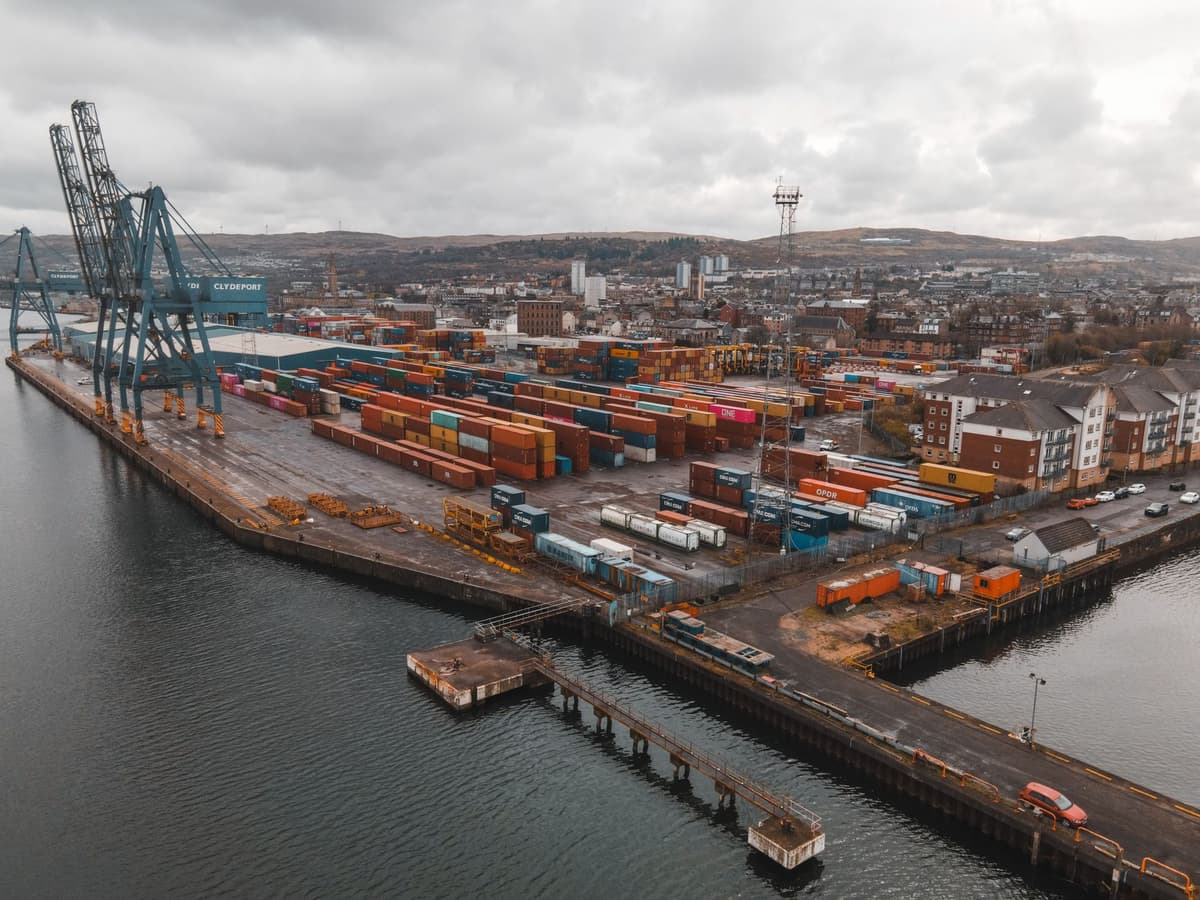
Photo by Ollie Craig on Pexels
Anatomy of a Self-Contained Sovereign Ward
A Nimitz-class hull measures 1,092 feet in length and displaces more than 100,000 long tons. It possesses an internal infrastructure that civil municipal planners can only envy. When anchored in Ise Bay or berthed along the deep-water industrial slips of the Port of Nagoya, a vessel of this profile immediately injects high-density municipal capability without requiring a single hookup to the regional electrical grid.
Consider the raw operational metrics inherent to the CVN-71 platform:
- Microgrid Generation: Two A4W pressurized water reactors produce an electrical output exceeding 190 megawatts—more than enough to power a small Japanese ward and export redundant baseload power directly into the Chubu Electric network.
- Desalination Capacity: Multi-stage flash distillation plants on board process up to 400,000 gallons of potable water daily, entirely bypassing domestic municipal water treatment stress.
- Vertical Density: The ship contains over 4,000 separate compartments, integrated mess facilities capable of serving 18,000 meals daily, advanced diagnostic medical bays with surgical suites, and advanced telecommunication arrays.
This is not a cruise ship, which relies on the continuous extraction of shore-side utilities and fragile commercial supply chains. It is a hardened, closed-system micro-city designed to withstand catastrophic external disruption while maintaining full biological and logistical continuity for its population.
Decoupling Governance from Physical Geography
The architectural challenge of the twenty-first century is volatility. Whether driven by climate-induced displacement, sea-level rise, or the sudden spatial bottlenecks of global trade and cultural exhibitions, stationary architecture is proving dangerously brittle. By leveraging mobile naval logistics for civilian administrative events, we begin treating urban density as an elastic service rather than an immovable concrete foundation.
This demands a profound shift in maritime law and cross-border governance. Utilizing a decommissioned or leased naval hull as temporary residential sovereign territory during the Asian Games challenges classical municipal zoning. It creates an offshore administrative precinct where athletic contingents reside, train, and recover within a fully monitored, biosecure perimeter, leaving the host city's transit arteries clear of convoy gridlock.
Critics will default to calling the concept politically unattainable or militarily sensitive. Yet the structural realities of global shipbreaking yards tell a different story. As the United States Navy grapples with the scheduled deactivation of its Cold War-era nuclear carriers over the next decade—facing staggering defueling and scrapping bills—civilian-aligned adaptive reuse offers a radical pathway for sovereign asset recovery. Nations construct deep-water ports for international logistics; utilizing those same berths for transient mega-settlements is simply the next step in spatial optimization.
What This Actually Means
The 2026 Asian Games will be a litmus test for whether Japan chooses to repeat the obsolete post-war model of construction-heavy prestige, or embrace industrial agility. Nagoya does not need another peripheral housing complex that takes five years to build and forty years to amortize.
Treating supercarriers as modular, floating neighborhoods proves that extreme density can be deployed and retracted without scarring the earth. If urban planning refuses to engage with the massive, hyper-efficient machines produced by twentieth-century defense budgets, it abandons one of the most sophisticated blueprints for closed-loop human survival ever engineered.
The future of the city is not fixed to the soil. It is buoyant, atomic, and utterly indifferent to the land-bound dogma that has bankrupted cities for fifty years.
Quick Answers
Is it legally feasible to use a naval warship for civilian athlete housing?
Yes, provided the vessel has undergone complete military demilitarization and is leased under a specialized bilateral maritime compact between the sovereign operator and the host government.
Why not simply charter existing commercial cruise liners instead?
Commercial cruise ships lack the independent microgrid capacities, industrial desalination volumes, and heavy logistical resilience that an industrial-grade naval platform provides, while placing heavy operational burdens on local port waste networks.
What happens to the ship once the Asian Games conclude?
The vessel is untied from the pier and redeployed elsewhere to answer the next disaster-relief operation, climate migration event, or international exhibition, leaving zero hectares of abandoned concrete behind.