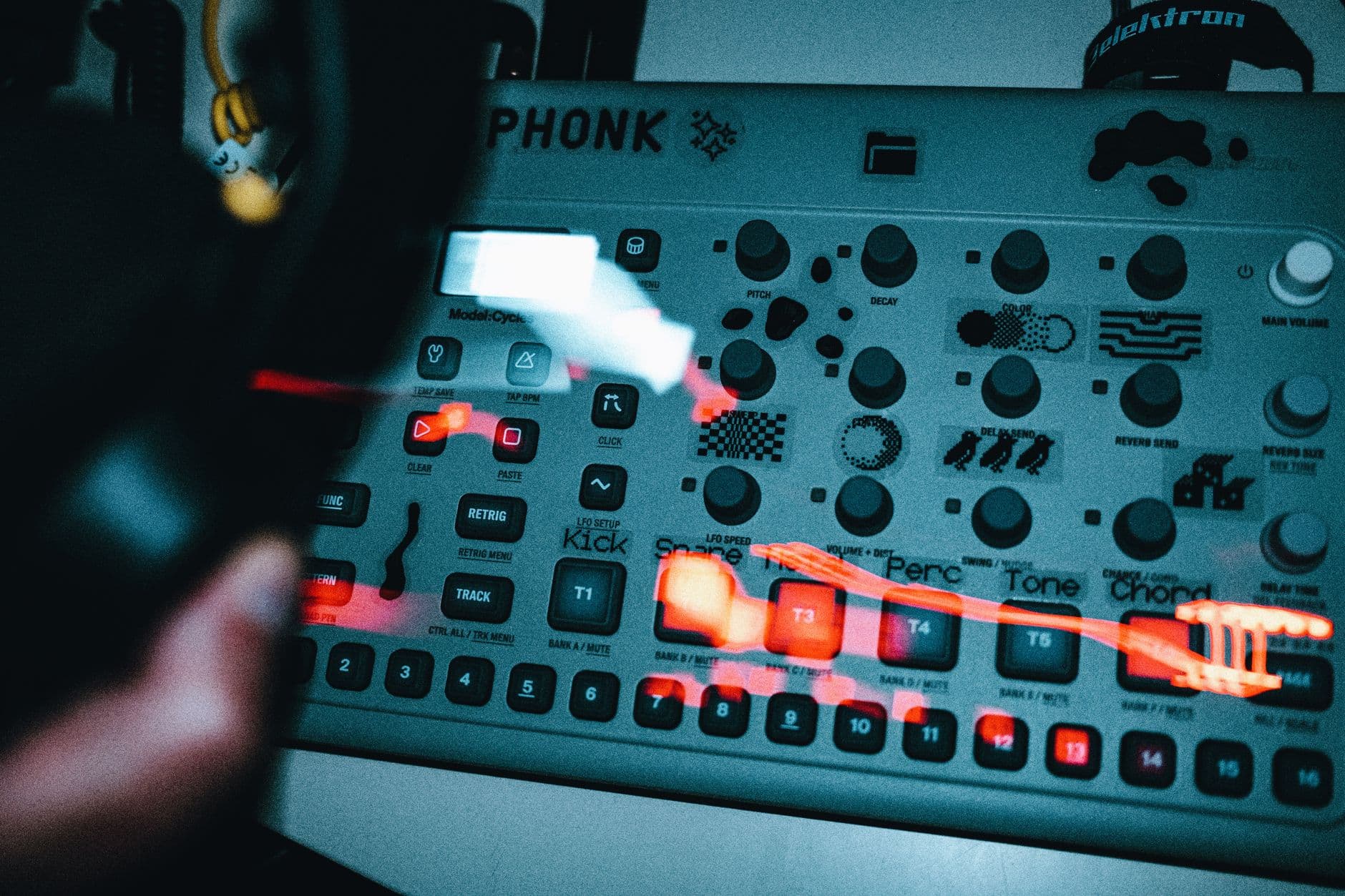
Silicon Valley spent fifteen years convincing us that a flat sheet of Gorilla Glass was the apex of human evolution. Now musicians are taking out personal loans to buy copper patch cords and spiral-bound archival manuals just to generate five seconds of robotic bubbling. It is a stunning triumph of human willpower over convenience.
The holy text of the moment is Suzanne Ciani’s archival Buchla documentation, repackaged and celebrated as if it were a newly uncovered Dead Sea Scroll for people who wear expensive beanies. Back in the 1970s, Ciani was patching together commercial sound logos on Don Buchla’s famously keyboard-less electronic instruments, pioneering a workflow that was deliberately counterintuitive. Today, reissue houses are printing her patch sheets so modern producers can study how to spend four hours physically rerouting electrical voltages just to emulate the sound of a dishwasher entering a rinse cycle.
It turns out that when you replace every tactile object in a person's life with an identical black rectangle, they don't achieve digital nirvana. They just develop a desperate, irrational craving to turn a physical knob that offers genuine mechanical resistance.
The Glorious Inconvenience of Real Electricity
For roughly two decades, software developers worked tirelessly to eliminate friction. They built digital audio workstations with unlimited tracks, pristine virtual instruments, and algorithms capable of pitch-correcting a stray dog into an opera singer. You can run an entire recording studio on an iPad while sitting on the toilet.
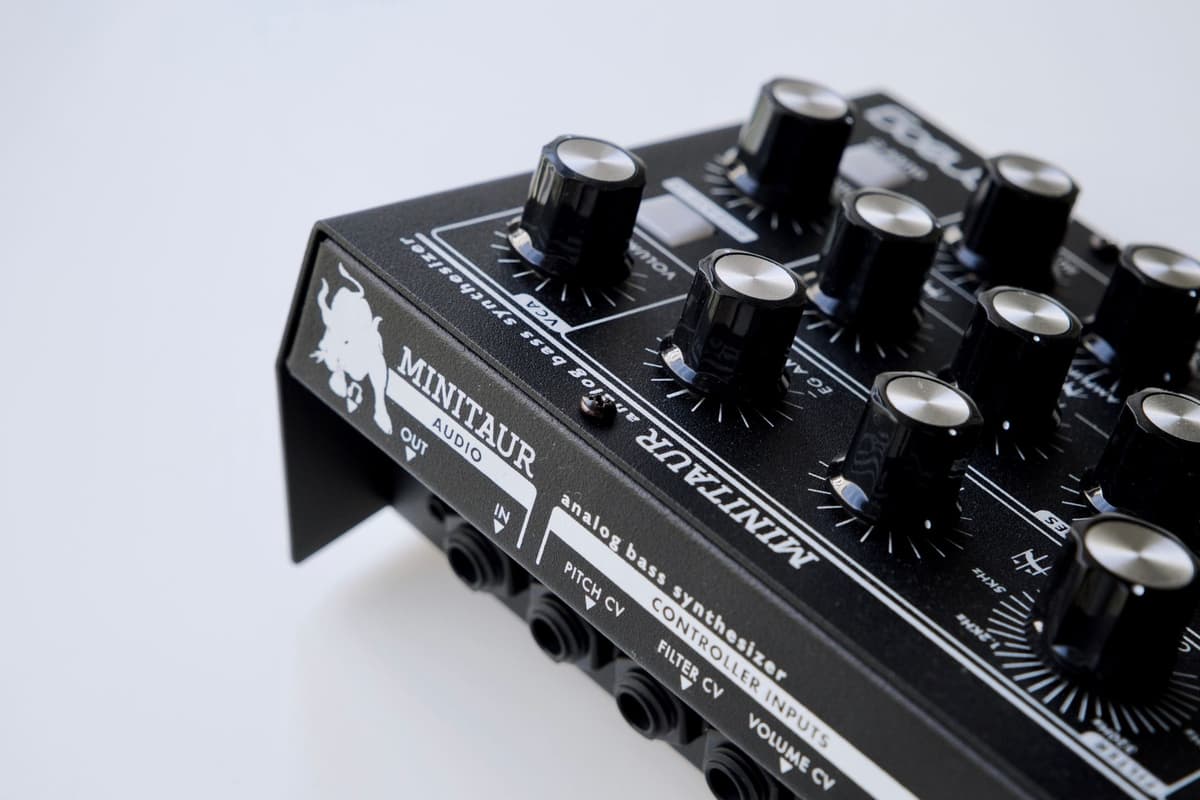
Photo by Egor Komarov on Pexels
Naturally, consumers looked at this miracle of frictionless perfection and decided it sucked.
Instead of opening a cracked laptop plugin that costs zero dollars, the enlightened modern hobbyist builds a Eurorack modular rig. The barrier to entry is delightfully punitive. A single boutique oscillator module routinely retails for $350, and you need about a dozen distinct modules before your system can make a noise louder than a persistent hum. By the time you've bought a powered aluminum case and thirty braided cables, you have spent $4,200 to build a machine with no presets, no "save" button, and absolutely zero ability to replicate the cool squeal it made yesterday afternoon.
This is marketed as "serendipity." In any other consumer electronics category, a machine that refuses to repeat its previous performance is classified as broken. In modular synthesis, it is proof of the machine’s untamed, organic soul.
Flat Glass and the Death of Muscle Memory
To understand the explosive demand for 50-year-old synthesizer cookbooks, you have to look at what gadget manufacturers have done to our hands. Over the last decade, industrial design surrendered to the church of cost reduction disguised as minimalism. Knobs, sliders, click-wheels, and physical switches were stripped out and replaced with capacitive glass panels because software interfaces are cheap to manufacture and infinitely cheaper to update.
Now, your refrigerator requires you to tap through a sub-menu to change the temperature. Your car’s climate control forces you to take your eyes off an eight-lane highway to drag a digital slider across a fingerprint-smudged dashboard. We were promised the bridge of the Starship Enterprise; what we got was an endless sea of cold, unyielding glass surfaces that offer the tactile feedback of a greasy cafeteria tray.
- Real buttons allow muscle memory to develop without visual confirmation.
- Touchscreens demand complete visual attention for trivial inputs.
- Hardware dials provide immediate mechanical context regarding minimum and maximum values.
- Glass screens offer nothing except the vague sensation of your own thumb fat sliding across glass.
Musicians simply reached the breaking point first. Making music on a computer screen feels suspiciously like filing corporate taxes in a spreadsheet, because modern music software literally looks like a spreadsheet with faders. When your daytime labor consists of staring at rectangles and clicking on pixels, the last thing you want to do for evening leisure is stare at a slightly different rectangle and click on slightly different pixels.
Archival Paper as the Ultimate Luxury Accessory
This brings us back to the re-release of Ciani's archival material. The resurgence of physical Buchla manuals is not merely about learning synthesis theory; you could learn the same principles from a free YouTube tutorial hosted by a teenager in Ohio. It is about the sacred artifact.

Photo by Tima Miroshnichenko on Pexels
Buying an archival paper manual is the ultimate tactile rebellion against the PDF. You place the spiral-bound book next to an instrument that costs as much as a used Honda Civic, and you study diagrams sketched before the invention of the microchip. There is a deeply performative element to this, of course. Half the people buying the literature will leave it open on a mahogany desk as an aesthetic centerpiece to signal to visitors that they appreciate "the architecture of voltage."
Yet behind the performative nonsense lies a genuine truth. Don Buchla deliberately avoided standard piano keyboards on his systems because he thought keyboards trapped musicians into centuries-old melodic cliches. He wanted human beings to interact with machines through touch plates, capacitive sensors, and continuous dials. Sixty years later, consumers are circling back to that exact proposition, having realized that mouse-clicking a virtual knob on a 13-inch screen is the least expressive act an artist can perform.
What This Actually Means
The modular boom is not a brief blip fueled by nostalgic baby boomers; the median age of Eurorack obsessives is plummeting downward, driven by generations who grew up entirely digital and hate it. The global synthesizer market has ballooned past $300 million annually, largely sustained by boutique hardware manufacturers whose entire catalog consists of things you can physically break.
This is not really about music at all. It is a desperate consumer counter-revolution against frictionless efficiency. When every digital service is algorithmically optimized, instantly accessible, and stored invisibly in an invisible cloud, it ceases to feel like property. It ceases to feel real.
People are deliberately buying massive, temperamental, un-digitized metal boxes precisely because they are inconvenient. We are finally discovering that friction is not a flaw in the user experience; it is where the actual experience lives.
Quick Answers
Why are vintage modular manuals like Suzanne Ciani's suddenly popular again?
Musicians are exhausted by screen-based software tutorials and want tangible, historical frameworks for using hardware that doesn't rely on digital interfaces.
Is analog modular hardware actually better than modern computer plugins?
Sonic differences are virtually indistinguishable in a finished mix, but the physical process of turning real dials produces entirely different creative choices than dragging a mouse.
Why is this trend expanding beyond professional musicians?
It reflects broader consumer fatigue with flat glass screens, driving people toward tactile gadgets with knobs, switches, and deliberate physical resistance.