The pharmaceutical industry has long been governed by Eroom’s Law—the observation that drug discovery becomes slower and more expensive every year despite technological gains. For decades, the process has relied on a brutalist strategy of trial and error, sacrificing millions of animals and billions of dollars to see what sticks. That era is ending because we have finally reached the 'Step 5' preview: the point where AI models are no longer just predicting patterns, but are simulating reality at the Pareto Frontier of reasoning and accuracy.
This isn't about mere automation. It is about a fundamental shift in how we perceive biological interactions. When we can simulate the fold of a protein and its reaction to a synthetic ligand with 99.9% accuracy, the traditional three-year window for animal trials begins to look less like a safety precaution and more like an institutional delay. We are moving toward a world where the 'Synthetic Clinical Trial' serves as the primary filter for human medicine.
The Pareto Frontier of Biological Logic
To understand why this is happening now, you have to look at the trade-off between speed and precision. In computational biology, we have historically faced a wall: you could have models that were fast but superficial, or models that were accurate but took months to process a single interaction. The Pareto Frontier represents the limit of what is possible; advancing it means we no longer have to choose. New models are achieving 'reasoning' capabilities—the ability to understand the causal chain of a molecular reaction—while maintaining 'accuracy' down to the atomic level.
This leap allows researchers to bypass the biological noise of animal models. Mice are not miniature humans; their metabolic pathways frequently lead researchers down expensive dead ends. By using high-fidelity simulations, we can model human-specific cellular responses that an animal model would naturally obscure. We are replacing the 'proxy' of a living animal with a direct digital twin of human biology.
From Silicon to Micro-dosing
This technology enables a radical new regulatory pathway. Instead of spending five years proving a drug doesn't kill a beagle, researchers can move from a synthetic trial straight to human micro-dosing. This involves administering sub-therapeutic doses to humans to verify the AI’s predictions in real-time. It is a more ethical, more precise, and infinitely faster method of validation.
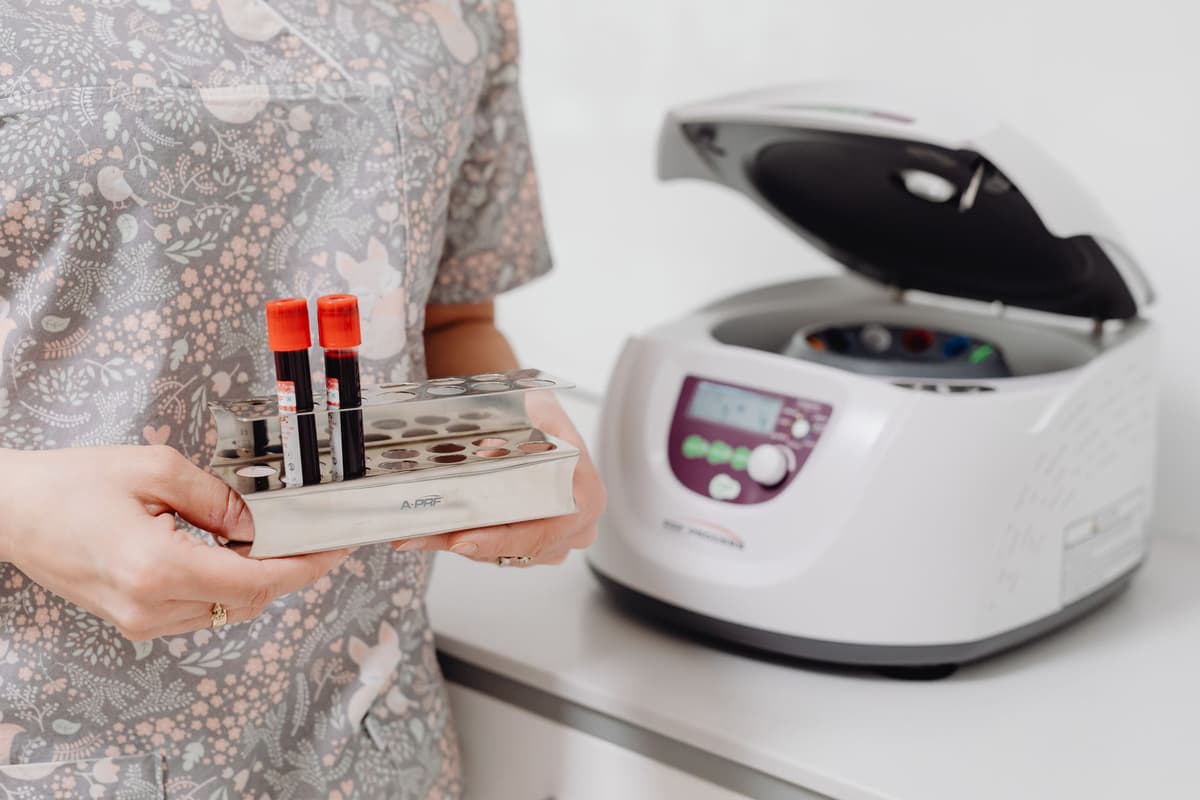
Photo by https://kaboompics.com/ on Pexels
By the time a drug reaches a human volunteer, the 'reasoning' model has already run millions of simulations. It has checked for off-target toxicity, metabolic interference, and even genetic variations that might cause adverse reactions in specific populations. The trial is no longer an experiment to see if the drug works; it is a verification of what we already know to be true from the simulation. This reduces the risk to human subjects by orders of magnitude.
The Economic Collapse of Drug Scarcity
Currently, it costs roughly $2.6 billion to bring a single drug to market. Much of that capital is wasted on failures that occur late in the pipeline. Synthetic trials front-load the failure. If a molecule is going to fail, the Pareto-optimized model identifies the flaw in seconds, not years. This collapse in the cost of failure will inevitably lead to a collapse in the price of innovation.
We are looking at a future where orphan diseases—conditions affecting fewer than 200,000 people—finally become profitable to treat. When the cost of discovery drops by 80%, the market for 'niche' medicine explodes. We are no longer limited by the throughput of physical laboratories or the ethics of animal husbandry. We are limited only by our ability to compute complexity.
What This Actually Means
The shift to synthetic clinical trials is the most significant advancement in medical ethics since the Nuremberg Code. We are finally decoupling medical progress from biological suffering. By treating drug discovery as an information science problem rather than a trial-and-error problem, we are effectively 'solving' the hardware of the human body.
This will require a total overhaul of the FDA and global regulatory bodies. Our current laws are written for a world of chemistry and chance; they are not prepared for a world of simulation and certainty. Regulators must move away from requiring 'animal data' as a blanket rule and start accepting 'computational proof' as a superior standard of evidence.
Ultimately, the Pareto Frontier isn't just a graph in a research paper. It is the line between a world where we guess how to heal people and a world where we know. The transition will be disruptive, and the pharmaceutical giants that rely on the 'moat' of high entry costs will struggle. But for the patient waiting on a cure that is currently 'too expensive' to develop, this change cannot come fast enough.
Quick Answers
Does this mean we will stop testing on animals entirely?
Not immediately, but it will reduce animal usage by an estimated 70-90% in the next decade as synthetic models prove more predictive than biological proxies.
Is a simulation really as safe as a living subject?
In many cases, it is safer; simulations can test for thousands of genetic variables and rare side effects that a small group of lab animals or human trial participants could never represent.
When will the first drugs developed this way reach the public?
Several AI-designed candidates are already in Phase I and II trials, but the first 'fully synthetic' pathway drugs are expected to hit the market by 2027-2028.