The Death of the Average Harvest
For most of human history, agriculture has been a game of averages. You harvested a field, you weighed the yield, and you sold it by the ton or the bushel. Whether you were growing wheat in Kansas or coffee in Ethiopia, the inherent variability of nature was smoothed over by the sheer scale of the bulk commodity market. That era is ending. We are moving toward a 'factory-to-table' model where the value of a crop is no longer determined by its volume, but by a high-resolution digital map of its quality, sorted grain by grain at the speed of light.
This isn't a theoretical shift. In 2023, the global smart farming market was valued at approximately $15 billion, and it is projected to double by 2030. The driving force isn't just better tractors; it is the integration of sensor-laden sorting systems that function exactly like the 'quality' modules in high-end logistics simulations. In these systems, every single blueberry or kernel of corn is scanned for sugar content, moisture, and structural integrity. The result is a bifurcated food supply where the 'perfect' items are siphoned off for premium markets while the rest is relegated to industrial processing.
The Algorithmic Sorting of Sustenance
Modern sorting facilities now use hyperspectral imaging and AI-driven optical sorters that can process over 100 million grains of rice per hour. These machines don't just look for stones or dirt; they identify chemical signatures and micro-fractures invisible to the human eye. This is the 'computational grade' system in action. By the time a harvest leaves the facility, it has been partitioned into a dozen different tiers of value. We are effectively applying the logic of semiconductor manufacturing to the organic world.
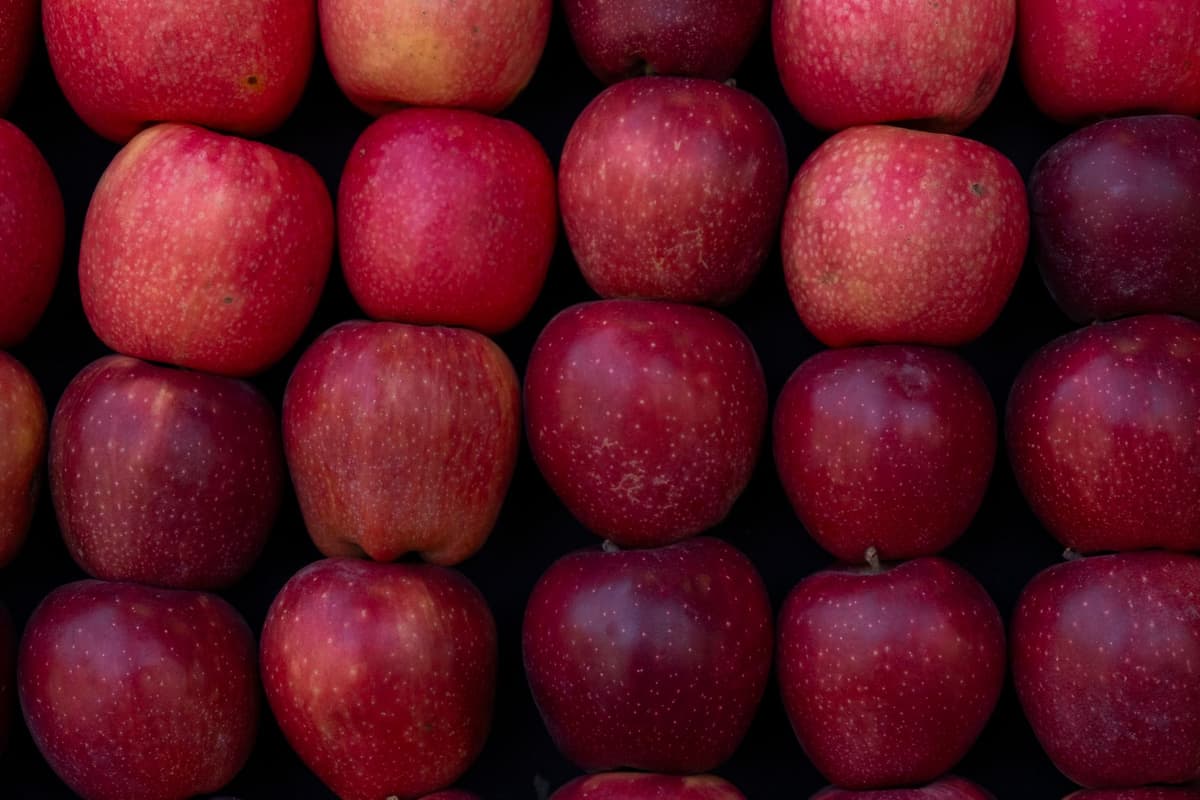
Photo by Engin Akyurt on Pexels
This shift creates a massive incentive for data-heavy farming. When a farmer knows that a specific 1% increase in protein content—detected by an automated sensor at the silo—can trigger a 15% price premium, the entire nature of labor changes. The farmer stops being a steward of the land and starts being a manager of a biological assembly line. Every input, from nitrogen levels to irrigation timing, is tuned to satisfy the specific demands of the sorting algorithm. The goal is no longer to feed the world; it is to hit the 'Grade A' threshold as consistently as possible.
The Fragility of Precision
While this efficiency is impressive, it introduces a dangerous level of rigidity into the global food supply. When a system is optimized for hyper-specific quality tiers, it becomes remarkably fragile. In a bulk system, a slightly subpar harvest is still food. In a computational system, a harvest that misses its technical specifications by a fraction of a percent might be rendered economically non-viable, even if it is perfectly edible. We are creating a world where 'good enough' is no longer an option because the logistics chain isn't built to handle it.
Furthermore, this technology risks widening the gap between high-tech agricultural hubs and the rest of the world. The infrastructure required to maintain a 'computational grade' supply chain—the fiber optics, the climate-controlled sensor arrays, the proprietary software—is prohibitively expensive. We are looking at a future where global food security is managed by a handful of firms that own the sorting logic. If you cannot prove the quality of your crop through an approved digital sensor, your product essentially doesn't exist in the modern marketplace.
What This Actually Means
The transition to precision-sorted food is essentially the 'Factorio-fization' of reality. We are treating the earth’s soil as a raw resource patch and the crops as modular components that must be refined through successive stages of technological filtration. This increases profit margins and reduces waste at the top of the pyramid, but it also commodifies the very data of life itself.
We must realize that when we turn food into a high-resolution data set, we lose the resilience that come with biological diversity. A system that only values the 'perfect' output will eventually find itself unable to cope with the messy, unpredictable realities of a changing climate. We are building a food system that is brilliant at sorting, but we have yet to prove it is capable of surviving. The algorithm may give us the perfect apple, but it cannot guarantee we will always have enough of them.
Quick Answers
Is this why food prices are rising?
In part, yes, because we are paying for the massive technological infrastructure required to sort and grade food at this level of granularity. We are no longer just paying for the calories; we are paying for the data validation of those calories.
Does precision sorting reduce food waste?
At the industrial level, it can reduce spoilage by identifying bruised or rotting fruit before it contaminates a shipment. However, it can increase waste at the farm level if a crop doesn't meet the high digital standards of the buyer.
Will this change the nutritional value of my food?
It likely will, as farmers will optimize their crops for the specific metrics the sensors are programmed to reward—such as sugar content or appearance—potentially at the expense of micronutrients that are harder to measure in real-time.