
The $30 Million Tool Shed
There is something deeply poetic about spending millions of dollars to put bicycles behind glass in Sakai, Japan, while the rest of the world spends billions making sure those same bicycles are as terrifying to ride as possible. The Shimano Bicycle Museum is a gleaming, architectural marvel that treats the derailleur with the same hushed reverence usually reserved for fragments of the True Cross. It’s a beautiful space, meticulously curated to show the evolution from the bone-shaker to the carbon-fiber featherweights of today. It is also the ultimate participation trophy for a civilization that has spent the last century pretending the internal combustion engine was a good idea for short trips to the grocery store.
Inside, the lighting is perfect. The floors are polished to a mirror finish. The bicycles are pristine. It’s the only place on Earth where a bicycle is truly safe, mostly because there are no distracted teenagers in 5,000-pound SUVs trying to check their TikTok notifications while turning right on a red light. Shimano has built a sanctuary for the machine, carefully curated to highlight technical innovation while politely ignoring the fact that a 10-speed cassette doesn't matter if the bike lane ends abruptly in a sewer grate.
Evolution is for Parts, Not Places
The museum’s layout is a chronological march of progress that would make Darwin weep. You start with the celerifere—basically a wooden beam with wheels and no steering—and end with electronic shifting systems that cost more than my first three cars combined. The message is clear: we are geniuses at refining the object. We have mastered the physics of the pedal. We have optimized the ergonomics of the saddle. We have done everything humanly possible to make the bicycle a perfect tool, except for the one thing that would actually make it useful: building a world where using it doesn't feel like a dare.
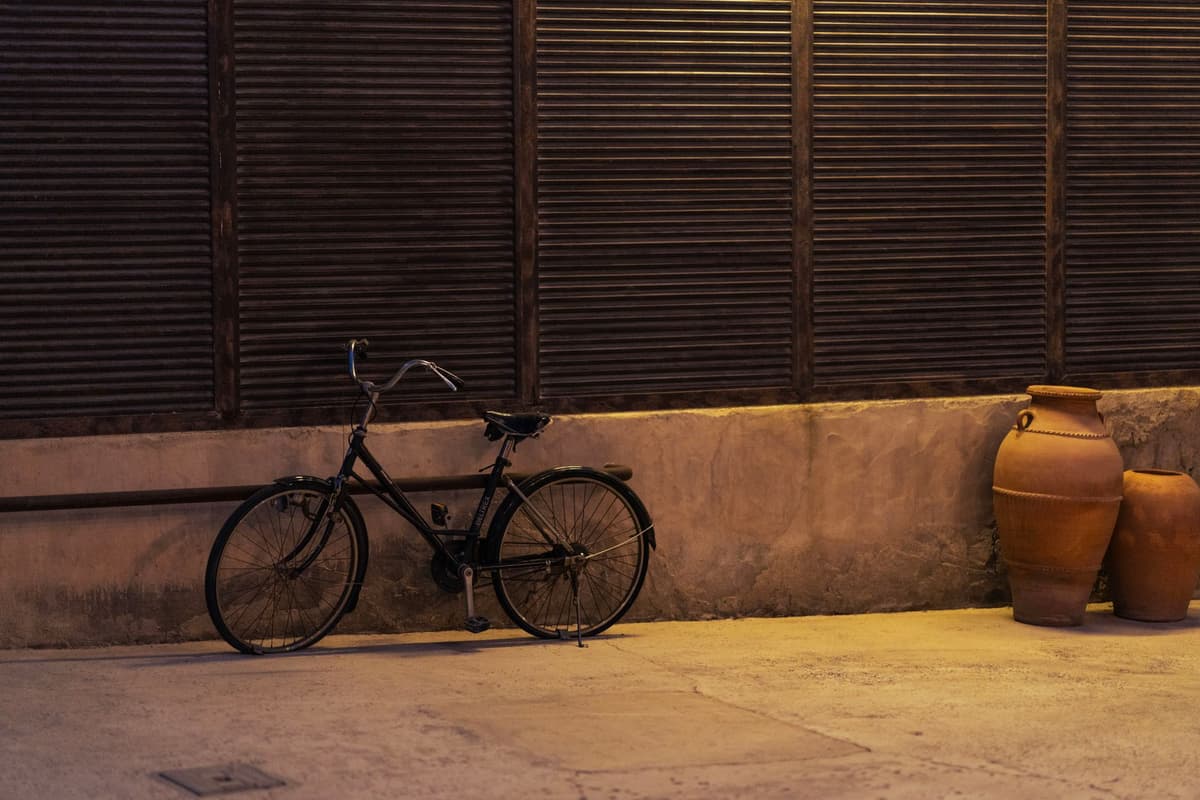
Photo by aboodi vesakaran on Pexels
As you move through the exhibits, you see the bicycle transition from a Victorian curiosity to a tool for mass liberation, and finally to its current status as a high-tech fitness toy. The curatorial choices lean heavily on the "individual mobility" narrative. It’s all about your speed, your efficiency, and your Shimano-equipped gear set. It’s a very convenient way to frame the conversation because it places the burden of urban planning on the consumer’s choice of derailleur. If you aren't commuting to work on a bike, the museum suggests it’s perhaps because you haven't experienced the crisp tactile feedback of a Dura-Ace shifter, rather than the fact that your commute involves a six-lane highway with no shoulder.
The Irony of Spatial Design
The architecture of the museum itself is a stunning piece of spatial design. It uses verticality and light to create a sense of movement and freedom. It’s a masterclass in how to move bodies through a space efficiently and pleasantly. If only the people who designed the museum were allowed to design, say, the city of Houston. Or literally any suburban sprawl in the Western hemisphere. The museum provides a frictionless environment for viewing bikes, which stands in stark contrast to the high-friction environment of actually riding them to the front door of the museum.
There is a specific tension in the air here. It’s the tension between the bicycle as a "critical component of sustainable city planning" and the bicycle as a "luxury item for middle-aged men in spandex." By focusing so heavily on the history of the Shimano brand and its mechanical milestones, the museum inadvertently highlights how we’ve treated cycling infrastructure as a niche hobby rather than a structural necessity. We treat the bike like a piece of art to be admired in a temperature-controlled room, rather than a solution to the fact that our cities are currently melting.
What This Actually Means
The Shimano Bicycle Museum is the perfect monument for the 21st century because it celebrates the solution while ignoring the problem. It tells a story of relentless technological improvement that has somehow resulted in zero net change for the average person's ability to get to work without smelling like exhaust fumes. We have the technology. We’ve had it since the late 1800s. We just prefer to keep it in a museum where it can't get in the way of the parking lots.
Ultimately, the museum is a beautiful, expensive distraction. It invites us to geek out over gear ratios and weight savings so we don't have to talk about why the street outside is sixty feet wide and death-adjacent. It’s a temple built to a god that we only worship on Sunday mornings when the traffic is light. If we actually cared about the "historical trajectory of urban cycling," the most important exhibit wouldn't be a bike at all—it would be a piece of concrete separated from cars by a sturdy bollard.
Quick Answers
Is the museum worth visiting for non-cyclists?
Yes, if only to see what it looks like when a corporation has a larger budget for aesthetics than most mid-sized cities have for transit. It’s genuinely beautiful.
Does the museum address climate change?
In the same way a Ferrari dealership addresses the need for public transportation—by implying that if you buy the most expensive version of the product, you’re somehow helping.
What’s the most impressive thing there?
The sheer commitment to pretending that the primary obstacle to global cycling adoption is the lack of a more aerodynamic crankset.
Can I bike to the museum?
You can, but the irony of navigating Sakai’s industrial traffic to reach a shrine of cycling might cause a localized rift in the space-time continuum.