We treat the global power grid like a permanent fixture of human civilization, but our safety margins rest on an alarmingly thin slice of history. Most industrial standards for geomagnetic resilience rely on data collected during the satellite era, roughly the last six decades. That is a blip. When modern astrophysicists digitized and reanalyzed handwritten magnetic logs from the 1840s, they uncovered a disturbing truth: extreme space weather events are far more frequent and variable than modern baselines account for.
Civilization runs on copper wire and low-Earth-orbit silicon. Both operate in direct contact with the violent magnetic mood swings of an average star. By ignoring historical baselines, we have engineered an unprecedented vulnerability into the foundation of global commerce.
The Ghost in the Victorian Logbooks
In September 1859, the famous Carrington Event set telegraph wires on fire and produced auroras bright enough to wake gold miners in the Rocky Mountains. History treated it as a freak aberration, a once-in-a-millennium anomaly that happened to clip Earth just as industrial telegraphy took off. That narrative has always been dangerously reassuring.
Recent work deciphering geomagnetic surveys recorded between 1840 and 1848 has completely broken that comfortable assumption. In dusty archives across Europe and maritime trading outposts, researchers uncovered consistent, simultaneous needle deflections recorded in manually kept ink registries. The data points to a massive, multi-day geomagnetic disturbance in late 1841 that rivaled modern benchmark storms. It was not recorded by digital magnetometers; it was logged by Victorian clerks dipping steel pens into inkwells under whale-oil lamps.
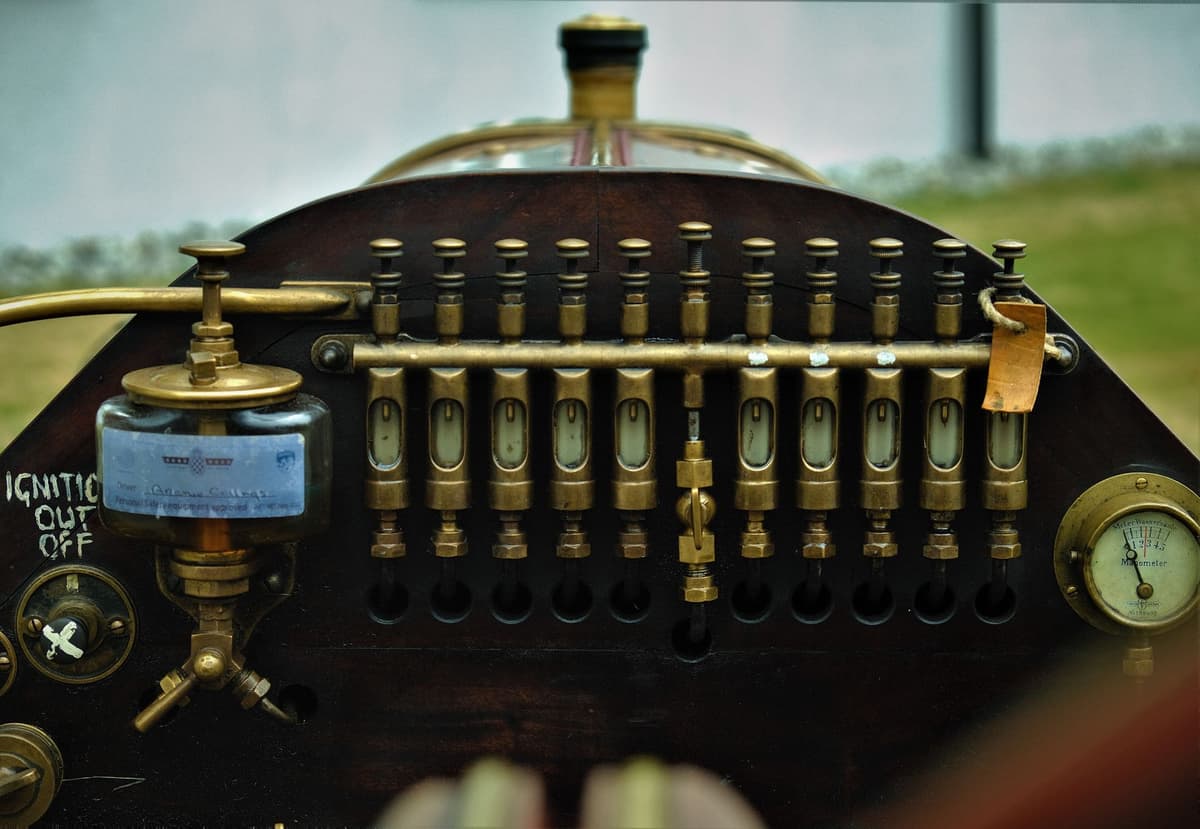
Photo by Nicholas Derio Palacios on Pexels
Because telegraphy was in its infancy and long copper runs did not yet span continents, the 1841 event passed largely unnoticed by the wider public. It left no burned relays. It caused no bankruptcies. Yet the physical blast of solar plasma was real. Had it struck tomorrow instead of 1841, the induced ground currents would have triggered cascading transformer failures across at least two continents.
Why Modern Models Underestimate the Sun
Space weather prediction relies heavily on computer simulations calibrated against events we have measured precisely. That precision begins, at the earliest, with the deployment of high-frequency ground monitors in the mid-twentieth century and expands significantly with NASA's launch of the Advanced Composition Explorer (ACE) satellite in 1997. We built our probabilistic risk curves using roughly 70 years of data to forecast phenomena governed by deep solar cycles that operate on scales of centuries.
When you force-feed newly recovered 19th-century ground observations into contemporary magnetohydrodynamic models, the curve shifts. The statistical return interval for high-intensity coronal mass ejections (CMEs) drops noticeably.
- Extreme disturbances are not millennial outliers; they occur on sub-century cadences.
- Coronal mass ejections frequently arrive in clustered pulses rather than isolated strikes, exhausting grid recovery mechanisms before repairs can begin.
- Earth's localized geomagnetic shielding exhibits regional vulnerabilities that standard global indices consistently smooth over and obscure.
Engineers designed the modern bulk-power system around the worst events on modern record: the 1989 Quebec blackout, which dropped six million people into darkness in ninety seconds, and the 2003 Halloween storms. The 1840s data demonstrates that the atmosphere can withstand shocks significantly more violent than either of those events without violating the laws of physics.
The Real Cost of an Induced Current
When a billion-ton cloud of magnetized plasma slams into Earth's magnetosphere, the lines of magnetic force compress and snap. This induces low-frequency electrical currents directly into the planet's crust. Long-distance transmission lines act as massive antennas, vacuuming up these geomagnetically induced currents (GICs) and funneling them into high-voltage step-up transformers.
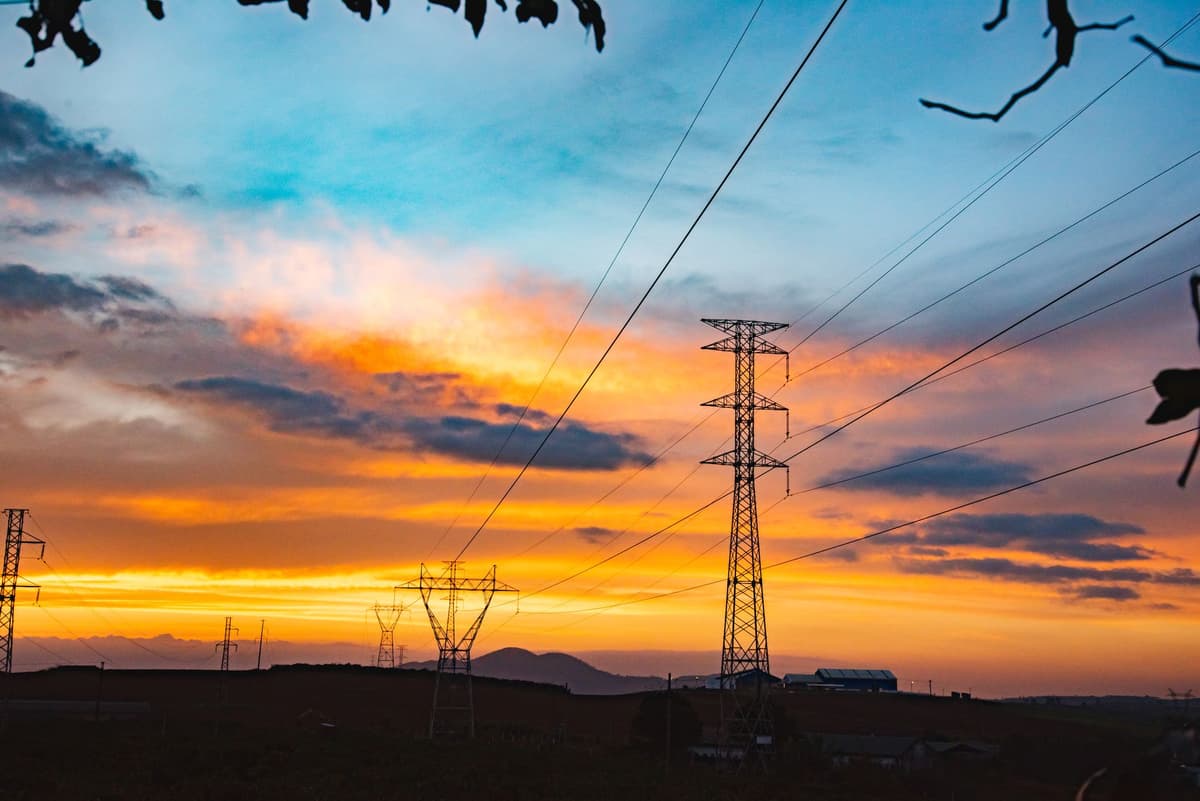
Photo by Chu Chup Hinh on Pexels
These multi-million-dollar transformers are not designed to handle direct-current saturation. The core steel overheats within minutes, burning away critical insulation and melting internal copper windings. A standard large power transformer weighs over 200 tons, requires bespoke manufacturing, and currently carries a replacement lead time exceeding 24 months. You cannot stockpile them in meaningful quantities. If twenty of them vaporize simultaneously in a single regional transmission corridor, that region does not experience a rolling blackout. It experiences an indefinite collapse of industrial logistics.
Lloyd's of London estimated that an extreme solar storm directed squarely at North America would carry an economic toll between $600 billion and $2.6 trillion in the first year alone. That estimate assumed historical recurrence intervals that the 1840s data now suggests are far too optimistic.
What This Actually Means
The work of digitizing and interpreting 180-year-old ink entries is not an exercise in historical trivia. It is a severe diagnostic warning. We have built an extraordinarily fragile digital civilization on the skin of a planet that routinely sails through the exhaust plumes of a volatile fusion reactor. Our current technological infrastructure has only ever existed during an extraordinarily quiet baseline period of solar behavior.
Hardening the infrastructure is technically straightforward, but it requires upfront capital expenditure that private utilities actively resist. Neutral ground blocking devices, series capacitors, and expanded transformer reserves cost money that yields no return on an earnings report until the disaster actually arrives. Regulators must stop accepting fifty-year statistical baselines as adequate risk management.
If we refuse to incorporate the physical reality of the 19th century into the grid codes of the 21st, we are simply waiting for an astronomical inevitability to reset our infrastructure for us. The Victorians left us the flight recorder; we are choosing not to read it.
Quick Answers
How can handwritten records from the 1840s be scientifically accurate?
Nineteenth-century naturalists utilized remarkably precise declinometers and suspended magnetic needles to record variations in Earth's field for maritime navigation. When cross-referenced across multiple geographic locations, these manual measurements produce quantitative data accurate enough for modern computational models.
Why wouldn't early storms cause massive power outages back then?
The electrical grid did not exist. The telegraph network was still in its earliest regional stages, meaning the expansive conductor loops required to translate magnetic fluctuations into destructive ground currents were absent.
Can satellites give us enough warning to protect the grid?
Modern monitoring satellites positioned at the L1 Lagrange point provide roughly 15 to 45 minutes of advance warning before a CME strikes. That is barely enough time to initiate controlled load-shedding and islanding procedures, assuming grid operators have automated protocols ready to deploy instantly.