The Audacity of the Underwater Parasol
There is a specific kind of madness in trying to shield the ocean from the sun. We are talking about a planet that is 71% water, yet here we are, watching scientists develop "atmospheric shading" devices—effectively massive, deployable underwater umbrellas—designed to hover over coral reefs during peak heat stress. It feels like trying to air-condition a forest fire, but the more I look at the data, the more I wonder if this micro-scale geoengineering is actually the smartest pivot we’ve made in decades.
For years, the strategy was passive: establish a marine protected area, stop the overfishing, and pray the carbon emissions drop fast enough to keep the water from boiling the life out of the calcium carbonate structures. That hasn't worked. In 2023, global sea surface temperatures hit record highs for over 300 consecutive days, leading to the fourth global mass bleaching event. Passive conservation is a luxury we no longer have, which is why the shift toward active, mechanical intervention feels both terrifying and deeply fascinating.
Decoupling Survival from the Atmosphere
What really grabs me about these thermal shields is the logic of "decoupling." Usually, the health of a reef is a direct hostage to the global thermostat. If the air gets hot, the top layer of the ocean gets hot, the symbiotic algae (zooxanthellae) freak out and leave their coral hosts, and the reef turns bone-white. By deploying these shades, we are essentially trying to create a localized microclimate where the coral doesn't care what the atmospheric temperature is.
It’s a temporary bypass of physics. The prototypes are designed to reduce light stress by up to 30%, which is often the difference between a coral bleaching or just having a very stressful summer. I keep picturing these things as a sort of palliative care for the planet. We aren't curing the fever; we're just putting a cold compress on the patient's forehead while we figure out how to stop the house from burning down.

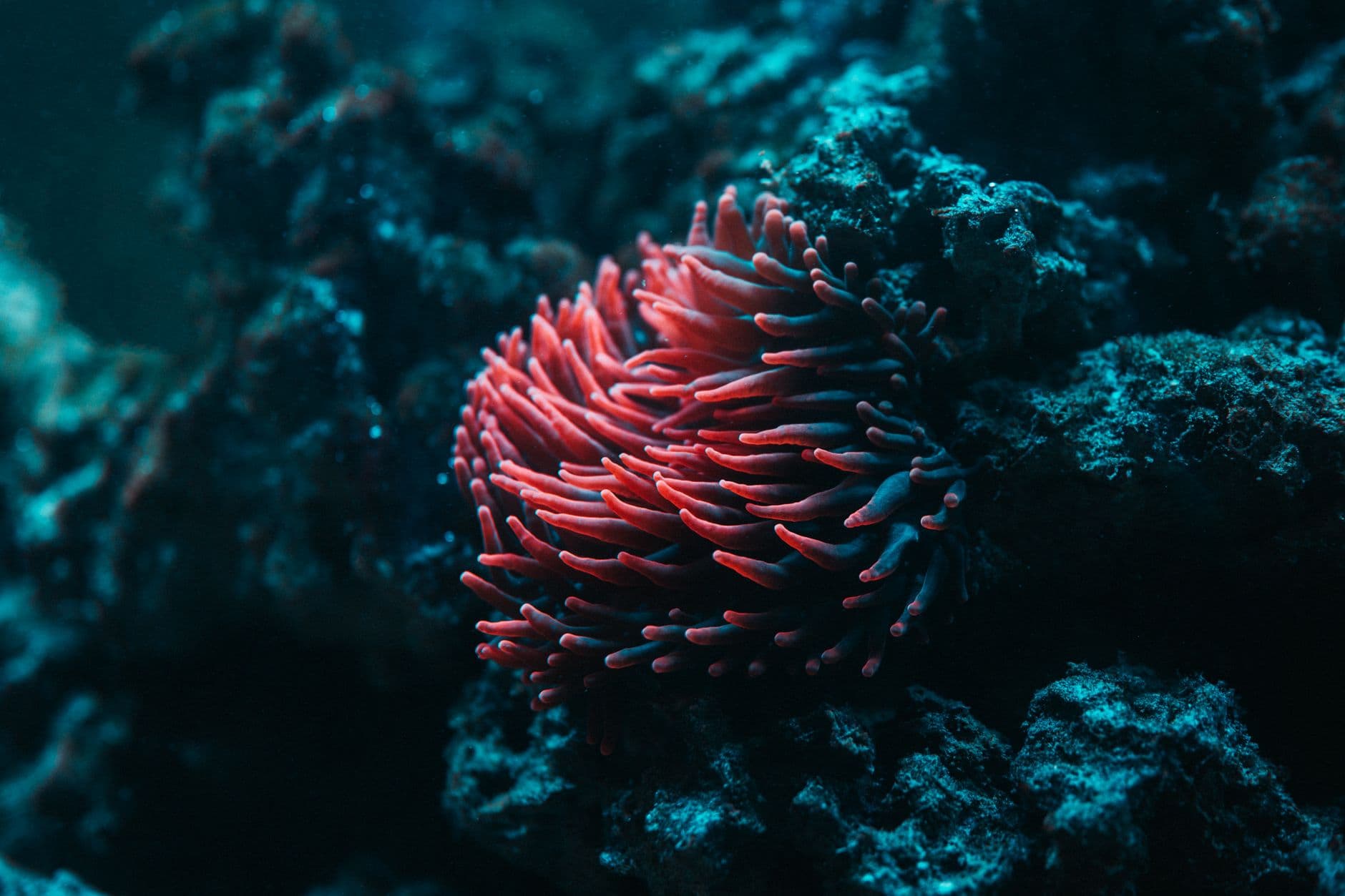
Photo by Steve A Johnson on Pexels
The Engineering of a Floating Shadow
The logistics here are genuinely wild. You can't just throw a tarp over a reef. Corals need some light for photosynthesis, and they need water flow to bring in nutrients and clear away waste. Scientists at places like the Southern Cross University are experimenting with ultra-thin, biodegradable films and floating lattices that can be deployed by drones when satellite data predicts a heatwave.
- The shields have to be storm-proof but easy to retract.
- They must be made of materials that don't leach microplastics into the very ecosystem they are trying to save.
- They need to be cost-effective enough to cover hectares, not just a few square meters in a lab tank.
I find myself wondering about the unintended consequences. If you shade a massive section of the reef, what happens to the plankton that relies on that specific column of light? Does the cooling effect create weird local currents? We are essentially playing God with a dimmer switch, and while the intention is pure, the ocean is a notoriously bad place for predictable outcomes. Yet, if the alternative is a 90% loss of all coral reefs by 2050, maybe a little unpredictable shade is a risk worth taking.
A Shift in the Human Ego
This feels like a turning point in how we view our role as stewards. For a long time, the environmentalist ethos was "leave no trace." We were supposed to be observers, minimizing our footprint. These underwater umbrellas are the opposite of that. They are a loud, mechanical, highly visible trace. It’s an admission that we have broken the natural systems so thoroughly that they can no longer function without our constant, active maintenance.
It reminds me of the "Great Green Wall" in Africa or the massive fans used to circulate cold air in Swiss glaciers. We are moving into the era of the Planetary Mechanic. We aren't just saving the reef; we are gardening it. There is something bittersweet about that. On one hand, it’s a testament to human ingenuity—that we can design a shield to protect a creature as delicate as a coral polyp. On the other, it’s a bit pathetic that we’ve made the surface of our own planet too bright for its oldest inhabitants.
What This Actually Means
Ultimately, underwater umbrellas aren't a solution to climate change, and the scientists behind them are the first to admit it. They are a tactical stall. If we can keep the "seed" populations of these reefs alive through the next two decades of extreme heat, we might have something left to rebuild with once (or if) we get our carbon act together. It’s about preserving the blueprint of an ecosystem so we don't lose the manual forever.
I’m leaning toward being a fan of this, mostly because it represents a move away from despair and toward gritty, practical experimentation. It’s messy, it’s expensive, and it looks a bit ridiculous to have a fleet of umbrellas in the middle of the Pacific. But in a world that is literally heating up, I’d rather see us holding an umbrella than just watching the shadows disappear.
Quick Answers
Do these umbrellas block all sunlight?
No, they are designed to be semi-permeable or selectively deployed to reduce solar stress by about 20-30% without starving the coral of the energy it needs for photosynthesis.
How much reef can we actually cover?
Currently, it’s limited to high-priority "nursery" areas or high-value tourist spots, as covering the entire 344,000 square kilometers of the Great Barrier Reef is logistically impossible.
Are the materials dangerous to the ocean?
Researchers are focusing on biocompatible materials that eventually dissolve or can be fully recovered, specifically to avoid adding to the ocean's massive plastic pollution problem.