When the architect of Western algorithmic intelligence purchases tens of thousands of hectares of northern European wilderness, this is not an eccentric retirement plan. It is the physical manifestation of an ideology that has already conquered our digital commons and is now securing its perimeter in the dirt. We are watching the quiet emergence of a new spatial doctrine: the data estate.
For two decades, the tech elite operated under the delusion that geography was obsolete. Code floated above borders, capital settled in cloud repositories, and the physical world was merely an inconvenient substrate requiring maintenance. That era has ended. As geopolitical fragility, grid vulnerabilities, and ecological disruption mount, the men who engineered our hyper-mediated reality are systematically converting volatile equity into sovereign, tangible ground.
The Return of the Physical Monopoly
Land acquisition at this scale reveals an unmistakable shift in how elite power structures view resilience. In the twentieth century, industrial tycoons bought tracts of wilderness for resource extraction: timber, minerals, water rights. In the twenty-first, the calculus has inverted. The asset is no longer what you can pull out of the earth, but the barrier the earth provides against the rest of the world.
Consider the scale. An acquisition encompassing thousands of hectares of Swedish forest is not a hobby farm. It represents a contiguous spatial footprint larger than many independent municipalities. In Sweden, where roughly 70 percent of the national land area is covered by boreal canopy and governed by centuries-old public commons traditions, private concentration of acreage on this level strains the social contract.
Surveillance capitalism generated unprecedented cash reserves by predicting and modifying human behavior at scale. When those proceeds are redeployed into primary natural resources, the feedback loop closes. The master of the network becomes the master of the terrain. The capital that tracked our movements through cities now purchases the right to exclude the public from the landscape entirely.
The Collision with Common Right
To understand the gravity of this purchase, one must understand the spatial philosophy of the Nordic region. Swedish land ownership has long operated alongside Allemansrätten, the constitutional right of public access that permits anyone to walk, camp, forage, and traverse private lands provided they do not disturb or destroy. It is a spatial philosophy that separates ownership from absolute exclusion.
Silicon Valley understands property through an entirely different legal lens: zero-sum containment, absolute access control, and frictionless perimeter enforcement. The two paradigms cannot comfortably coexist.
- Legal perimeter friction: Enforcing corporate standards of physical security and privacy inevitably chips away at historic public easements through subtle deterrents, monitoring, and administrative pressure.
- Ecological governance by decree: Conservation ceases to be a democratic regional priority managed by state forestry boards and becomes an idiosyncratic private fiefdom governed by individual preference.
- Resource monopolization: Boreal forests serve as critical carbon sinks and hydrological stabilizers; privatizing massive parcels concentrates climate hedge assets in individual hands.
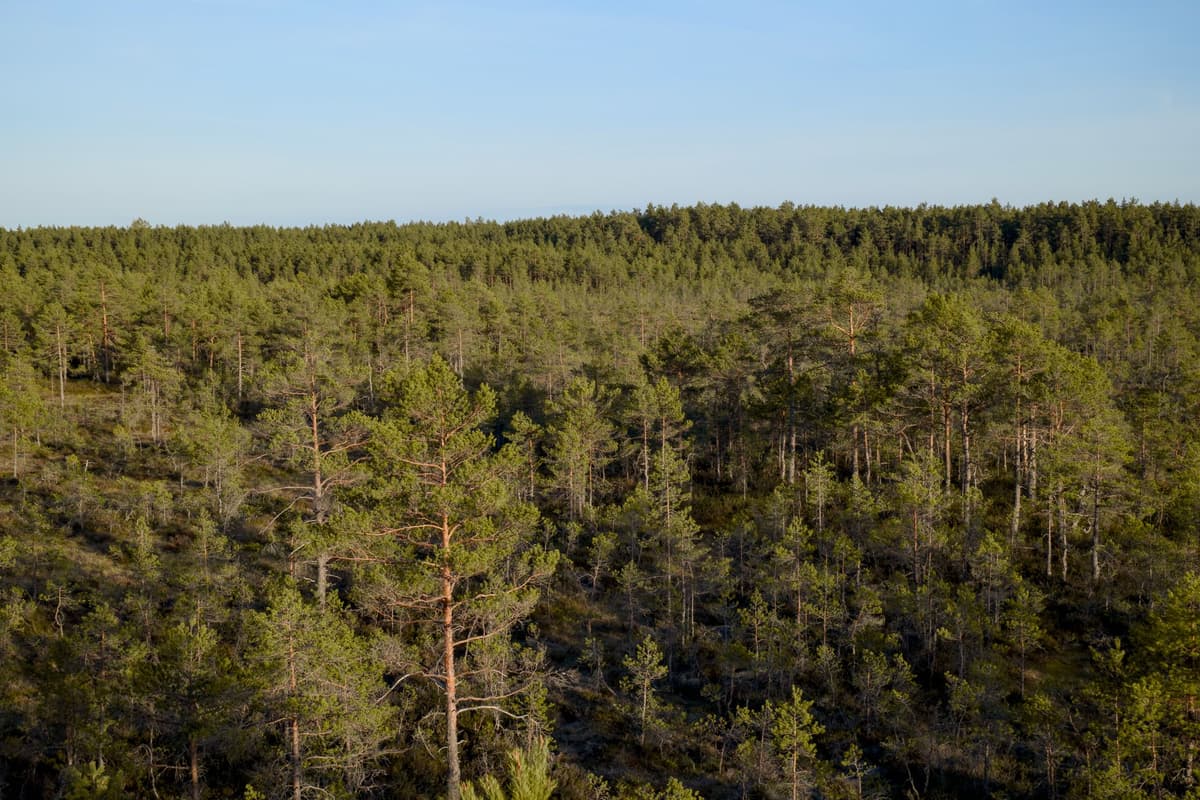
Photo by Lauri Poldre on Pexels
When a single foreign actor holds deep regional tracts, local planning authorities lose planning leverage. Architecture and regional planning rely on predictable civic cooperation. A private enclave of this magnitude introduces an unanswerable sovereign neighbor into regional planning meetings: an owner with deeper pockets than the county government and zero accountability to the electorate.
Digital Feudalism Discovers Soil
The technological context here is inseparable from the land itself. Palantir grew out of post-9/11 defense intelligence infrastructure, standardizing predictive analytics and geospatial tracking for states and military bodies. Its operational ethos is total awareness, threat anticipation, and risk mitigation. It is impossible to separate an investor's institutional worldview from their physical investments.
When technocrats buy vast natural acreage, they rarely build mere residences. They construct resilient, off-grid infrastructures designed to withstand supply chain degradation, social unrest, and climatic shocks. The architecture of these retreats reflects their digital systems: self-contained, heavily monitored, hardened against the exterior, and computationally sovereign. It is defensive architecture rendered in timber and stone.
We must discard the narrative that these transactions represent benign, philanthropic conservationism. True conservation requires democratic governance, transparent management goals, and public accountability. A private owner can declare an ecosystem protected today, clear-cut it tomorrow for liquidity, or ring it with passive sensor networks to prevent local entry under the banner of ecological preservation. Environmental protection becomes an alibi for territorial isolation.
What This Actually Means
The migration of surveillance capital into European land portfolios is a leading indicator, not an anomaly. It signals that those with the clearest analytical visibility into global fragility have concluded that the existing institutional safeguards of the global order are insufficient for their long-term security. They are hedging against the systems they helped construct.
When the state allows foundational assets like primary forests and regional watersheds to be collected by individuals with no historic or democratic ties to the territory, it abdicates spatial sovereignty. The Nordic model preserved stability because it treated land not merely as tradeable equity, but as an intergenerational compact between the citizen and the state.
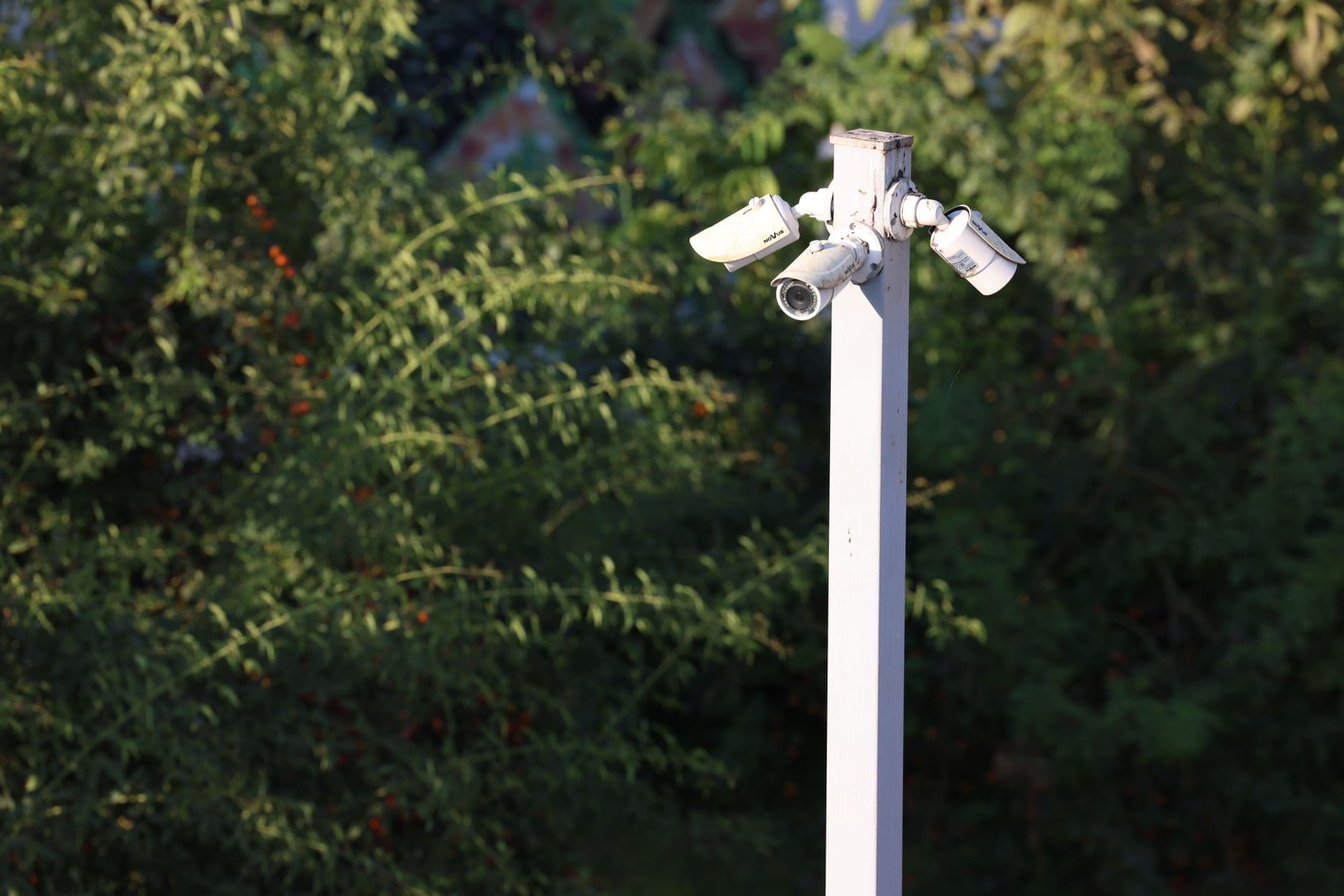
If the modern commons can be carved up and converted into private strategic reserves for the engineers of global predictive technology, the very concept of the public sphere shrinks. The future is not a floating digital network. It is an ancient forest, watched by cameras you will never see, behind a perimeter you are no longer permitted to cross.
Quick Answers
Does Swedish law allow foreign nationals to buy large tracts of forest?
Yes. Sweden has few restrictions on foreign property acquisition, though specific agricultural and forestry parcels in designated rural areas may require an acquisition permit (förvärvstillstånd) from the regional administrative board.
Can a private owner eliminate the right to roam (Allemansrätten)?
No, the right is protected by the Swedish Instrument of Government. However, owners can legally restrict access immediately surrounding private residences and can seek permits to alter land use in ways that practically deter the public.
Why choose northern Sweden instead of an island or traditional tax haven?
Northern Sweden offers political stability, abundant freshwater reserves, cool climatic trajectories under global warming, and extensive natural barriers, making it an ideal long-term security hedge compared to vulnerable coastal territory.