The Fragility of the Industrial Field
For decades, the promise of precision agriculture has been undermined by the sheer volatility of the environment. We asked machines to distinguish a single sprout of pigweed from a soybean leaf in sub-millisecond windows while bouncing over uneven soil in 100-degree heat. The computational load required for this level of computer vision is staggering, necessitating direct GPU acceleration. Until recently, that meant writing code in C++, a language that offers immense power but lacks a safety net. In the high-stakes environment of a thousand-acre farm, a single memory leak or a segmentation fault doesn't just mean a software crash; it means a hundred-thousand-dollar robot sitting idle during the only forty-eight-hour window suitable for planting.
Industrial agriculture is currently defined by a 'spray and pray' philosophy because human labor cannot scale to the level of individual plant management. We dump millions of tons of glyphosate across the landscape because it is the only way to manage weeds at a macro level. The shift to native GPU programming in Rust changes the calculus of what is possible. By moving the logic of weed identification into a memory-safe environment, we are removing the primary cause of system instability in autonomous hardware. We are moving from a world of chemical carpet-bombing to one of surgical, mechanical intervention.
Why Memory Safety Equals Environmental Safety
The technical shift toward Rust is a direct response to the 'Real-Time Harvest' problem. When a robot identifies fifty different species of sprouts while moving at five miles per hour, it is performing thousands of concurrent operations on the GPU. In older paradigms, these concurrent operations were a breeding ground for 'race conditions'—errors that are notoriously difficult to debug and catastrophic for real-time systems. Rust’s ownership model prevents these errors at compile time. This means the code doesn't just run; it is mathematically guaranteed to handle memory correctly.
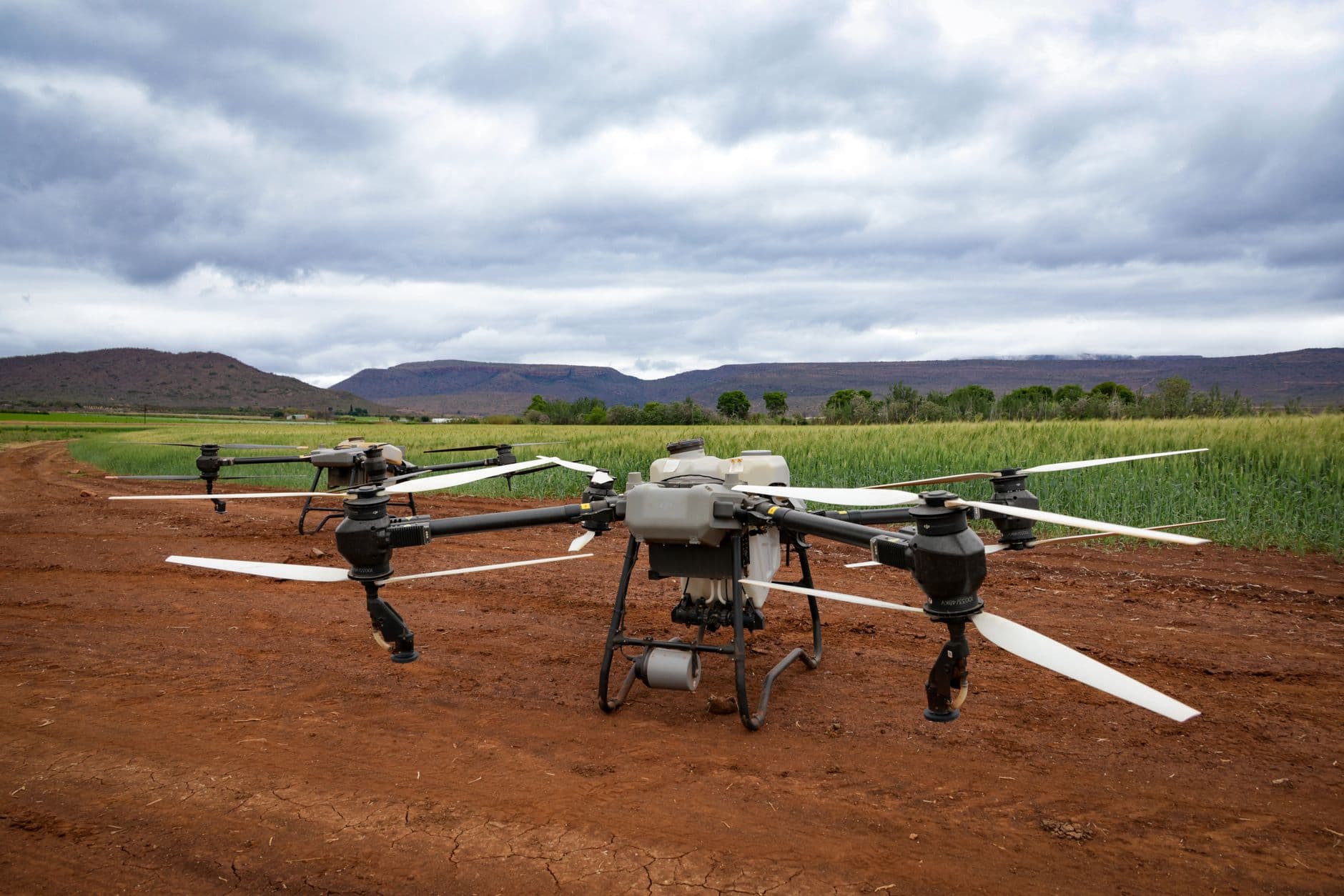
This stability allows for 'ultra-precise' weeding that was previously a laboratory fantasy. When the system is reliable, farmers can trust a machine to use high-powered lasers or micro-nozzles to target individual weeds with a 90% reduction in herbicide use. That 90% figure isn't just a win for the balance sheet; it is a fundamental shift in the nitrogen and chemical load we are forcing our topsoil to carry. The software is finally as rugged as the steel it controls.

Photo by cottonbro studio on Pexels
The Economic Mandate for Reliable Code
We must view software architecture as a critical component of food security. If the systems managing our caloric output are prone to the 'blue screen' logic of the early 2000s, we have simply traded one form of fragility for another. The integration of Nvidia’s accelerated computing with Rust’s safety guarantees provides a level of uptime that makes the replacement of traditional tractors economically viable. A robot that crashes once a day is an expensive toy; a robot that runs for 5,000 hours without a memory fault is a utility.
In 2023, the cost of herbicide for a large-scale corn operation can exceed $60 per acre. For a 2,000-acre farm, that is a $120,000 annual tax paid to chemical companies. If an autonomous system can reduce that cost by 90%, the return on investment for the hardware is realized in less than three seasons. However, that ROI only exists if the machine stays in the field. By eliminating the 'undefined behavior' inherent in legacy GPU languages, we are lowering the barrier to entry for small and medium-sized farms to adopt high-tech solutions that were once the exclusive domain of massive conglomerates.
What This Actually Means
This transition marks the end of the 'beta testing' era for agricultural robotics. We are moving into a period where the intelligence of the machine is finally matched by the resilience of the code. When we can distinguish between 50 species of sprouts in milliseconds without the fear of a system-wide lockup, we change our relationship with the land. We stop treating the field as a sterile factory floor and start treating it as a complex biological system that can be managed with nuance.
The real story isn't the speed of the GPU or the novelty of the programming language. The real story is the reclamation of the soil. By utilizing memory-safe, high-performance computing, we are building a food system that is less dependent on the petrochemical industry and more dependent on the elegance of logic. It is a rare instance where better code leads directly to a cleaner earth.
We are finally seeing the intersection of computer science and ecology produce something tangible. The 'Real-Time Harvest' is not just about efficiency; it is about the maturity of autonomous systems. It is the moment where the robot stops being a liability and starts being a steward.
Quick Answers
Why does the programming language matter for a farm?
Legacy languages like C++ often suffer from memory errors that cause robots to freeze or crash in the field. Rust eliminates these errors, ensuring that the robot works reliably during the narrow windows of time when planting and weeding must occur.
How does this reduce herbicide use?
When the software is stable enough to run complex AI models at high speeds, the robot can identify and target individual weeds with 90% less chemical volume, rather than spraying the entire field indiscriminately.
Is this technology only for large corporate farms?
While large farms are the early adopters, the increased reliability and decreased chemical costs make autonomous robots more economically viable for smaller operations that cannot afford to have a technician on-site to fix software crashes.