The Trillion Dollar Laboratory
I spent yesterday afternoon looking at the historical budget of NASA compared to the current private capital flowing into Low Earth Orbit (LEO). For decades, space was a government monopoly because the risk-to-reward ratio was, frankly, terrifying. No sane board of directors would have approved a mission to the moon in 1969. But today, the math is shifting in a way that feels different than the 'space race' of my childhood. When Bezos sells $1 billion of Amazon stock every year to fund Blue Origin, he isn't just throwing money at the stars. He is betting that the infrastructure of the solar system is finally ready for its first real tenants.
There is a peculiar tension in watching a billionaire build a New Glenn rocket. It feels like we are watching the transition from the age of explorers to the age of contractors. If the 20th century was about proving we could go, the 21st century seems to be about proving we can stay. I find myself wondering: at what exact dollar point does a vacuum become a neighborhood? The answer likely lies in the shift from government-funded R&D to the kind of aggressive, iterative commercial testing that only happens when someone’s personal fortune is on the line.
The Reusable Rocket Paradox
We used to throw away our rockets like used napkins. It was the most expensive way to travel imaginable. Now, with the advent of vertical landing and rapid refurbishment, the cost per kilogram to orbit is plummeting. This is the 'technological maturity' the economists keep talking about. It isn't just that the rockets work; it's that they work reliably enough to be boring. When a launch becomes a routine Tuesday event rather than a national spectacle, you know the paradigm has shifted.
- The cost to launch a payload has dropped by nearly 95% since the Space Shuttle era.
- Blue Origin’s New Shepard has flown the same booster over eight times.
- We are moving from 'bespoke' spacecraft to 'assembly line' hardware.
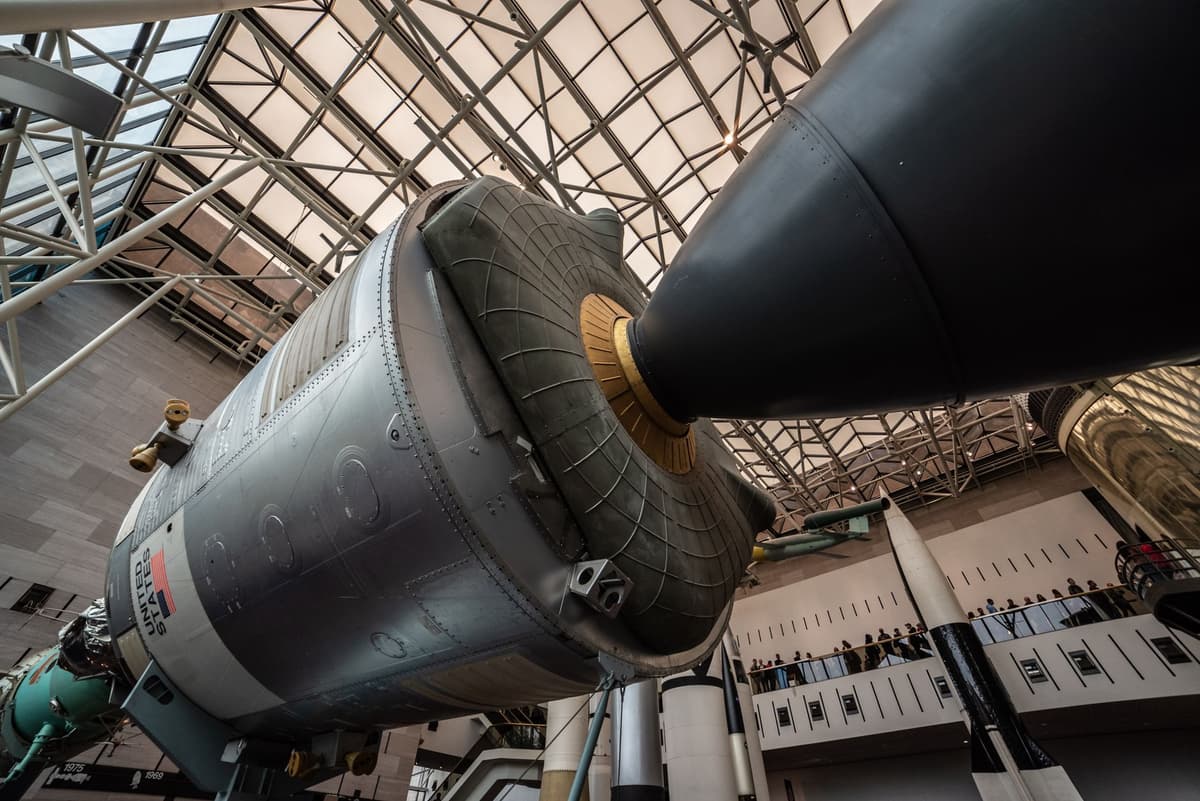
Photo by Dominik Gryzbon on Pexels
What fascinates me is how this affects the 'In-Situ Resource Utilization' (ISRU) dream. This is the idea that we shouldn't bring everything with us; we should mine the moon or asteroids for water and fuel. For years, this was a PowerPoint slide at a space conference. Now, it’s a line item in a business plan. If Bezos can prove that it’s cheaper to get water from the lunar poles than to lift it from Earth, the entire macroeconomic structure of our species changes overnight. We stop being a planet-bound civilization and start being a solar one.
Why The Billions Follow The Risk
I often think about the 'bellwether' effect. When figures like Bezos or Musk pivot their entire strategic focus toward orbital infrastructure, it signals to the rest of the financial world that the 'unsolvable' problems are now just 'difficult' problems. It’s a subtle but massive distinction. Difficult problems can be solved with enough engineering and capital. Unsolvable ones are just black holes for cash. The fact that venture capital in space tech reached nearly $15 billion in a single year recently suggests the smart money no longer thinks space is a black hole.
Is this a vanity project? Maybe in the sense that every great monument is a product of ego. But a vanity project usually ends when the person dies. What Bezos is building—the 'Orbital Reef' space station, the lunar landers—is designed to be a platform for other people to make money. He talks about 'building the road to space.' If he builds the road, he doesn't have to be the one driving every truck. He just has to own the toll booth. That is a much more sustainable, and frankly more interesting, vision than just planting a flag.
What This Actually Means
We are living through the moment where the 'Frontier' becomes the 'Market.' It’s a messy, ego-driven, and often controversial transition, but it’s also the only way space exploration survives the fickle nature of political cycles. Governments lose interest when the next election cycle hits; billionaires with a legacy to build tend to stay focused for decades. This shift toward private-sector leadership means that the pace of innovation is no longer tied to a congressional subcommittee, but to the speed of a CAD program and a 3D printer.
Ultimately, the 'Billionaire Space Race' is a misnomer. It’s not a race to a finish line; it’s a race to build the first profitable ecosystem off-planet. If they succeed, the way we think about resources, energy, and even the survival of our species will be fundamentally altered. We are watching the scaffolding of a new era being welded together in real-time, one liquid-oxygen-drenched test flight at a time. It makes me wonder what the next 'impossible' thing to become 'profitable' will be.
Quick Answers
Is this just a way for rich people to escape Earth?
No, because Earth is still the only place with air, chocolate, and a functional ecosystem; space is a place to move heavy industry, not a luxury resort.
Why can't NASA just do this alone?
NASA is great at the 'firsts,' but government agencies aren't designed for the cost-cutting and rapid iteration required to make space flight routine and affordable.
When will I actually see the benefits of this?
You already are, through more robust satellite networks, better weather tracking, and the massive drop in the cost of global data distribution.