The Universe Forgot to Be a Baby
For decades, we had a lovely, comforting story about how the universe worked. It was a slow, majestic crawl from a hot soup of particles to the first flickering stars, eventually leading to the awkward teenage phase of proto-galaxies. We wrote it down in textbooks, drew nice little diagrams, and felt very smart about ourselves. Then we launched the James Webb Space Telescope (JWST) in December 2021, and the universe decided to stop playing along with our little narrative.
JWST looked back to roughly 500 to 700 million years after the Big Bang—a period when everything was supposed to be messy, small, and disorganized. Instead, it found massive, bright, mature galaxies that look like they’ve been around for billions of years. It’s the cosmological equivalent of walking into a nursery and finding a group of infants discussing the nuances of 18th-century French literature while smoking cigars. We expected cosmic toddlers; we got the 'Universe's Greatest Hits' collection instead.
Our Models Are Doing Great, Thanks for Asking
The standard model of cosmology, Lambda CDM, is a masterpiece of human ingenuity that is currently being held together by the scientific equivalent of duct tape and prayer. According to this model, gravity takes a long time to pull enough dark matter together to start building substantial galaxies. You can't just have a massive, structured galaxy half a billion years after the Big Bang. It’s physically impossible, or at least it was until JWST took a picture of six of them.
These 'Universe Breakers' are so massive that they shouldn't exist in 99% of our current simulations. To make the math work now, you have to assume that the early universe was about ten times more efficient at turning gas into stars than we ever imagined. It's almost as if the laws of physics were working overtime on a holiday weekend just to spite our future peer-reviewed papers. We aren't just adjusting the dials on our theories; we're staring at the radio wondering why it’s leaking gravy.

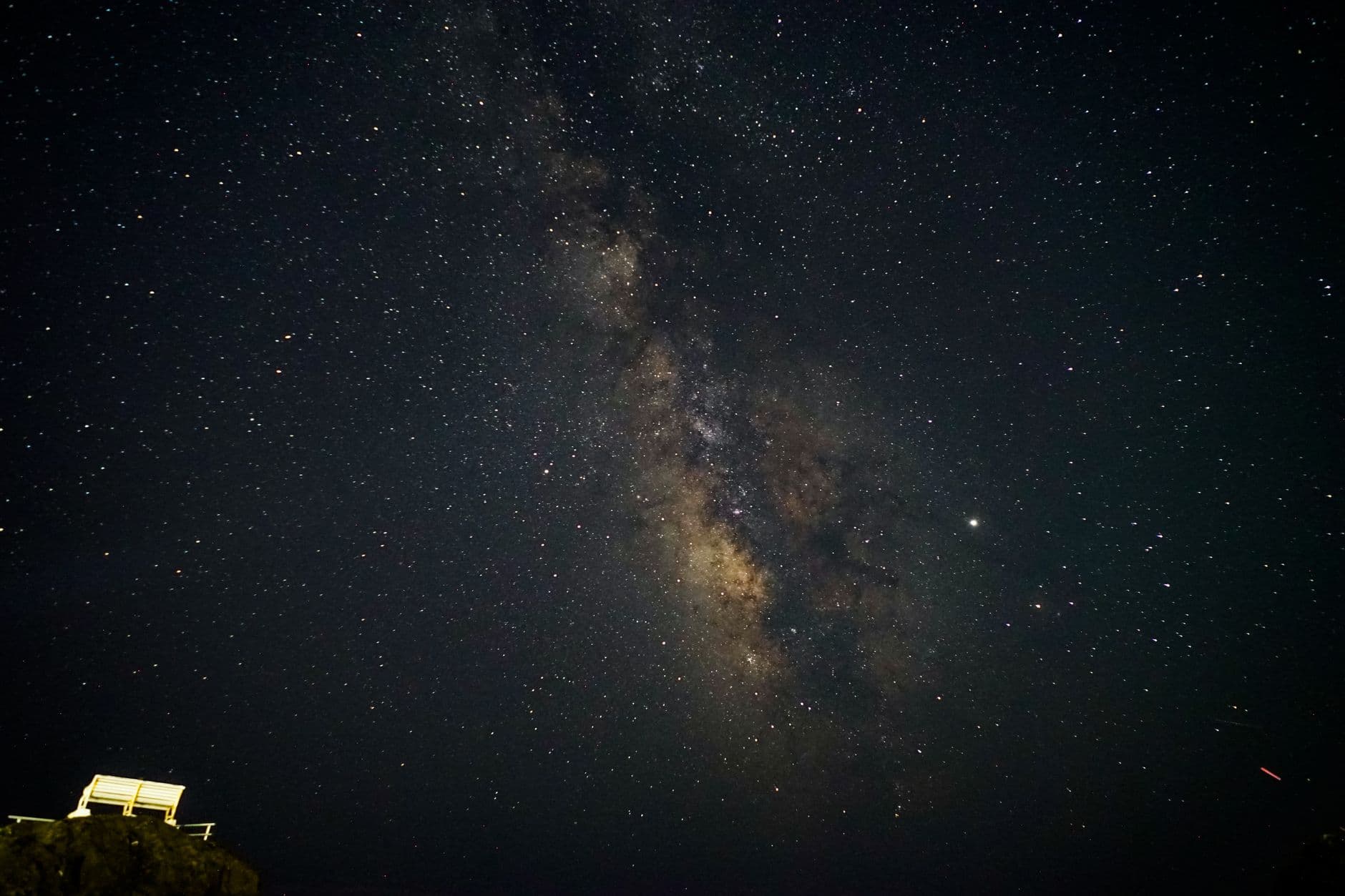
Photo by Brett Sayles on Pexels
The Textbook Industry Is Thrilled
If you happen to own a company that prints astrophysics textbooks, this is the greatest economic stimulus package in history. Every chapter on galaxy formation written before 2022 is now essentially a very expensive collection of guesses. We used to think we understood the 'Dark Ages' of the universe, but it turns out we were just projecting our own lack of data onto the void. The sheer arrogance of assuming we knew the timeline of a 13.8-billion-year-old entity based on a few blurry photos from Hubble is, in retrospect, quite charming.
Astronomers are now scrambling to explain how these galaxies got so big so fast. Maybe the Big Bang wasn't exactly what we thought. Maybe dark matter behaves like it's on performance-enhancing drugs. Or maybe, and this is the most likely scenario, the universe simply doesn't care about our spreadsheets. We’ve spent years building a house of cards, and JWST just walked in and turned on a very large industrial fan.
- The 'Universe Breakers' found by the CEERS survey are up to 100 billion times the mass of our Sun.
- These galaxies appear as they were only 3% of the universe's current age.
- Current theories suggest they should be 10 to 100 times smaller than what we are seeing.
What This Actually Means
What this actually means is that we are currently living through a period of profound scientific embarrassment, which is the only way real progress ever happens. We are forced to admit that our 'fundamental assumptions' were actually just very educated guesses that happened to be wrong. It turns out that the early universe was a frantic, high-energy construction site rather than the sleepy, slow-motion nursery we imagined.
We didn't just find a few weird outliers; we found a systematic flaw in our understanding of how matter clumps together. This isn't a 'tweak the numbers' situation; it's a 'tear down the drywall' situation. The fact that we can see these objects at all suggests that the early universe was significantly more crowded and active than our most ambitious models predicted.
In the end, JWST is doing exactly what it was supposed to do: making us look like idiots. There is something deeply humbling about spending billions of dollars to prove that we don't know nearly as much as we thought we did. It’s a win for science, but a massive loss for anyone who hates being wrong.
Quick Answers
Is the Big Bang theory dead?
No, but it's currently in the ICU receiving a very aggressive reality check regarding its timeline.
Could these just be weirdly bright small galaxies?
It's possible, but the data suggests they have the mass of the Milky Way, which is like finding a toddler who weighs 200 pounds.
When will the textbooks be fixed?
Probably as soon as the scientists stop arguing and finish their third round of 'pre-print' revisions, so maybe 2030.