I keep wondering why a country's sports ministry budget suddenly behaves like a naval deployment plan. When India set its sights on the 2026 Asian Games in Aichi-Nagoya, Japan, something clicked into place that had nothing to do with personal bests and everything to do with hemispheric leverage. Track spikes and diplomatic pacts usually occupy entirely different corridors of power, but right now, watching New Delhi calibrate its athletic machine feels less like training for a tournament and more like drafting a new maritime doctrine.
Take a look at the ledger. For the 2024-25 fiscal cycle, India allocated roughly ₹3,442 crore (around $415 million) to its Ministry of Youth Affairs and Sports, a massive leap from the shoestring budgets of a decade ago. It begs an honest question: why now? What changes when the world's most populous nation decides that coming in fourth or fifth on the continental table is no longer an athletic disappointment, but a strategic vulnerability?
The Geography of a Podium
For decades, the Asian Games were an exercise in predictable dominance. China would vacuum up two hundred gold medals, Japan and South Korea would scrap for silver status, and everyone else would divide the regional scraps. In Hangzhou in 2023, China took home 201 gold medals. India crossed the triple-digit threshold for the first time with 107 total medals, 28 of them gold. It was hailed as a national awakening, but what fascinated me wasn't the tally itself; it was the rhetoric immediately following it.
The rhetoric didn't frame Hangzhou as a finished triumph. It treated the haul like an operational proof-of-concept.
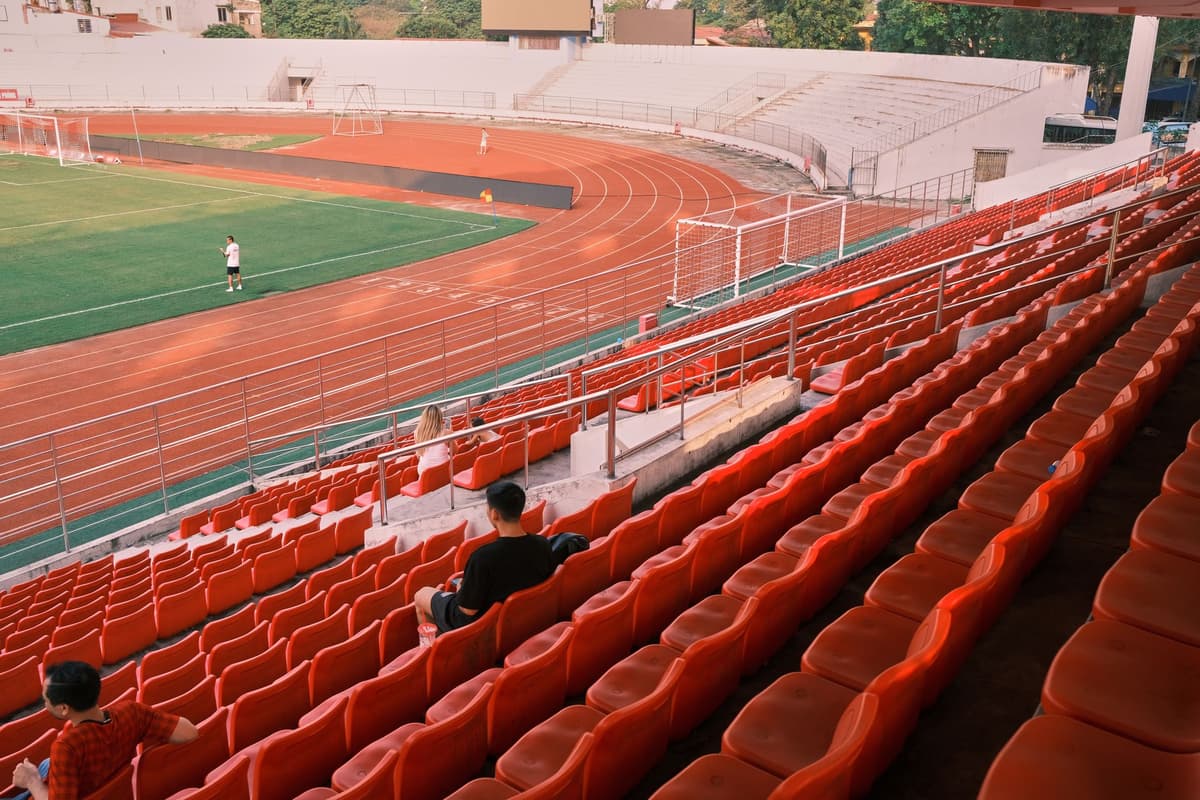
Photo by Thuan Pham on Pexels
Think about where 2026 takes place: Japan. Consider the diplomatic choreography already tying New Delhi to Tokyo through the Quad framework, maritime surveillance agreements, and infrastructure investments across Southeast Asia. When Indian athletes step onto tracks in Nagoya, they aren't merely competing against Chinese sprinters. They are physically occupying the cultural space of a partner nation while attempting to show the broader neighborhood that Beijing does not hold a permanent monopoly on Asian excellence. Is athletic swagger necessary for regional leadership? Historically, the answer is uncomfortably close to yes.
The Currency of the Non-Aligned
What does it actually mean to lead the 'Global South'? We hear the phrase thrown around in think-tank panels until it loses all contour, but soft power requires tangible, shareable triumphs. A satellite launch works, sure. A massive pharmaceutical export network works, too. But cultural identification is visceral. When smaller nations in Central Asia, South Asia, and East Africa watch continental competitions, who do they see looking back at them?
China spent forty years building an unassailable sports assembly line, using Soviet-derived centralized academies to manufacture champions in disciplines the public barely watched, specifically to harvest Olympic tallies. India is trying something stranger and perhaps more volatile:
- Flooding private corporate capital into Olympic development via entities like the Inspire Institute of Sport.
- Systematically subsidizing grassroots identification through the Khelo India initiative.
- Weaponizing indigenous disciplines (like kabaddi) alongside global mainstays to assert indigenous cultural validity.
- Pitching itself to neighboring federations as an alternative training hub, offering facilities to South Asian neighbors who used to look solely to Kunming or Beijing.
If you can train your neighbor's athletes, feed their programs, and consistently beat their rivals on television, your diplomatic notes arrive on different paper. You stop being merely an economy with a large population; you start looking like a center of gravity. I wonder if this approach is more durable than state-run sports factories, or if the sheer chaos of private-public partnerships will trip over its own bureaucracy before 2026 even arrives.
The $5 Billion Shadow of 2036
Underneath the Nagoya scramble lies an even bigger gamble: India's formal letter of intent to the International Olympic Committee to host the 2036 Summer Games, likely in Ahmedabad. You cannot credibly ask the IOC to hand you a multi-billion dollar mega-event if your own delegation finishes behind regional midweights in the medal table. The 2010 Commonwealth Games in Delhi showed the world what happens when infrastructure runs behind and institutional corruption leaks into the open. That scar is still visible in Delhi policy circles.
Nagoya in 2026 is the trial run. If India can touch 130 or 140 medals in Japan, on the soil of one of Asia's historic sports powerhouses, the domestic argument for 2036 hardens into certainty. The infrastructure investments currently pouring into Gujarat and surrounding states suddenly look less like domestic vanity projects and more like the inevitable arrival of a premier global power.
Yet I find myself questioning the durability of sports diplomacy when the border remains cold. Does finishing on a podium with a rival from across the Line of Actual Control open lines of communication, or does it merely raise the stakes of national prestige to a point where losing becomes unacceptable? In Hangzhou, three wushu players from Arunachal Pradesh were denied normal entry visas by Chinese authorities, igniting a diplomatic firestorm before the torch was even lit. Sports doesn't float above sovereignty; it absorbs every ounce of its friction.
What This Actually Means
When we watch sports, we want to believe in pure meritocracy. We want the clean line of the stopwatch, the undeniable measurement of the tape, the absolute clarity of an arrow hitting the target. But nations don't spend hundreds of millions of dollars to watch someone run fast just for the poetry of the stride.
India's push toward Nagoya reveals a country done with playing regional defense. By treating the 2026 Games as an audition for the 2036 Olympics and a direct counterweight to Chinese cultural dominance, New Delhi is testing whether athletic prestige can substitute for decades of entrenched geopolitical influence. It is an experiment in whether national momentum can be manufactured through elite training centers and high-performance nutritionists.
Whether it works depends entirely on what happens when the starting gun fires. You can write all the policy white papers you want about maritime corridors and the Global South, but at the end of the day, an athlete either crosses the line first or they don't. And that is the most fascinating part: after all the billions spent and all the diplomatic maneuvering, a nation's geopolitical ambition still rests on the hamstrings of twenty-two-year-olds.
Quick Answers
Why are the 2026 Asian Games significant for India?
They serve as the critical benchmark to prove India can rival China's sporting dominance while establishing athletic credibility for its bid to host the 2036 Summer Olympics.
Where are the 2026 Asian Games being held?
They will take place in the Aichi Prefecture and its capital city, Nagoya, in Japan.
How does sports tie into India's foreign policy?
India uses athletic investment to project leadership within the Global South, building soft power to complement its trade routes and regional security pacts.
Has India officially bid for the 2036 Olympics?
Yes, the Indian Olympic Association submitted a formal letter of intent to the International Olympic Committee in late 2024.