The Joy of Not Having a Single Point of Failure
For decades, the peak of human achievement was the centralized power plant. We loved them. We built these massive, throbbing cathedrals of concrete and steam, hooked them up to a single national grid, and patted ourselves on the backs for our supreme efficiency. It was a beautiful system, provided you lived in a world where everyone agreed to be nice forever. Ukraine has discovered that when your neighbor decides to treat your thermal plants like a high-stakes game of Tetris, having one big light switch is a bit of a liability.
Now, the trendiest thing in Kiev isn't a new coffee shop; it's a solar panel bolted to a balcony. We are witnessing the birth of the "Fortress Grid," a system where every apartment building and water pump acts like its own little sovereign nation. It’s the ultimate survivalist aesthetic, except instead of hiding in a bunker with canned beans, people are just trying to make sure their refrigerators don't turn into science experiments during a blackout.
There is a certain ironic elegance to it. Russia spends millions of dollars on a precision missile to take out a substation, only to find out the local hospital is still running because some guy installed a wind turbine and a rack of batteries in the parking lot. It’s hard to win a war of attrition when your target is essentially a thousand angry gnats instead of one giant, slow-moving cow.
Why Efficiency is for People Not Being Shelled
Urban planners used to obsess over "economies of scale." They told us that bigger was better because it lowered the cost per kilowatt-hour by 0.004 cents. That’s a fantastic metric until you factor in the cost of replacing a $20 million transformer every three weeks. Suddenly, that inefficient, fragmented, and expensive rooftop solar array looks like the greatest bargain in the history of civil engineering.
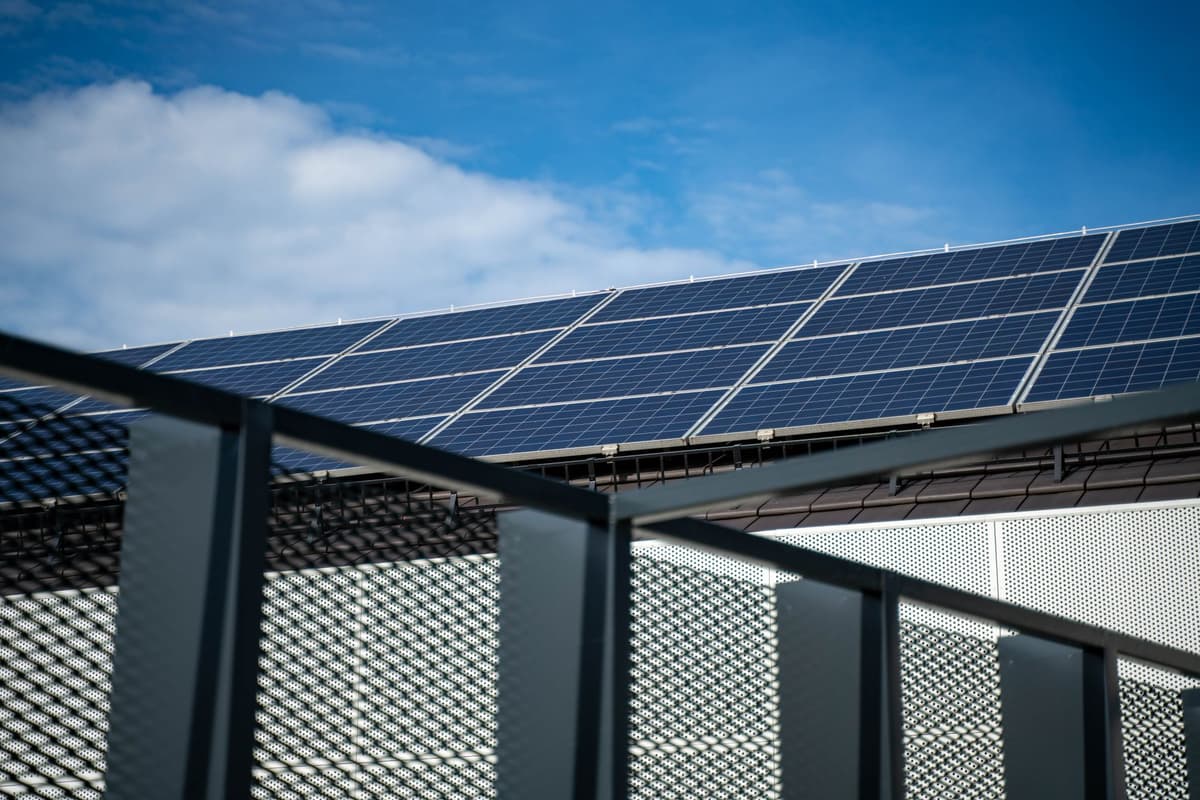
Photo by Vladimir Srajber on Pexels
This is the death of the master plan. We’re moving toward a "fragmented architecture" where the goal isn't to be part of a glorious national backbone, but to be able to survive a total divorce from it. It’s the infrastructure equivalent of a teenager moving into a basement apartment and insisting they don't need their parents' Netflix password anymore. Except in this case, the parents are a crumbling Soviet-era grid and the basement has a battery backup.
In the West, we talk about "smart cities" like they’re places where your trash can tells the city council it’s full. In Ukraine, a smart city is one where the water pumps still work when the main lines are severed. It turns out that resilience isn't about high-tech sensors; it's about having enough redundancy that the system is too annoying to bother destroying. If you have to blow up 5,000 individual solar installations to turn off the lights in one neighborhood, you’re probably going to run out of missiles before they run out of sunlight.
The Survivalist Aesthetic is the New Mid-Century Modern
We are looking at a future where municipal design is dictated by the "Disconnection Metric." Architects are being forced to ask: "If the rest of the world disappears tomorrow, does this building still have a pulse?" This is a radical shift from the last century of progress. We spent a hundred years trying to connect everyone to everything, and now the smartest people in the room are trying to figure out how to make sure we can all function in total isolation.
It’s a bit like returning to the feudal era, but with lithium-ion batteries instead of moats. Each district, each block, each building becomes its own fortress. This isn't just about energy; it’s about the very philosophy of how we cluster together. The centralized city was built on trust. The resilient city is built on the assumption that the person across the border—or even the person at the head of the national utility company—might fail you at any moment.
- Centralization: One big target, very cheap, works until it doesn't.
- Decentralization: Ten thousand small targets, very expensive, works even when it's being hit.
- The Winner: Whoever still has a functioning toaster in February 2024.
What This Actually Means
What this actually means is that the era of the "invisible" infrastructure is over. We used to hide our power lines and tuck our generators away in industrial zones because they were ugly. Now, a solar array is a status symbol of survival. We are going to see a massive shift in how cities are built, moving away from the "big pipe" model toward a cellular structure where every node is responsible for its own life support.
It’s a cynical, survivalist way to build a world, but it’s also the only one that seems to work when the missiles start flying. We are trading the sleek, interconnected efficiency of the globalized era for a jagged, defensive posture. It’s not pretty, it’s not particularly cheap, and it’s definitely not what they taught us in school. But as it turns out, being "unplugged" is a lot more fun when it’s a choice you made, rather than one made for you by a long-range ballistic missile.
This isn't just a Ukrainian quirk; it's a blueprint. Every city sitting on a fault line, in a hurricane path, or near a hostile neighbor is watching. They aren't looking at the pretty parks or the bike lanes. They’re looking at the guy in Lviv who figured out how to keep his internet on using an old car battery and a prayer. That is the future of urban planning: a thousand points of light that refuse to go out all at once.
Quick Answers
Is decentralized energy actually more efficient?
Absolutely not, it’s a logistical nightmare that costs significantly more per unit of energy produced. However, it has the distinct advantage of existing after a bombardment, which is a metric traditional economists often forget to include in their spreadsheets.
Will other cities start doing this?
Any city with a sense of self-preservation is already looking at how to decouple their essential services from the main grid. Expect to see more "microgrids" and fewer massive, centralized vanity projects in the next decade.
Does this mean the national grid is dead?
Not dead, just demoted. It’s becoming the backup plan for when your local solar panels are covered in snow, rather than the single point of failure that keeps your entire civilization from collapsing into the dark ages.