Your Room is Ready, and It’s Full of Pioneers
There is something deeply poetic about the fact that while NASA scientists were busy obsessing over sterile environments and laminar flow hoods, the real masters of the universe were chilling in an $80 motel room. We’ve spent decades looking for the building blocks of life in the pristine plumes of Enceladus, but it turns out the blueprint for cosmic domination was hiding under a stained duvet. These extremophiles don't need a hydro-thermal vent or a sub-surface ocean to survive; they just need a lukewarm shower head and a complete lack of industrial cleaning supplies.
This discovery of 'organizing principles' in terrestrial grime is a hilarious slap in the face to our collective ego. We like to think of life as a fragile, precious miracle that requires a perfect 'Goldilocks zone' to exist. In reality, life is more like that one guy at a party who won't leave—it’s persistent, it’s messy, and it can survive on a diet of dust and disappointment. If a microbe can thrive in the climate-controlled purgatory of a budget lodge, a moon made of ice and salt is basically a five-star resort.
The Great Interplanetary Colonization of Sludge
Planetary protection protocols used to be about keeping Earth safe from 'Andromeda Strain' scenarios. Now, the panic has flipped. We are terrified that our own disgusting stowaways are going to land on Europa and immediately start gentrifying the place. Imagine spending $4 billion on a mission to find the first alien cell, only to realize you’re looking at a descendant of a bacterium that hitched a ride on a scientist’s sneaker in 2024.
- We are currently tracking over 500,000 pieces of space junk, but we can't track the trillion microbes living on a single satellite.
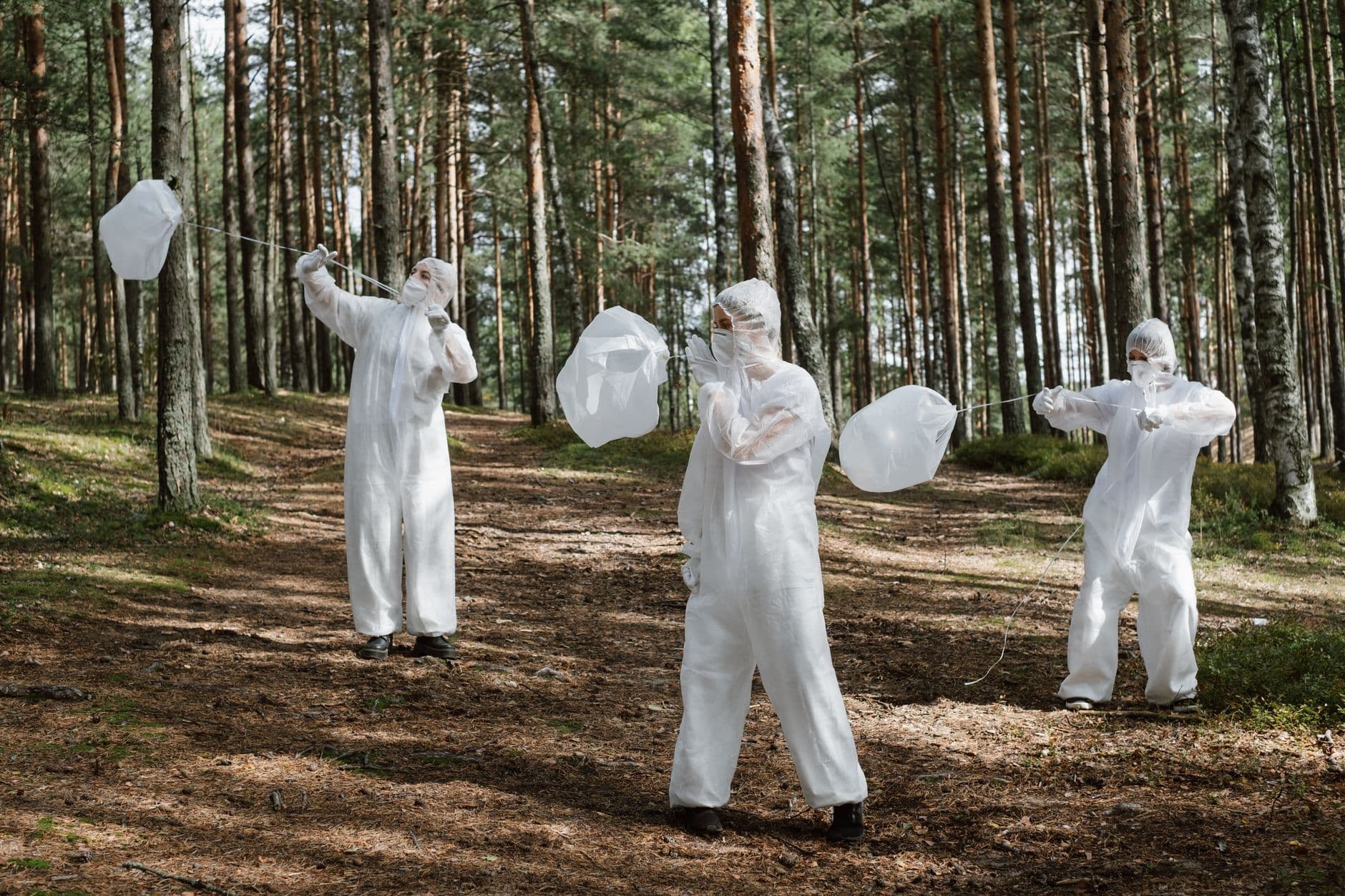
- The 'clean rooms' at JPL are legally required to be cleaner than a heart surgery suite, yet extremophiles have been found living in the filters designed to catch them.
- Current estimates suggest that if we land a rover on a moon with liquid water, we have a nearly 100% chance of introducing Earth-based life to that environment.
It’s a classic human move. We haven't even finished destroying our own planet's ecosystem, but we're already preemptively ruining everyone else's. We aren't sending our best and brightest to the stars; we're sending the biological equivalent of invasive kudzu that can survive a vacuum and a heavy dose of radiation. If there is an indigenous Martian or Europan ecosystem, it doesn't stand a chance against the hardened veterans of a roadside motel carpet.
Natural Selection Favors the Filthy
Darwin didn't account for the fact that the 'fittest' might just be the ones who are the least picky about their living conditions. The extremophiles we’ve found in humble terrestrial settings have 'organizing principles' that allow them to go into a sort of biological stasis, waiting for a better neighborhood to open up. They are the ultimate opportunists. When we send a probe to Enceladus, we aren't just sending a camera; we're sending a lifeboat for the world’s most resilient squatters.
Space agencies are now forced to confront a reality where 'finding life' might just be a very expensive mirror. The probability that Earth-based life could outcompete extraterrestrial ecosystems isn't just high; it's practically a guarantee. Our microbes have spent billions of years competing in the brutal, high-stakes arena of Earth. Alien life, living in its quiet, dark, subsurface ocean, has no idea what’s coming. It’s like bringing a wolf into a room full of dodos, except the wolf is a microscopic spore that can survive being baked by the sun.
What This Actually Means
We need to stop pretending that space is a pristine frontier. It’s a construction site, and we are the messy contractors leaving our trash everywhere. The discovery in that motel room proves that life doesn't need a miracle; it just needs a foothold. By the time we actually drill through the ice of Europa, the 'locals' might already be speaking Earth-microbe and complaining about the lack of sunlight.
This isn't just a blow to our scientific purity; it’s a fundamental shift in how we define discovery. If we find life on another world, we will spend the next century arguing about whether we found it or brought it with us. We are so good at surviving in terrible conditions that we have become a biological hazard to the rest of the galaxy.
Ultimately, the search for life might be the shortest search in history. We found it. It’s on our boots, it’s in our vents, and it’s currently thriving in the back of a van in Des Moines. We’re not looking for life; we’re just waiting for our own germs to beat us to the finish line.
Quick Answers
Is the motel room discovery actually related to space?
Yes, because it proves that the 'rules' for life to organize and survive are much more flexible and resilient than we previously assumed.
Can we actually clean a spacecraft enough to prevent contamination?
Technically no, as some microbes have evolved specifically to survive the chemicals and radiation we use to kill them.
Will Earth life kill alien life?
Very likely, as Earth-based organisms have spent billions of years in a much more competitive and diverse biological 'arms race' than what likely exists on an icy moon.