The $400 Box of Sadness
For decades, the guitar industry has been a magnificent grift fueled by the collective delusion that a specific shade of teal paint makes a diode sound 'creamy.' We have spent the GDP of a small island nation on boutique pedals hand-wired by guys named Caleb who claim their solder contains 2% unicorn tears. But then the Waveshare ESP32-S3-Touch-AMOLED-2.06 waltzes into the room, looking like a piece of cyberpunk jewelry, and suddenly Caleb’s business model looks as structurally sound as a wet taco.
This tiny board costs less than a fancy sandwich and features a 2-inch AMOLED touch screen that is frankly too beautiful for a device destined to be repeatedly kicked by a sweaty man in Doc Martens. It has enough processing power to simulate a 1965 Fender Twin Reverb while simultaneously calculating the trajectory of a SpaceX rocket. The 'boutique moat' isn't just leaking; the dam has burst and it’s carrying away all the overpriced vacuum tubes.
Legacy brands are currently clutching their pearls and their proprietary DSP chips, praying we don't notice that a hobbyist in a basement can now build a touch-driven multi-effects rig for the price of a pack of strings. It’s glorious. It’s chaotic. It’s probably going to result in a lot of accidental firmware updates in the middle of a guitar solo.
High Definition Distortion is a Weird Flex
Why does a guitar pedal need a 410x502 resolution AMOLED screen? It doesn't. That’s exactly why I love it. We are moving from the era of 'this knob turns the volume up' to 'let me swipe through three menus of high-contrast sub-parameters to adjust my virtual sag.' It’s the kind of overkill that makes the average boomer blues-lawyer weep into his vintage sunburst finish.

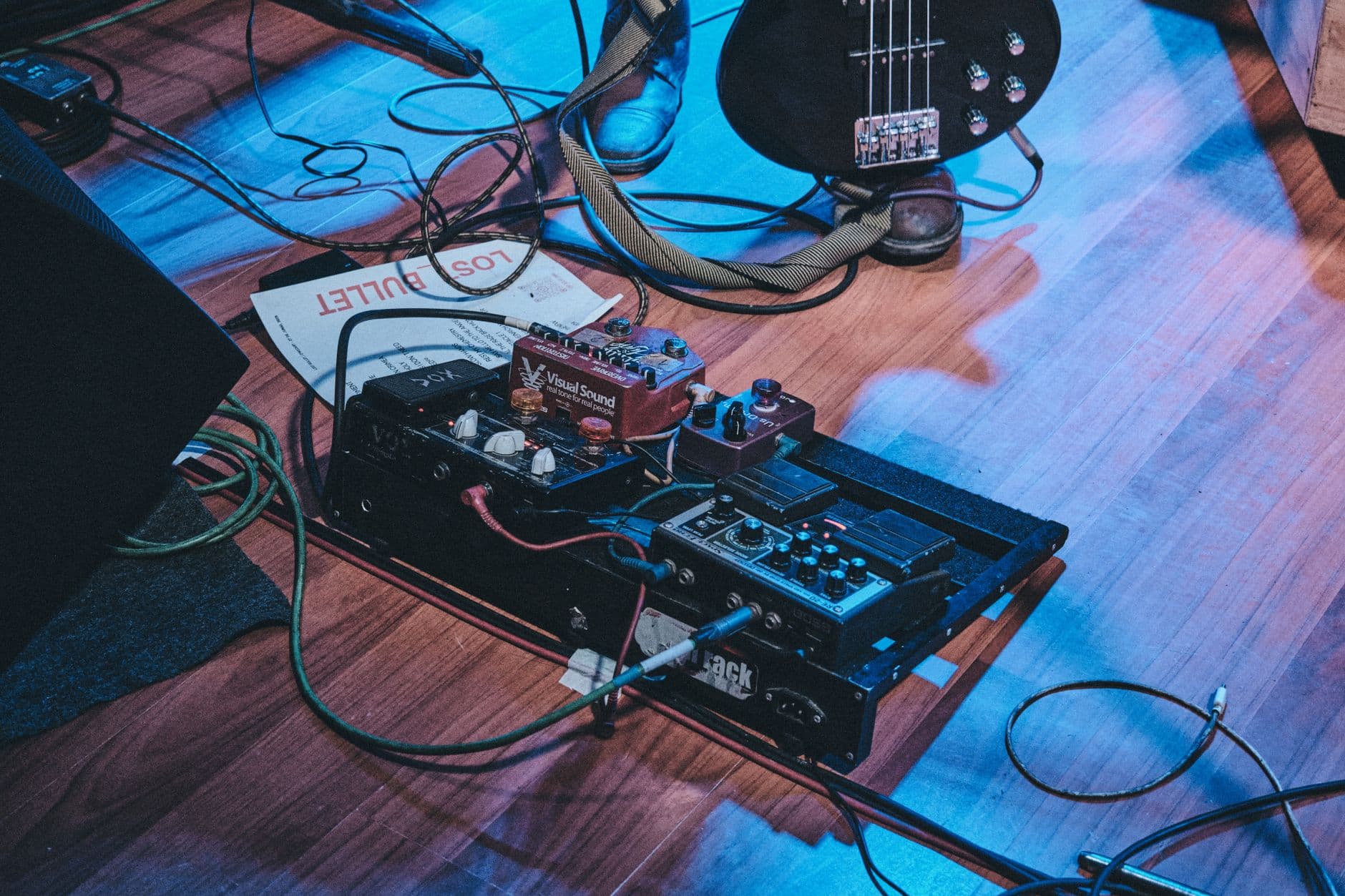
Photo by Tahir Xəlfəquliyev on Pexels
The ESP32-S3 isn't just a chip; it's a tiny, caffeinated brain. Because it has built-in Wi-Fi and Bluetooth, your guitar pedal can now technically browse Reddit or check the weather. I cannot wait for the first firmware bug that causes a delay pedal to start reading out stock prices instead of echoing my G-major chord. Imagine the atmospheric depth of a cavernous reverb being interrupted by a notification that your Uber Eats driver is three minutes away.
This isn't just about saving money. It's about the absurdity of putting a retina-quality display on a device that lives on a floor covered in beer spills and dog hair. We are giving the most sensitive, beautiful technology to the least responsible group of people on earth: lead guitarists.
The Death of the 'Magic' Component
In the old days, gear snobs would argue about 'New Old Stock' Germanium transistors like they were discussing fine vintages of Bordeaux. They’d claim a pedal only sounded good because the components were salvaged from a Soviet radar station in 1974. The ESP32-S3-Touch laughs at your Soviet radar stations. It treats your 'warm analog tone' as a math problem it can solve in its sleep.
When code replaces copper, the mystery dies, and the fun begins. We are entering the 'Linux of Loud.' If you don't like the way your distortion sounds, you don't swap a resistor; you change a line of C++ and reflash the board. It democratizes the 'boutique' sound by making it a downloadable file rather than a physical object you have to beg a dealer in Nashville to ship to you.
Naturally, the purists will hate this. They will talk about 'latency' and 'feel' and how the digital approximation doesn't 'bloom' correctly. These are usually the same people who can’t hear the difference between a $2,000 Klone and a $30 Joyo pedal in a blind test. The reality is that a $15 chip is now capable of doing 99% of the heavy lifting, leaving the other 1% to be argued about on internet forums until the heat death of the universe.
What This Actually Means
The democratization of boutiqueware means the barrier to entry for creating wild, experimental audio gear has been lowered to the floor. You no longer need a factory in Ohio or a degree in electrical engineering to build a touch-controlled granular synthesizer that fits inside a mint tin. You just need a USB-C cable and a dream of making noises that sound like a dial-up modem having a panic attack.
We are going to see a flood of weird, hyper-specific devices that the 'Big Three' pedal companies would never make because they’re too busy releasing their fourteenth slightly different version of a 1970s circuit. Expect pedals that sync to your heart rate, or amps that change their EQ based on the current price of Bitcoin. It’s going to be stupid, it’s going to be messy, and it’s going to be significantly cheaper than what we’re used to.
Ultimately, the 'magic' was always just math and marketing. The ESP32-S3 just happens to be very good at the math part, and it doesn't care about the marketing. It’s just a little piece of silicon with a very pretty face, waiting for you to tell it how to ruin your neighbors' Sunday afternoon. Go forth and build something that Caleb would find threatening.
Quick Answers
Does a guitar pedal really need a touch screen?
No, but your phone didn't 'need' a camera either, and now we use it to film our cats in 4K. It’s about the luxury of being unnecessary.
Will this actually sound as good as my analog gear?
To 95% of people in a bar at 11:00 PM on a Tuesday, yes. To the guy in the front row with his arms crossed, nothing will ever be good enough.
Is it hard to program these things?
If you can follow a YouTube tutorial and copy-paste code without setting your house on fire, you’re basically a boutique manufacturer now. Welcome to the club.